

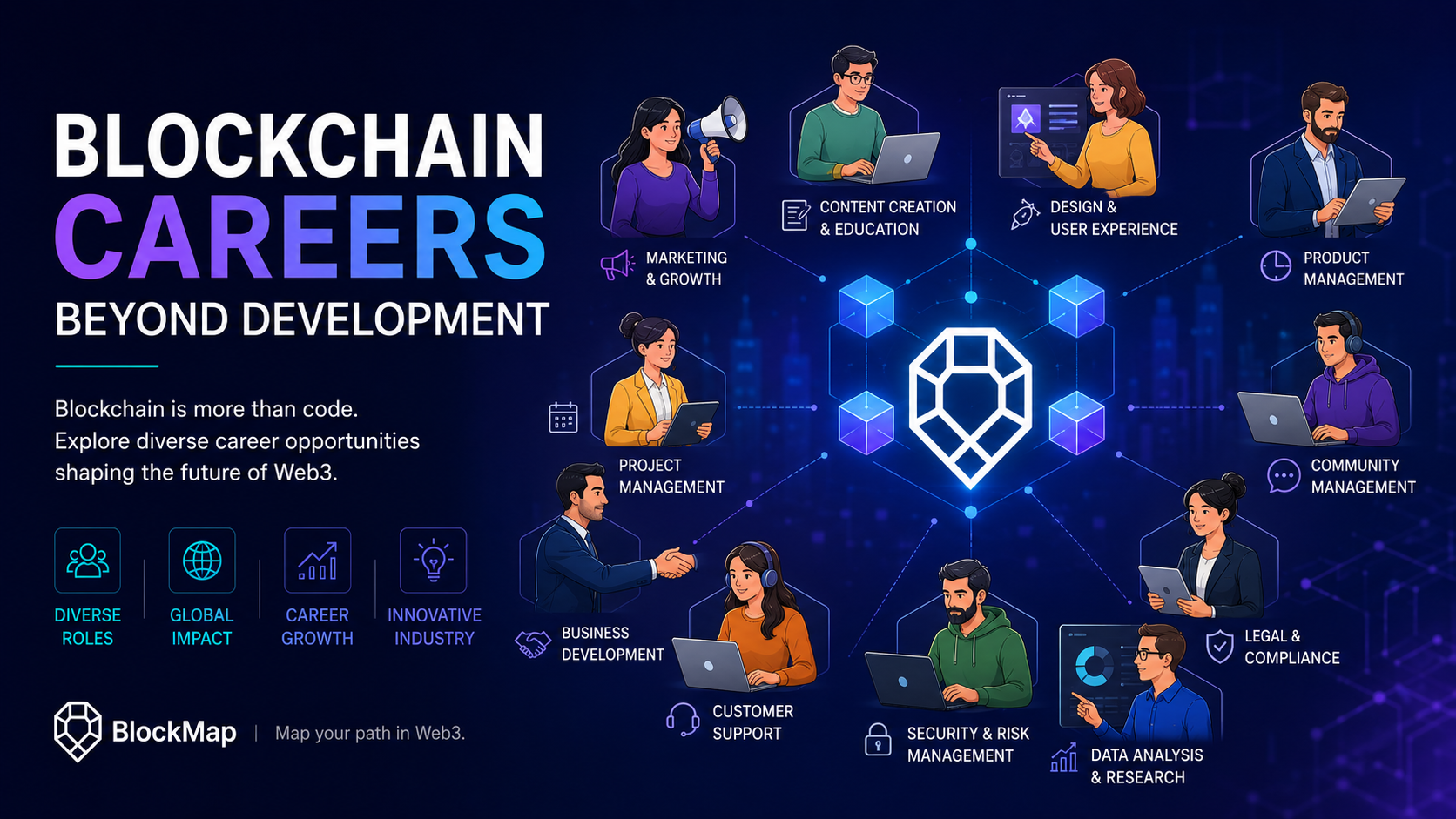
Blockchain is often associated with software engineers writing smart contracts or building decentralized applications. While developers remain essential, they represent only one part of a much larger ecosystem.
As blockchain technology continues to mature, organizations need professionals with a wide range of skills to build products, educate communities, manage operations, ensure compliance, create content, and grow businesses.
Whether you're changing careers, entering the workforce, or looking to apply your existing expertise in a new industry, blockchain offers opportunities far beyond programming. Many successful professionals in the space have backgrounds in marketing, finance, design, education, law, customer support, or project management rather than computer science.
In this article, we'll explore the many career paths available in blockchain, the skills they require, and how you can prepare for a role in this rapidly evolving industry.
Why the Blockchain Industry Needs More Than Developers
Building blockchain technology is only one piece of creating successful projects. Every cryptocurrency, decentralized application (dApp), wallet, exchange, NFT platform, or infrastructure provider needs teams that can communicate with users, manage communities, create educational content, handle legal requirements, and operate businesses effectively.
As blockchain adoption expands into finance, gaming, identity, healthcare, supply chains, and entertainment, companies increasingly seek specialists who understand their own fields while learning how blockchain can improve them.
This creates opportunities for professionals from nearly every background.
Community Management
Many blockchain projects succeed because of their communities.
Community managers help create welcoming environments where users can learn, ask questions, share ideas, and contribute to projects.
Typical responsibilities include:
- Managing Discord, Telegram, Reddit, and other communities
- Organizing online events and AMAs
- Answering user questions
- Moderating discussions
- Gathering community feedback
- Communicating updates from development teams
Strong communication skills, patience, empathy, and an understanding of blockchain concepts are often more valuable than technical programming knowledge.
Marketing and Growth
Every blockchain project needs users.
Marketing professionals help explain complex technologies in ways that are easy to understand while building trust with potential users.
Career opportunities include:
- Content marketing
- Social media management
- Brand strategy
- Email marketing
- SEO
- Growth marketing
- Partnership management
- Influencer outreach
People who enjoy storytelling, analytics, and creative campaigns can find rewarding careers in blockchain marketing.
Content Creation and Education
Blockchain can be difficult for newcomers to understand.
Content creators help bridge that gap by producing educational resources that make complex topics accessible.
Examples include:
- Blog articles
- YouTube videos
- Podcasts
- Tutorials
- Documentation
- Newsletters
- Online courses
- Infographics
High-quality educational content remains one of the industry's greatest needs as adoption continues to grow.
Technical Writing
Technical writers combine communication skills with technical understanding.
They create documentation that helps developers and users understand how blockchain software works.
Typical projects include:
- API documentation
- Wallet guides
- Developer documentation
- Smart contract references
- Knowledge bases
- FAQs
- User manuals
Clear documentation often determines whether developers choose to build on a particular blockchain platform.
Graphic Design and User Experience
Blockchain applications often involve complex financial interactions.
Designers help simplify these experiences while making products visually appealing and easy to use.
Roles include:
- UI design
- UX research
- Product design
- Branding
- Illustration
- Motion graphics
- Website design
Designers who understand both usability and blockchain concepts are increasingly valuable.
Product Management
Product managers help turn ideas into successful products.
They coordinate between developers, designers, marketers, community managers, and executives while ensuring projects solve real user problems.
Responsibilities often include:
- Defining product roadmaps
- Prioritizing features
- Conducting user research
- Managing development timelines
- Coordinating cross-functional teams
Strong organization and communication skills are essential.
Project Management
Large blockchain organizations frequently manage multiple initiatives simultaneously.
Project managers keep work organized by:
- Tracking deadlines
- Managing resources
- Coordinating teams
- Monitoring progress
- Identifying risks
- Improving workflows
Experience with Agile or Scrum methodologies can be especially useful.
Customer Support
Crypto users frequently need assistance with wallets, exchanges, staking, transactions, or account security.
Support specialists help users resolve problems while educating them about best practices.
This role requires:
- Excellent communication
- Problem-solving skills
- Patience
- Security awareness
- Product knowledge
Many professionals enter the blockchain industry through customer support before moving into other positions.
Business Development
Business development professionals create partnerships that help blockchain projects grow.
They may negotiate integrations, collaborate with other companies, attract enterprise customers, or identify new markets.
Typical activities include:
- Partnership negotiations
- Networking
- Market research
- Sales
- Strategic planning
- Relationship management
People with strong interpersonal skills often thrive in these positions.
Legal and Compliance
As blockchain adoption grows, regulatory requirements become increasingly important.
Legal professionals help organizations navigate changing regulations while protecting users and businesses.
Career paths include:
- Compliance officer
- Legal counsel
- Regulatory analyst
- Risk management
- Policy advisor
Many companies actively seek professionals with legal backgrounds who are willing to specialize in blockchain.
Finance and Accounting
Blockchain companies still need traditional financial expertise.
Professionals in finance may work on:
- Treasury management
- Financial reporting
- Budget planning
- Tax compliance
- Investment analysis
- Payroll
- Auditing
Understanding digital assets and token economics adds valuable expertise.
Research and Data Analysis
Data helps blockchain organizations make informed decisions.
Researchers analyze:
- On-chain activity
- Market trends
- User behavior
- Token economics
- Industry developments
- Competitive landscapes
Analytical thinking and data visualization skills are highly valued.
Security and Risk Management
Security extends far beyond writing secure smart contracts.
Organizations need professionals who can:
- Conduct security audits
- Develop security policies
- Investigate incidents
- Assess operational risks
- Train employees
- Improve organizational security
Cybersecurity experience can transfer well into blockchain.
Recruitment and Human Resources
Growing blockchain companies constantly hire new talent.
Recruiters and HR professionals help build strong teams by:
- Finding qualified candidates
- Managing interviews
- Supporting employee onboarding
- Developing workplace culture
- Organizing training
Understanding blockchain terminology helps recruiters identify suitable candidates.
Event Management
Conferences, hackathons, webinars, and meetups are central to the blockchain ecosystem.
Event professionals organize experiences that bring communities together.
Responsibilities include:
- Venue coordination
- Speaker management
- Sponsorships
- Marketing
- Logistics
- Virtual event production
Strong organizational skills are essential.
Sales
Many blockchain companies sell infrastructure, analytics platforms, enterprise software, payment solutions, or consulting services.
Sales professionals help customers understand products while building long-term relationships.
Industry knowledge combined with communication skills can create excellent career opportunities.
Translation and Localization
Blockchain is a global industry.
Projects frequently need websites, documentation, educational materials, and applications translated into multiple languages.
Localization specialists ensure content feels natural rather than simply translated, helping projects reach international audiences.
Journalism and Media
Crypto news moves quickly.
Journalists, editors, researchers, and media professionals help explain important developments while investigating trends and interviewing industry leaders.
Accuracy, critical thinking, and ethical reporting are especially important in a rapidly changing sector.
Education and Training
As organizations adopt blockchain technologies, they need trainers who can teach employees, students, and customers.
Opportunities include:
- Corporate training
- University education
- Online instruction
- Certification programs
- Workshop facilitation
Experienced educators can apply their teaching skills while learning blockchain concepts.
Freelancing in Blockchain
Many blockchain projects hire freelancers instead of full-time employees.
Common freelance services include:
- Writing
- Graphic design
- Translation
- Video editing
- Marketing
- Community moderation
- Research
- Virtual assistance
- Consulting
Freelancing can provide valuable industry experience while building a professional portfolio.
Skills That Matter Across Every Role
Although each profession has unique requirements, several skills are valuable throughout the blockchain industry:
- Strong communication
- Continuous learning
- Problem-solving
- Adaptability
- Collaboration
- Critical thinking
- Digital literacy
- Curiosity about emerging technologies
Blockchain evolves rapidly, making lifelong learning one of the most important career skills.
How to Get Started
You don't need years of blockchain experience to enter the industry.
A practical approach includes:
- Learn blockchain fundamentals.
- Follow reputable industry news.
- Join active blockchain communities.
- Build a portfolio of relevant work.
- Contribute to open-source or community projects.
- Network with professionals.
- Continue developing skills related to your chosen career path.
Many employers value demonstrated enthusiasm and practical contributions just as much as formal qualifications.
Final Thoughts
The blockchain industry offers far more opportunities than software development alone. Behind every successful project are marketers, educators, designers, writers, analysts, lawyers, recruiters, community managers, product specialists, support teams, and countless other professionals working together.
As blockchain technology becomes part of more industries, demand for diverse skills is likely to continue growing. Whether your background is in communications, business, finance, education, design, or operations, there may already be a place for your expertise in the blockchain ecosystem.
The best way to begin is to keep learning, engage with blockchain communities, build practical experience, and look for ways your existing skills can solve real-world problems in this exciting and rapidly evolving industry.


Pick your reaction
Post your comment