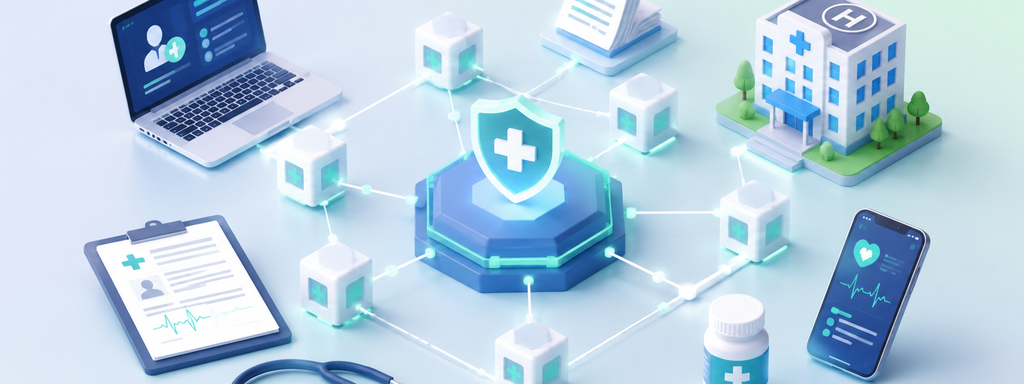

Healthcare is one of the industries where trust, security, and accurate data are essential. Every day, hospitals, clinics, laboratories, pharmacies, and insurance providers exchange enormous amounts of sensitive information. Blockchain technology has the potential to improve how this data is stored, shared, and protected while giving patients greater control over their own medical records.
Although blockchain is still an emerging technology in healthcare, many organizations are exploring how it can increase transparency, reduce administrative costs, and improve patient outcomes.
What Is Blockchain?
A blockchain is a decentralized digital ledger that securely records transactions or pieces of information across a network of computers. Instead of relying on a single central database, multiple participants maintain synchronized copies of the ledger.
Once information has been added to the blockchain, it is extremely difficult to alter or delete without network consensus. This makes blockchain especially useful for storing records that require integrity, traceability, and transparency.
Healthcare organizations can use blockchain alongside existing systems rather than replacing them entirely.
Why Healthcare Needs Better Data Management
Healthcare providers face numerous challenges when managing patient information:
- Medical records are often spread across multiple systems.
- Hospitals and clinics may use incompatible software.
- Patients frequently have little control over their own records.
- Data breaches continue to affect millions of people every year.
- Administrative processes can be slow and expensive.
These problems make it difficult for healthcare professionals to access complete patient histories while maintaining privacy and security.
Blockchain offers new ways to address many of these issues.
Secure Medical Records
One of the most discussed blockchain applications is electronic health records (EHRs).
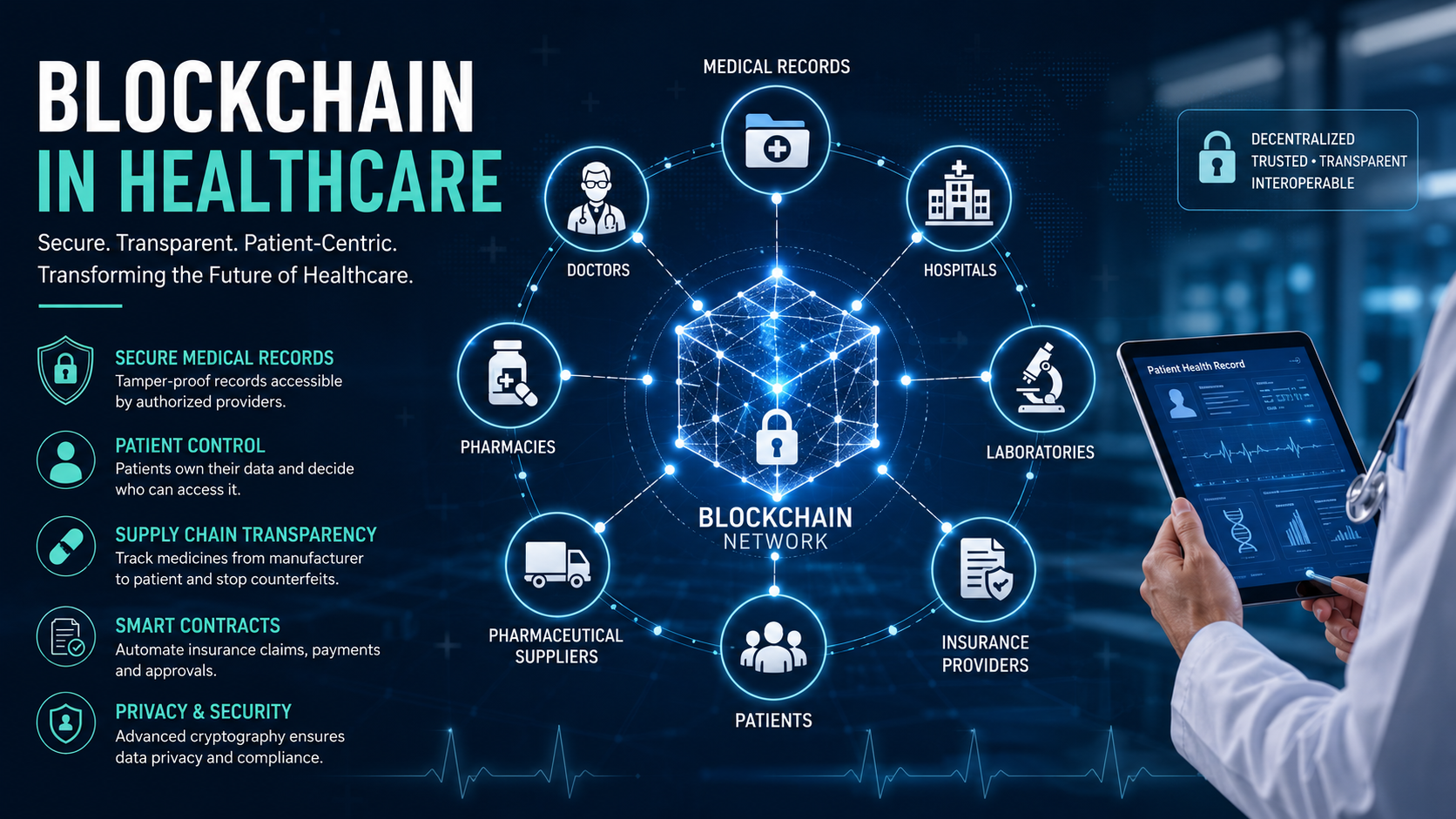
Instead of storing patient data in isolated databases, blockchain can help create a secure index of medical records that authorized providers can access when needed.
Patients could grant or revoke permission for doctors, specialists, or hospitals to view specific information.
Benefits include:
- Faster access to medical history
- Reduced duplication of tests
- Improved coordination between providers
- Better protection against unauthorized changes
- Strong audit trails showing who accessed records
Sensitive medical data is typically stored off-chain, while blockchain records permissions, timestamps, and cryptographic proofs.
Giving Patients More Control
Many healthcare systems are built around institutions rather than patients.
Blockchain makes it possible for patients to become the primary owners of their health data.
For example, patients may be able to:
- Share records with a new doctor instantly.
- Provide temporary access during emergencies.
- Revoke access after treatment.
- Monitor who viewed their information.
- Carry a lifelong medical history across providers.
This approach is sometimes called self-sovereign health data.
Improving Data Security
Healthcare records are highly valuable targets for cybercriminals because they contain personal identities, insurance information, and medical histories.
Blockchain improves security by:
- Preventing unauthorized modification of records
- Creating tamper-evident audit logs
- Reducing single points of failure
- Using strong cryptographic verification
- Increasing transparency for authorized participants
While blockchain cannot eliminate all cybersecurity risks, it can significantly strengthen the integrity of healthcare data.
Supply Chain Tracking for Medicines
Counterfeit medicines are a major global problem.
Blockchain can improve pharmaceutical supply chains by recording every step of a medicine's journey from manufacturer to distributor, pharmacy, and patient.
This allows organizations to verify:
- Manufacturing dates
- Batch numbers
- Shipping history
- Storage conditions
- Authenticity
If contamination or recalls occur, affected products can be identified much more quickly.
Clinical Trials
Clinical research depends on trustworthy data.
Blockchain can help researchers create transparent records for:
- Patient enrollment
- Consent management
- Study results
- Data collection
- Protocol changes
Because blockchain creates immutable timestamps, researchers can demonstrate that data has not been altered after collection.
This may improve confidence in published research while simplifying regulatory audits.
Insurance and Claims Processing
Insurance administration often involves extensive paperwork and manual verification.
Blockchain combined with smart contracts could automate parts of this process.
Examples include:
- Verifying treatment eligibility
- Processing approved claims automatically
- Reducing duplicate submissions
- Detecting fraudulent claims
- Accelerating reimbursements
Automation may reduce costs for both healthcare providers and insurers.
Healthcare Identity
Correctly identifying patients is surprisingly difficult.
Duplicate records, outdated information, and identity errors can lead to delayed treatment or medical mistakes.
Blockchain-based digital identities could help create secure patient identifiers that work across multiple healthcare providers while preserving privacy.
Healthcare professionals could also use blockchain to verify medical licenses, certifications, and professional credentials.
Medical Device Management
Modern hospitals use thousands of connected medical devices.
Blockchain can help maintain trusted records for:
- Device maintenance
- Software updates
- Calibration history
- Regulatory compliance
- Equipment ownership
This creates a transparent maintenance history throughout a device's lifecycle.
Public Health
Public health organizations can benefit from secure, trustworthy data sharing during disease outbreaks.
Blockchain may support:
- Secure reporting between hospitals
- Vaccination records
- Cross-border health documentation
- Disease surveillance
- Resource tracking
Reliable information sharing can improve coordination while protecting sensitive patient information.
Smart Contracts in Healthcare
Smart contracts are programs that automatically execute predefined actions when specific conditions are met.
Healthcare applications may include:
- Insurance payouts
- Appointment verification
- Consent management
- Prescription authorization
- Clinical trial participation
Automation can reduce paperwork and minimize delays caused by manual processing.
Privacy Challenges
Healthcare data is among the most sensitive personal information.
Public blockchains are generally not suitable for storing complete medical records because blockchain data is difficult or impossible to remove.
Instead, many healthcare solutions use:
- Permissioned blockchains
- Encrypted storage
- Off-chain medical records
- Cryptographic verification
- Fine-grained access controls
These approaches aim to balance transparency with strict privacy requirements.
Regulatory Considerations
Healthcare is heavily regulated in many countries.
Blockchain solutions must comply with laws governing patient privacy and data protection, such as:
- GDPR in the European Union
- HIPAA in the United States
- National healthcare regulations
- Medical data retention policies
Designing blockchain systems that satisfy these legal requirements remains an active area of development.
Current Limitations
Despite its promise, blockchain is not a complete solution.
Challenges include:
- Integration with existing hospital systems
- Scalability for large healthcare networks
- Regulatory uncertainty
- Implementation costs
- Industry-wide standardization
- User adoption and training
Many healthcare providers are currently running pilot programs rather than large-scale deployments.
The Future of Blockchain in Healthcare
As healthcare becomes increasingly digital, secure data sharing will become even more important.
Blockchain could help create more connected healthcare systems where patients have greater control over their information, providers can collaborate more efficiently, and medical records remain accurate and secure throughout a person's lifetime.
While blockchain is unlikely to replace existing healthcare infrastructure entirely, it can serve as a trusted layer that improves interoperability, transparency, and security across the healthcare ecosystem.
Conclusion
Blockchain has the potential to transform healthcare by making medical records more secure, improving collaboration between providers, increasing patient control over personal data, and strengthening pharmaceutical supply chains. Although significant technical, regulatory, and organizational challenges remain, ongoing research and pilot projects continue to demonstrate how blockchain can complement existing healthcare systems. As the technology matures, it may play an increasingly important role in building a more efficient, transparent, and patient-centered healthcare industry.

Pick your reaction
Post your comment