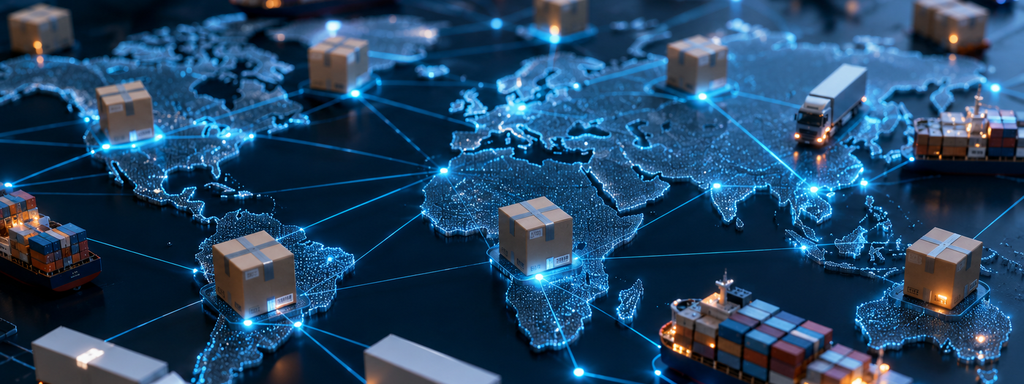

Supply chains are responsible for moving products from manufacturers to customers, often involving dozens of companies across multiple countries. While modern supply chains are incredibly sophisticated, they can also be difficult to track, vulnerable to fraud, and slowed down by paperwork. Blockchain technology offers a new way to improve transparency, traceability, and collaboration throughout the entire process.
What Is Supply Chain Management?
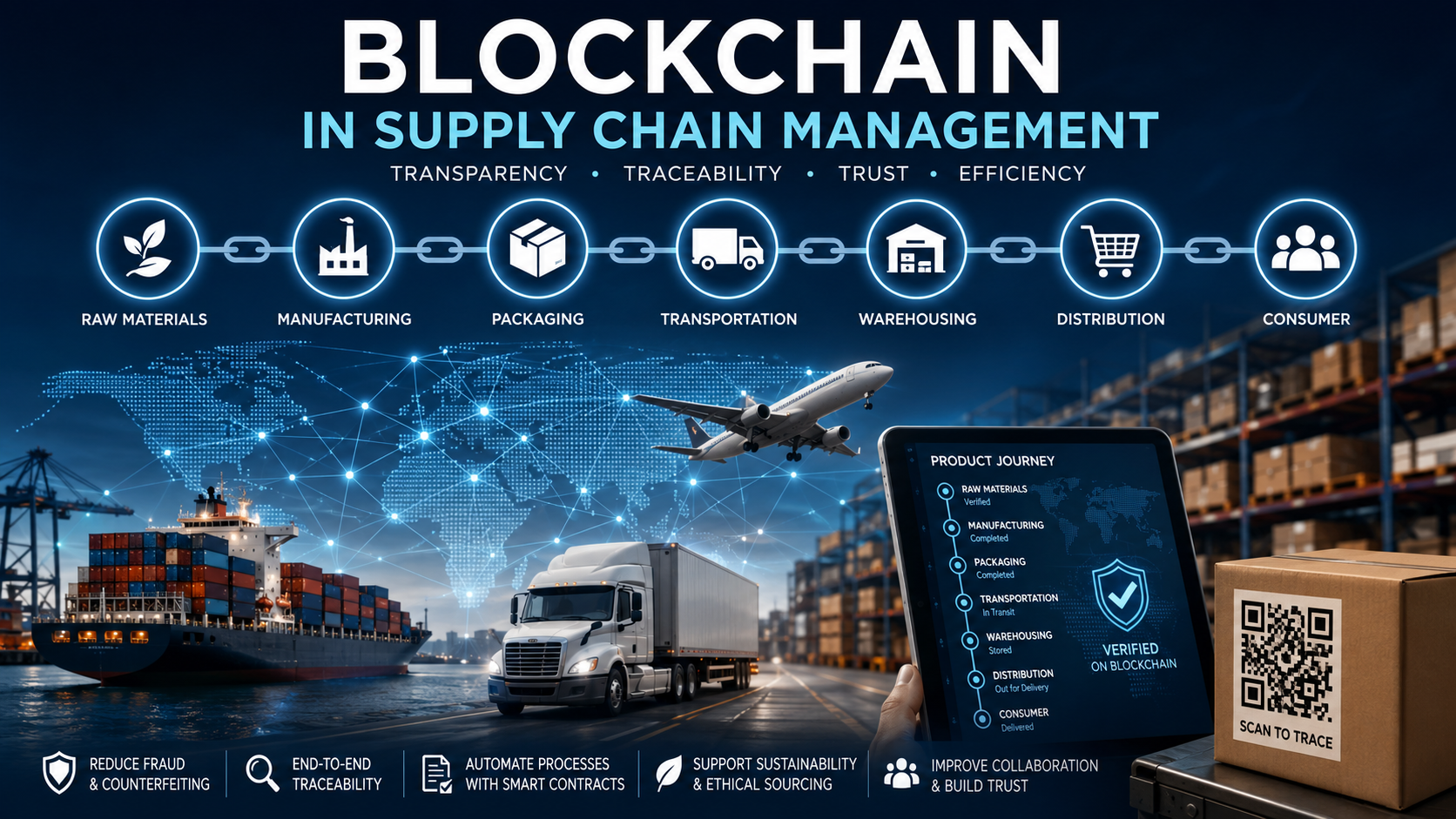
Supply chain management is the coordination of every step involved in producing and delivering a product. This includes:
- Sourcing raw materials
- Manufacturing goods
- Packaging
- Transportation
- Warehousing
- Distribution
- Retail sales
- Returns and recycling
Every participant needs accurate information about products, shipments, and transactions. Traditionally, this information is stored in separate databases owned by different companies, making it difficult to maintain a single, reliable record.
The Challenges of Traditional Supply Chains
Global supply chains face numerous challenges that affect businesses and consumers alike.
Limited Visibility
Companies often only have visibility into the suppliers and distributors they work with directly. Information further up or down the supply chain may be difficult or impossible to verify.
Counterfeit Products
Fake products are a major problem in industries such as pharmaceuticals, luxury goods, electronics, and automotive parts. Without reliable tracking, counterfeit items can enter legitimate supply chains.
Paper-Based Processes
Many supply chains still rely heavily on invoices, shipping documents, customs forms, and certificates that require manual processing. This increases costs and delays.
Human Errors
Manual data entry can result in mistakes that are difficult to detect and expensive to correct.
Lack of Trust
Different organizations often maintain separate records that may not always match. Resolving disputes requires time, audits, and significant administrative effort.
How Blockchain Can Help
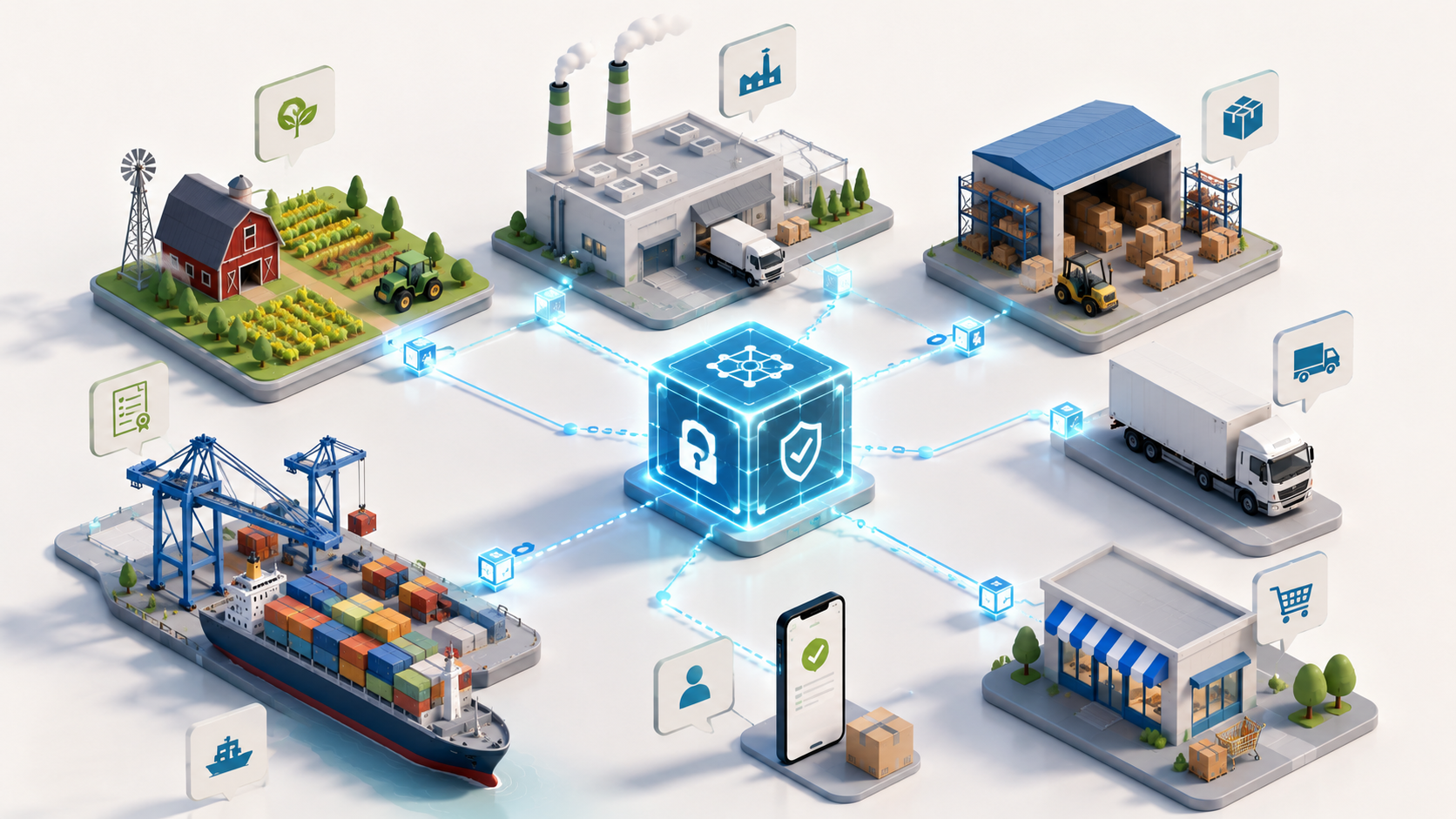
Blockchain provides a shared digital ledger that multiple organizations can use together. Instead of each company maintaining completely separate records, authorized participants can access the same trusted information.
Every update is recorded chronologically and cannot easily be altered, creating a permanent history of a product's journey.
Rather than replacing existing business systems entirely, blockchain often works alongside them by serving as a trusted layer for sharing important information.
End-to-End Product Traceability
One of blockchain's greatest strengths is tracking products throughout their lifecycle.
For example, a shipment of coffee beans may include records for:
- The farm where the beans were harvested
- Processing facilities
- Export companies
- Shipping containers
- Customs inspections
- Warehouses
- Roasters
- Retail stores
Each participant can add verified information to the blockchain, creating a complete history that consumers and businesses can review.
Fighting Counterfeit Goods
Blockchain helps verify authenticity by recording every legitimate transfer of ownership.
Manufacturers can assign each product a unique digital identity using:
- QR codes
- NFC chips
- RFID tags
- Serial numbers
Customers can scan these identifiers to confirm that a product originated from an authorized manufacturer and followed the expected supply chain.
While blockchain cannot physically prevent counterfeiting, it makes fraudulent products much easier to detect.
Improving Food Safety
Food recalls often require companies to identify where contaminated products originated.
Traditional investigations can take days or even weeks.
With blockchain, companies can trace products back through the supply chain much faster, helping identify affected batches and reducing unnecessary waste.
Examples include tracking:
- Fresh vegetables
- Meat
- Seafood
- Dairy products
- Packaged foods
Faster traceability can improve consumer safety while reducing financial losses.
Pharmaceutical Supply Chains
The pharmaceutical industry depends on accurate records to ensure medicines remain safe throughout transportation.
Blockchain can help record:
- Manufacturing dates
- Batch numbers
- Storage temperatures
- Transportation conditions
- Distribution history
- Pharmacy deliveries
This improves confidence that medicines have been handled correctly before reaching patients.
Smart Contracts in Logistics
Blockchain platforms that support smart contracts can automate many supply chain processes.
Examples include:
- Releasing payments when shipments arrive
- Updating inventory automatically
- Triggering insurance claims
- Recording customs approvals
- Confirming delivery milestones
Automation reduces paperwork and minimizes delays caused by manual verification.
Better Collaboration Between Organizations
Supply chains involve many independent companies that may use different software systems.
Blockchain creates a shared source of truth without requiring every participant to use the same internal software.
Each organization continues managing its own operations while sharing verified information with partners when necessary.
Sustainability and Ethical Sourcing
Consumers increasingly want to know where products come from and whether they were produced responsibly.
Blockchain can help document:
- Fair trade certifications
- Organic farming practices
- Sustainable forestry
- Responsible mining
- Carbon emissions
- Recycling efforts
Although blockchain cannot verify claims by itself, it provides a secure place to store certifications and audit records from trusted organizations.
Cross-Border Trade
International shipping requires cooperation between manufacturers, freight companies, customs agencies, ports, warehouses, and retailers.
Blockchain can reduce delays by allowing participants to securely share documentation without repeatedly recreating the same records.
Digital documentation can simplify customs processing and improve communication between organizations.
Asset Tracking
Blockchain can also be used to monitor valuable assets such as:
- Shipping containers
- Cargo pallets
- Industrial equipment
- Rental machinery
- High-value electronics
Combined with Internet of Things (IoT) sensors, blockchain can record:
- GPS location
- Temperature
- Humidity
- Shock events
- Opening of containers
This creates a permanent history of environmental conditions throughout transportation.
Industries Exploring Blockchain Supply Chains
Many industries are experimenting with blockchain-based supply chain solutions, including:
- Food and agriculture
- Pharmaceuticals
- Automotive manufacturing
- Aerospace
- Electronics
- Fashion and luxury goods
- Mining
- Energy
- Construction
- Consumer goods
The technology can be adapted to many different types of products and logistics networks.
Benefits of Blockchain in Supply Chain Management
Organizations may benefit from blockchain through:
- Improved transparency
- Better product traceability
- Reduced fraud
- Faster recalls
- More efficient documentation
- Increased automation
- Lower administrative costs
- Stronger collaboration
- Greater customer trust
- Easier compliance with regulations
The exact benefits depend on how the technology is implemented and how many participants join the network.
Limitations and Challenges
Despite its advantages, blockchain is not a complete solution for every supply chain problem.
Challenges include:
Data Accuracy
Blockchain preserves data after it has been entered, but it cannot determine whether the original information was accurate. Reliable data collection remains essential.
Adoption
The technology is most valuable when many organizations participate. Convincing numerous companies to adopt a shared system can be difficult.
Integration
Businesses often need to connect blockchain platforms with existing enterprise software such as ERP, warehouse management, and logistics systems.
Privacy
Not every participant should have access to all information. Permissioned blockchain networks help control who can view and update specific data.
Costs
Developing and integrating blockchain solutions requires investment, training, and ongoing maintenance.
Public vs. Private Blockchains
Supply chain applications often use permissioned or private blockchain networks rather than completely public ones.
These networks allow organizations to:
- Control access
- Protect confidential business information
- Meet regulatory requirements
- Process transactions efficiently
Some solutions also anchor important records to public blockchains to provide additional security and independent verification.
The Future of Blockchain in Supply Chains
As businesses continue to digitize operations, blockchain is becoming one of several technologies helping modernize global logistics. Combined with IoT devices, artificial intelligence, automation, and advanced analytics, blockchain can improve how products are tracked, verified, and managed across international supply chains.
While adoption is still growing, many organizations see blockchain as a valuable tool for increasing transparency, reducing inefficiencies, and building greater trust between trading partners.
Final Thoughts
Supply chains involve countless organizations working together to move products around the world. Blockchain offers a shared, tamper-resistant record that can improve transparency, traceability, and collaboration without requiring every participant to trust a single central authority.
Although blockchain is not a cure-all and still depends on accurate data and broad industry adoption, it has the potential to reduce fraud, speed up logistics, improve product authenticity, and simplify complex business processes. As supply chains become more connected and data-driven, blockchain is likely to play an increasingly important role in helping businesses deliver products more efficiently and with greater confidence.
Pick your reaction
Post your comment