

Elections are one of the foundations of democratic societies, but they also face ongoing challenges. Voters expect results to be accurate, transparent, and protected against fraud, while election organizers must ensure privacy, accessibility, and public trust. As blockchain technology continues to evolve beyond cryptocurrencies, one of its most discussed potential applications is digital voting.
Although blockchain-based voting is not yet widely used for national elections, researchers, governments, and private organizations are actively exploring how distributed ledger technology could improve election systems. Understanding both its potential and its limitations is essential for anyone interested in blockchain's real-world applications.
What Is Blockchain Voting?
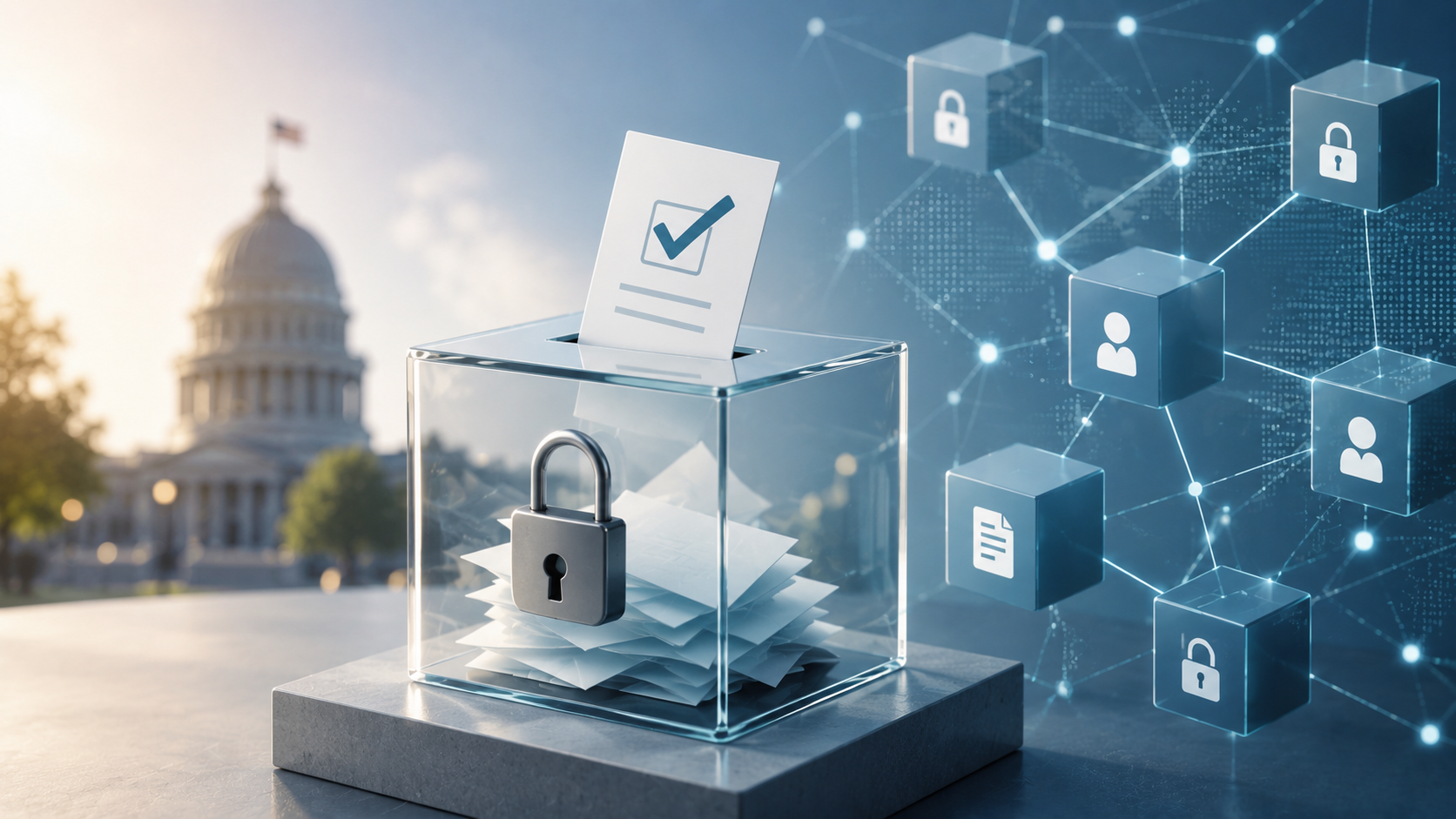
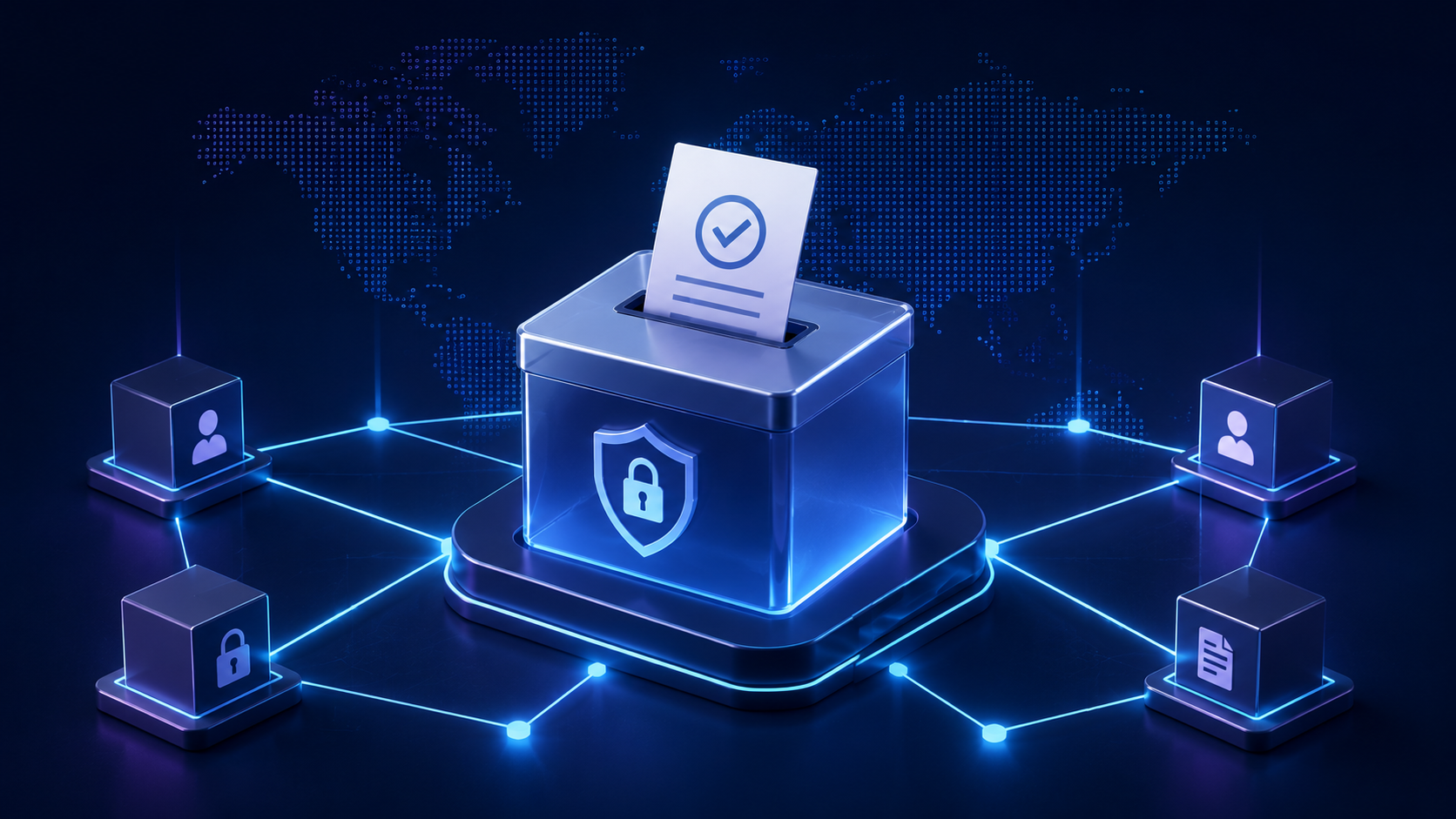
Blockchain voting is a digital voting system where votes are recorded on a blockchain instead of a traditional centralized database.
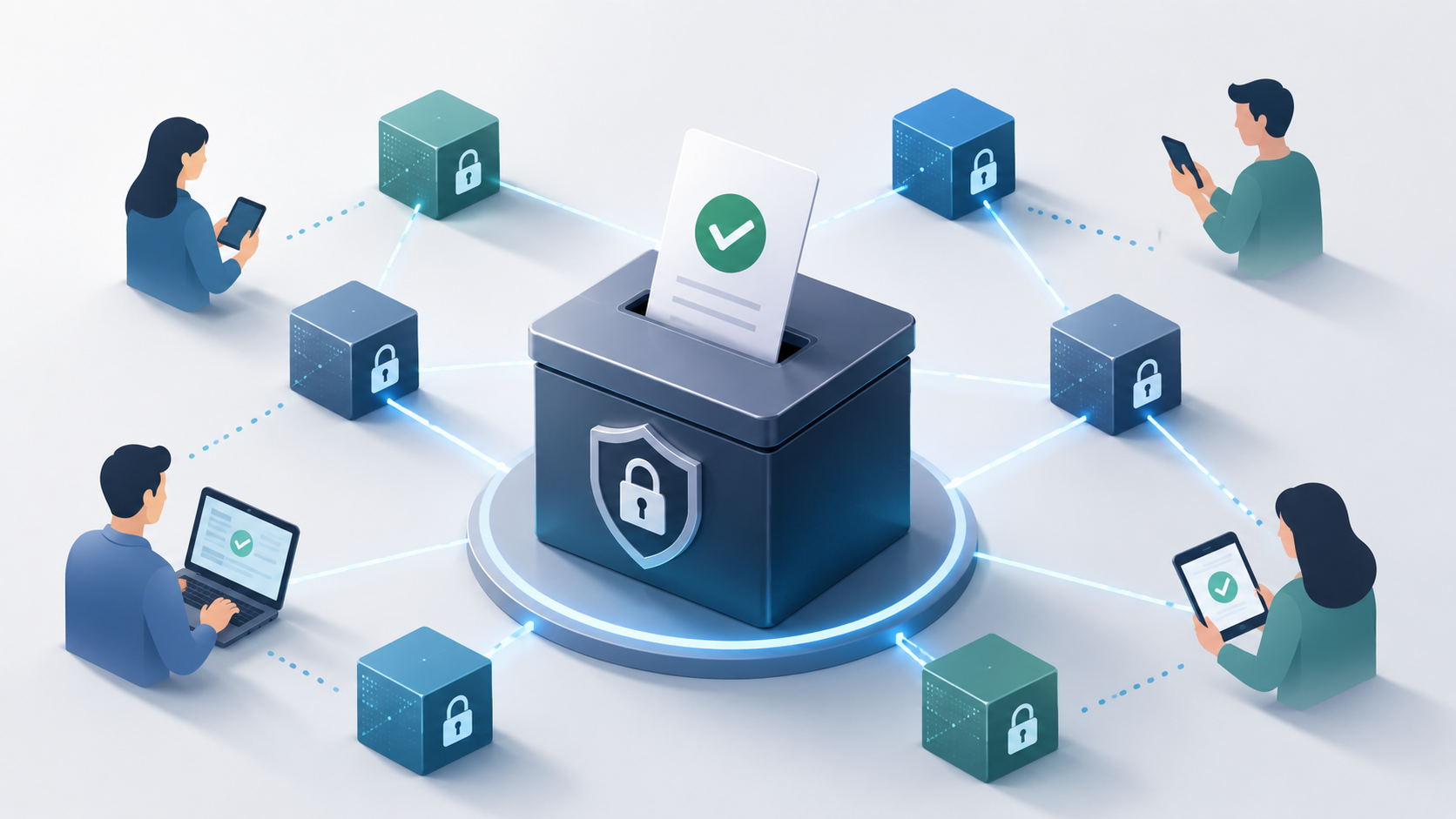
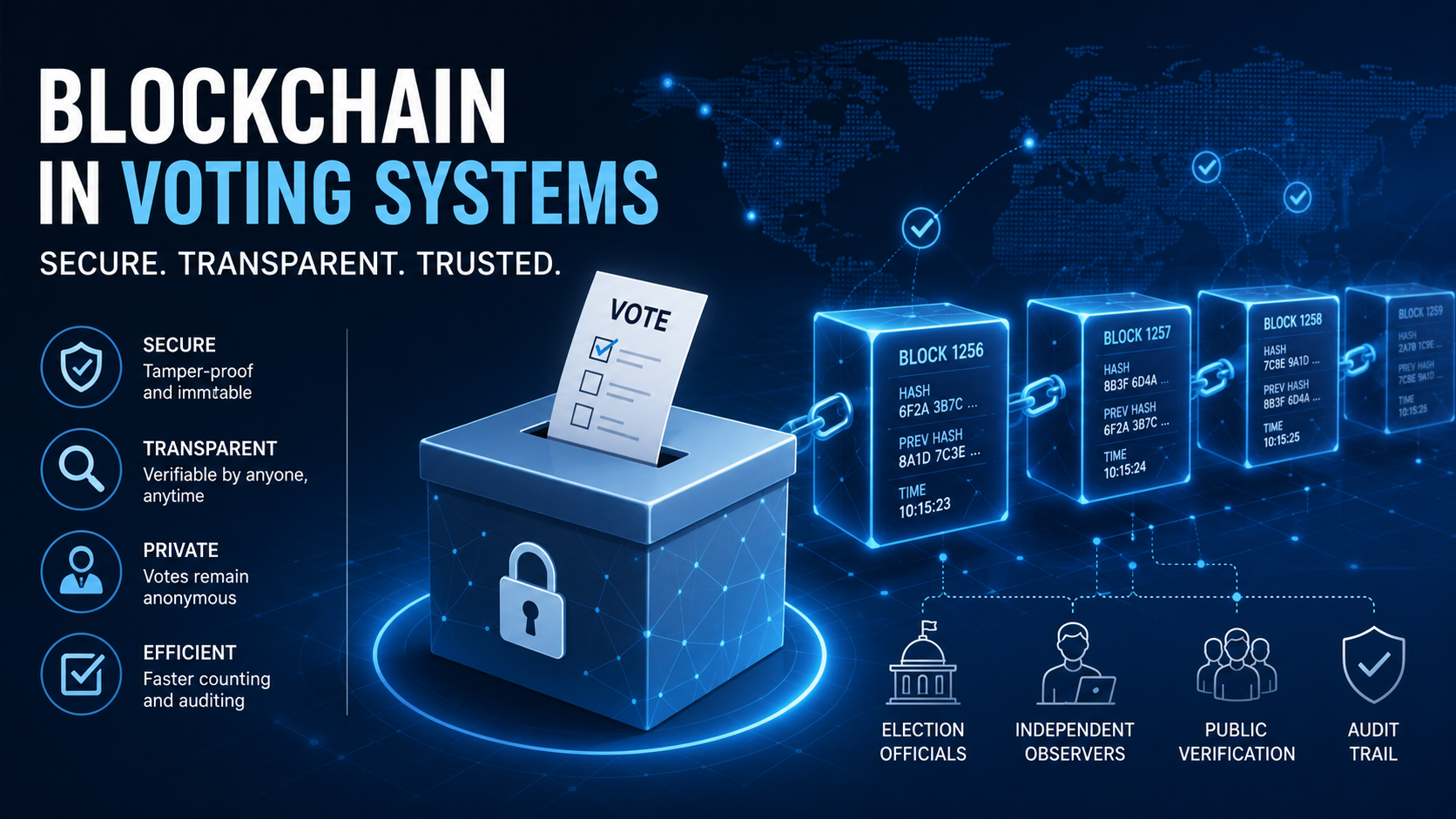
Rather than storing ballots on a single server controlled by one organization, each vote is added as a transaction to a distributed ledger shared across multiple participants. Once recorded, these transactions become extremely difficult to alter or delete without detection.
The goal is not simply to move voting online, but to make election records more transparent, tamper-resistant, and verifiable.
Why Traditional Voting Systems Face Challenges
Most elections already include numerous security measures, including paper ballots, independent observers, and recount procedures. However, modern voting systems can still face issues such as:
- Human error
- Equipment failures
- Cybersecurity risks
- Slow vote counting
- Limited transparency
- High administrative costs
- Difficulties for overseas or remote voters
Blockchain technology aims to address some of these problems, though it is not a complete solution.
How Blockchain Voting Works
While implementations vary, a simplified blockchain voting process usually follows these steps:
1. Voter Registration
Eligible voters are verified using government-issued identification or secure digital identity systems.
Each voter receives a unique digital credential that allows them to cast exactly one ballot.
2. Casting the Vote
The voter selects their preferred candidate or option through a secure voting application.
The ballot is encrypted before being submitted.
3. Recording on the Blockchain
The encrypted vote is added to the blockchain as a transaction.
Each transaction receives a timestamp and becomes linked to previous blocks, creating a permanent record.
4. Verification
Election officials and independent observers can verify that votes were recorded correctly without revealing individual voter choices.
5. Counting Results
Votes are decrypted or processed according to the election's cryptographic design, allowing results to be calculated while preserving voter privacy.
Benefits of Blockchain Voting
Increased Transparency
Every recorded vote leaves a permanent audit trail.
Observers can verify that votes were counted without relying solely on one central authority.
Better Protection Against Tampering
Changing votes after they have been recorded would require altering multiple copies of the blockchain, making unauthorized changes significantly more difficult.
Faster Vote Counting
Digital ballots can often be counted much faster than paper ballots while reducing manual processing.
Improved Auditability
Election audits become easier because every transaction remains permanently recorded.
Independent organizations can review election records without modifying them.
Remote Voting Possibilities
Blockchain may make secure remote voting more practical for:
- Citizens living abroad
- Military personnel
- Remote communities
- People with disabilities
The Importance of Cryptography
Blockchain alone does not secure elections.
Modern blockchain voting systems rely heavily on advanced cryptographic techniques such as:
- Digital signatures
- Public-key cryptography
- Zero-knowledge proofs
- Homomorphic encryption
- Multi-party computation
These technologies help ensure that:
- Only eligible voters participate.
- Votes cannot be altered.
- Ballots remain anonymous.
- Results can be verified.
Smart Contracts in Voting
Some blockchain voting platforms use smart contracts to automate election rules.
Smart contracts can:
- Accept votes only during official voting periods.
- Prevent duplicate voting.
- Automatically count ballots.
- Publish results after voting ends.
- Enforce election rules without manual intervention.
This reduces opportunities for administrative errors.
Public vs Private Blockchains
Different blockchain networks may be suitable for different voting systems.
Public Blockchains
Public blockchains allow anyone to verify transactions.
Advantages include:
- Maximum transparency
- Strong decentralization
- Independent verification
Disadvantages include:
- Lower transaction speeds
- Higher scalability challenges
- Greater privacy considerations
Permissioned Blockchains
Permissioned (private) blockchains restrict participation to approved organizations.
Advantages include:
- Higher performance
- Better privacy controls
- Easier regulatory compliance
Disadvantages include:
- Reduced decentralization
- Greater reliance on trusted institutions
Many proposed election systems favor permissioned blockchains because they balance transparency with privacy and operational requirements.
Real-World Experiments
Several countries and organizations have tested blockchain voting in limited situations.
Examples include:
- University student elections
- Shareholder voting
- Local government pilot programs
- Municipal elections
- Internal organizational voting
These projects have demonstrated technical feasibility but also highlighted practical challenges involving security, voter authentication, and usability.
Challenges and Criticism
Despite its promise, blockchain voting remains controversial among cybersecurity experts.
Digital Identity
Securely verifying voter identity is often more difficult than recording votes.
If identity systems are compromised, blockchain cannot fix that problem.
Device Security
A blockchain cannot protect against malware on a voter's computer or smartphone.
Compromised devices could manipulate votes before they ever reach the blockchain.
Privacy
Election systems must balance transparency with ballot secrecy.
Publishing voting data openly requires sophisticated cryptographic protections to prevent voters from being identified.
Scalability
National elections may involve tens or hundreds of millions of votes submitted within a short period.
Not every blockchain network can process this level of activity efficiently.
Accessibility
Voting systems must remain easy to use for citizens of all technical backgrounds.
Complex digital processes could discourage participation if not carefully designed.
Public Trust
Even technically secure systems require public confidence.
Citizens must understand how the system works well enough to trust election outcomes.
Blockchain Is Only One Piece of the Puzzle
A secure election depends on much more than the technology used to record votes.
Successful voting systems also require:
- Independent oversight
- Transparent procedures
- Strong legal frameworks
- Secure identity verification
- Reliable hardware
- Public education
- Regular security audits
Blockchain can improve some aspects of election integrity, but it cannot replace good governance.
The Future of Blockchain Voting
Blockchain voting continues to attract interest as digital identity systems mature and cryptographic research advances.
Future developments may include:
- More secure remote voting
- Cross-border voting for citizens abroad
- Faster election audits
- Greater transparency
- Improved accessibility
- Stronger cryptographic privacy protections
However, widespread adoption for national elections is likely to require years of testing, legal review, and public acceptance.
Conclusion
Blockchain offers an intriguing approach to making voting systems more transparent, auditable, and resistant to tampering. By creating immutable records and enabling independent verification, it has the potential to strengthen confidence in certain types of elections and organizational voting.
At the same time, blockchain is not a magic solution. Secure digital identity, voter privacy, device security, accessibility, and public trust remain critical challenges that blockchain alone cannot solve. As technology and cryptography continue to evolve, blockchain may become an increasingly valuable tool within modern voting systems—but it will work best as part of a broader, carefully designed election infrastructure rather than as a replacement for existing democratic safeguards.
Pick your reaction
Post your comment