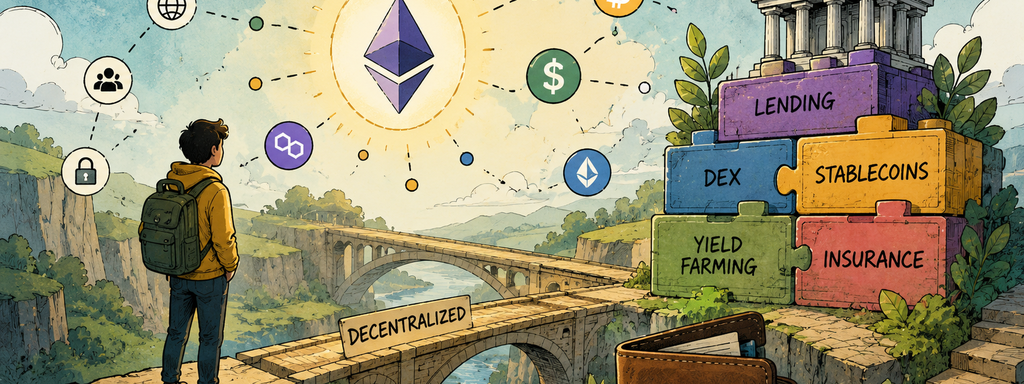

Decentralized Finance, better known as DeFi, is one of the most important innovations to emerge from blockchain technology. It aims to recreate traditional financial services - such as banking, lending, trading, and investing - without relying on centralized institutions like banks or payment companies. Instead, DeFi uses smart contracts running on blockchain networks to allow users to interact directly with financial applications in a transparent and permissionless way.
Over the past few years, DeFi has grown into a massive ecosystem handling billions of dollars in digital assets. Whether you are completely new to cryptocurrency or simply curious about how blockchain can change finance, understanding the basics of DeFi is an important step.
What Is DeFi?
DeFi stands for Decentralized Finance. It refers to financial applications built on blockchain networks, most commonly on Ethereum.
Traditional financial systems rely on intermediaries such as:
- Banks
- Credit card companies
- Brokers
- Payment processors
- Exchanges
DeFi removes many of these middlemen by using blockchain technology and smart contracts. Smart contracts are self-executing pieces of code that automatically enforce rules and transactions without needing a central authority.
In simple terms, DeFi allows people to:
- Send money globally
- Borrow and lend assets
- Trade cryptocurrencies
- Earn interest
- Purchase insurance
- Access financial services
…all without needing approval from a bank or institution.
How DeFi Works
Most DeFi applications run on blockchain networks that support smart contracts. A smart contract acts like a digital agreement programmed to execute automatically when certain conditions are met.
For example:
- A lending protocol can automatically issue a loan when collateral is deposited.
- A decentralized exchange can automatically swap tokens between users.
- Interest rewards can be distributed without human involvement.
Because these systems run on public blockchains, transactions are usually:
- Transparent
- Open-source
- Accessible worldwide
- Available 24/7
Users interact with DeFi platforms using crypto wallets instead of traditional bank accounts.
Popular crypto wallets include:
- MetaMask
- Trust Wallet
- Phantom
Key Components of the DeFi Ecosystem
1. Decentralized Exchanges (DEXs)
Decentralized exchanges allow users to trade cryptocurrencies directly from their wallets without relying on a centralized company to hold funds.
Popular DEX platforms include:
- Uniswap
- PancakeSwap
- Curve Finance
Instead of traditional order books, many DEXs use liquidity pools where users contribute assets and earn trading fees in return.
2. Lending and Borrowing
DeFi lending platforms allow users to lend crypto assets and earn interest or borrow funds by depositing collateral.
Examples include:
- Aave
- Compound
These protocols operate automatically through smart contracts. Interest rates are often determined algorithmically based on supply and demand.
3. Stablecoins
Stablecoins are cryptocurrencies designed to maintain a stable value, often pegged to traditional currencies like the US dollar.
Popular stablecoins include:
- USD Coin
- Tether
- DAI
Stablecoins play a major role in DeFi because they reduce the volatility commonly associated with cryptocurrencies.
4. Yield Farming and Staking
Many DeFi platforms reward users for providing liquidity or helping secure networks.
- Yield farming involves moving assets between protocols to maximize returns.
- Staking usually involves locking tokens to support blockchain operations while earning rewards.
These strategies can generate passive income, although they also come with risks.
Advantages of DeFi
Accessibility
Anyone with an internet connection and a crypto wallet can access DeFi services without needing permission or identification from a bank.
Transparency
Transactions and smart contract code are usually publicly visible on the blockchain, making the system more transparent than traditional finance.
Global Availability
DeFi platforms operate worldwide and are available 24 hours a day without traditional banking hours.
User Control
Users maintain direct control over their funds instead of trusting a centralized institution to hold assets.
Risks and Challenges
While DeFi offers exciting possibilities, it also comes with significant risks.
Smart Contract Vulnerabilities
Bugs or exploits in smart contracts can lead to stolen or lost funds.
Volatility
Cryptocurrency prices can fluctuate dramatically, affecting investments and collateral.
Scams and Fraud
Because DeFi is open and permissionless, fraudulent projects and scams can appear easily.
Regulatory Uncertainty
Governments around the world are still developing rules for decentralized financial systems.
User Responsibility
In DeFi, users are responsible for securing their wallets and private keys. Losing access to a wallet can mean permanently losing funds.
Why DeFi Matters
DeFi represents an attempt to create a more open financial system that is accessible to anyone, regardless of location or background. Supporters believe it could reduce costs, increase financial inclusion, and encourage innovation in global finance.
At the same time, the industry is still evolving. Security, scalability, and regulation remain major challenges that developers and communities continue to address.
Even so, DeFi has already demonstrated that blockchain technology can be used for far more than simple digital payments. It has introduced entirely new ways for people to interact with money, assets, and financial services online.
Conclusion
Decentralized Finance is reshaping how people think about banking, investing, and financial freedom. By using blockchain technology and smart contracts, DeFi enables financial services without relying on centralized intermediaries.
From decentralized exchanges and lending platforms to stablecoins and staking, the DeFi ecosystem continues to grow rapidly and attract users from around the world. While the technology still carries risks, it also opens the door to a more transparent and accessible financial future.
For anyone interested in cryptocurrency and blockchain technology, learning the basics of DeFi is an essential step toward understanding where the digital economy may be heading next.


Pick your reaction
Post your comment