

Cryptocurrency prices can rise and fall dramatically within hours, making it difficult to decide when to buy. Many investors worry about purchasing at the wrong time or trying to predict short-term market movements. Dollar-cost averaging (DCA) is a simple investment strategy designed to reduce this uncertainty by spreading purchases over time instead of investing everything at once.
Whether you're buying Bitcoin, Ethereum, Nano, or another cryptocurrency, understanding how dollar-cost averaging works can help you develop a more consistent and disciplined approach to investing.
What Is Dollar-Cost Averaging?
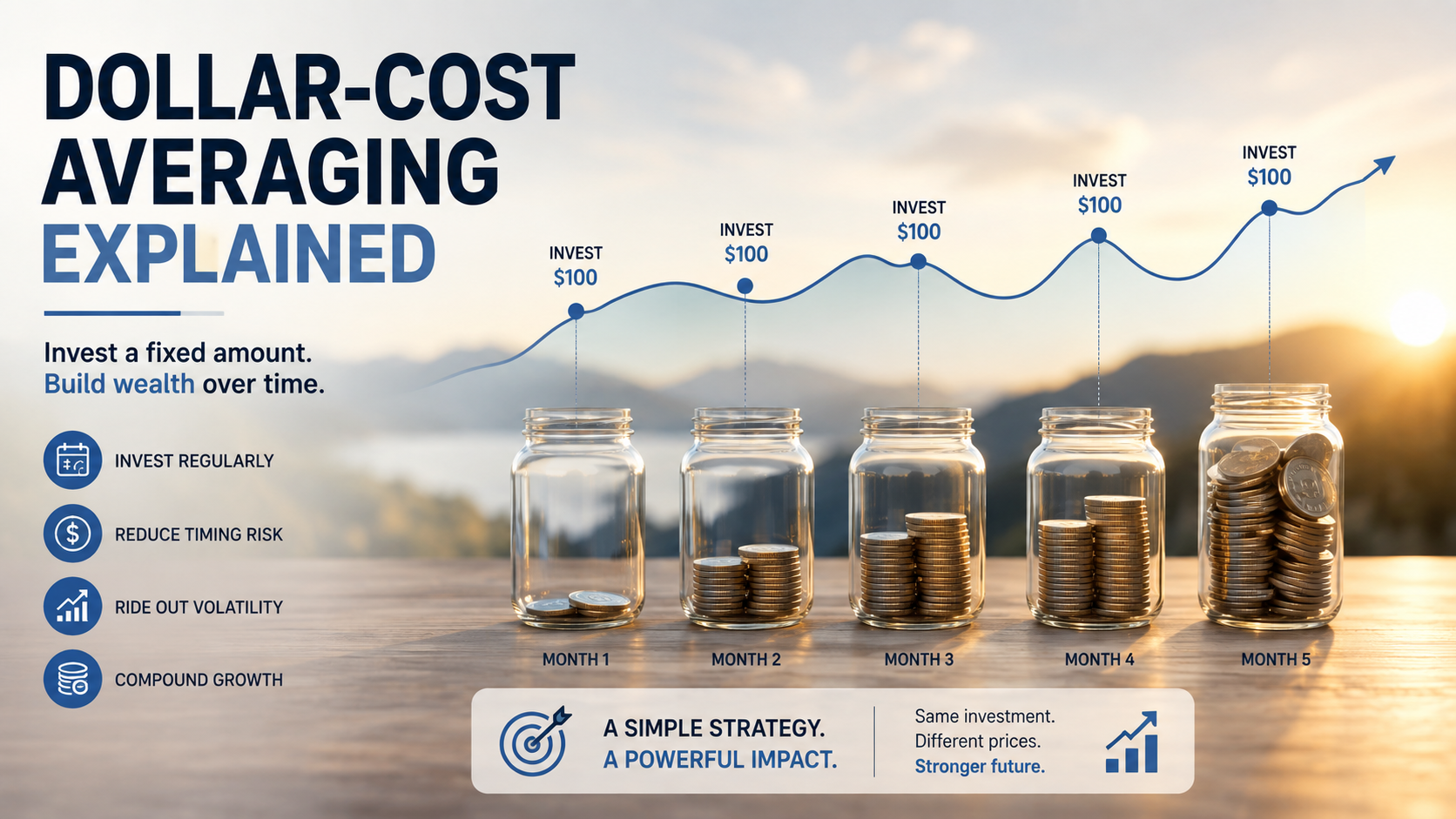
Dollar-cost averaging is an investment strategy where you invest a fixed amount of money at regular intervals, regardless of the current market price.
Instead of trying to identify the perfect time to buy, you purchase assets on a predetermined schedule. For example, you might invest:
- $50 every week
- $100 every two weeks
- $250 on the first day of each month
Because prices change over time, you'll automatically buy more units when prices are low and fewer units when prices are high.
The goal is not to maximize profits from perfect timing, but to reduce the impact of market volatility over the long term.
How Dollar-Cost Averaging Works
Imagine you decide to invest $100 into Bitcoin on the first day of every month. In January, Bitcoin is trading at a high price, so your $100 buys only a small fraction of a Bitcoin. In February and March, the price falls, allowing you to buy a larger amount with the same $100. Later, as the price rises again, each monthly investment buys slightly less. Over time, these regular purchases result in an average purchase price that falls somewhere between the highest and lowest prices you paid, reducing the impact of trying to invest at exactly the right moment.
Rather than worrying about buying at the market bottom, you've steadily accumulated Bitcoin across different market conditions while following a consistent investment plan.
Why Investors Use Dollar-Cost Averaging
Many investors prefer DCA because it removes much of the emotion from investing.
Instead of asking:
- "Should I buy today?"
- "What if the price crashes tomorrow?"
- "What if I miss the next rally?"
the decision has already been made. You simply continue investing according to your schedule.
This disciplined approach often makes it easier to stay invested during both bull and bear markets.
The Benefits of Dollar-Cost Averaging
Reduces Timing Risk
Nobody consistently predicts market tops and bottoms.
Even experienced traders regularly make incorrect short-term predictions.
DCA reduces the importance of perfect timing by spreading purchases across many different prices.
Encourages Consistency
Building wealth often comes from consistent investing rather than making one perfect trade.
A regular investment schedule encourages long-term habits instead of emotional reactions.
Removes Emotional Decision Making
Fear and greed influence many investment decisions.
When prices rise quickly, investors often feel pressured to buy.
When prices fall sharply, many panic and stop investing.
Dollar-cost averaging creates a predefined plan that reduces emotional decision making.
Easier Budgeting
Because the investment amount stays the same, DCA fits naturally into monthly financial planning.
Many people simply invest part of each paycheck.
Suitable for Long-Term Investors
Investors who believe cryptocurrencies will grow over many years often prefer gradually building positions instead of making one large purchase.
The Downsides of Dollar-Cost Averaging
Although DCA has many advantages, it isn't perfect.
Lower Returns in Strong Bull Markets
If prices continuously rise over a long period, investing everything immediately could generate higher returns than spreading purchases over months.
This is because more money would have been invested earlier at lower prices.
Requires Patience
DCA focuses on long-term accumulation.
It doesn't produce instant results and may feel slow during periods of rapid market growth.
Doesn't Eliminate Risk
Dollar-cost averaging reduces timing risk, but it doesn't guarantee profits.
If the underlying investment loses value over the long term, DCA won't prevent losses.
Choosing quality projects still matters.
Dollar-Cost Averaging vs Lump-Sum Investing
Lump-sum investing means investing all available money at once.
For example:
- Investing $12,000 immediately
- Investing $1,000 every month for twelve months
Each approach has advantages.
Lump-Sum Investing
Pros:
- Higher expected returns if markets trend upward
- Money begins working immediately
- Simpler with one transaction
Cons:
- Greater timing risk
- More emotionally difficult if prices fall shortly after investing
Dollar-Cost Averaging
Pros:
- Lower timing risk
- Less emotional stress
- More consistent investing habits
- Better for regular income earners
Cons:
- May underperform during sustained bull markets
- Takes longer to fully invest available capital
Neither strategy is universally better. The right choice depends on your financial situation, risk tolerance, and investment goals.
DCA in Cryptocurrency Markets
Dollar-cost averaging is especially popular in crypto because digital assets are highly volatile.
Large price swings are common.
For example:
- Bitcoin has experienced multiple corrections exceeding 50%.
- Ethereum has repeatedly seen significant periods of both rapid growth and steep declines.
- Smaller cryptocurrencies can move even more dramatically in either direction.
Rather than trying to predict every market cycle, many long-term investors simply continue buying on a regular schedule.
Automating Dollar-Cost Averaging
Many cryptocurrency exchanges allow users to automate recurring purchases.
For example, you can schedule:
- Weekly Bitcoin purchases
- Monthly Ethereum purchases
- Regular purchases of multiple cryptocurrencies
Automation removes the need to remember every investment date and helps maintain consistency.
Before using automated purchases, check:
- Transaction fees
- Purchase limits
- Available cryptocurrencies
- Payment methods
Common Mistakes
Stopping During Market Declines
One of the biggest mistakes is abandoning DCA when prices fall.
Ironically, falling prices often allow investors to purchase more cryptocurrency with the same amount of money.
Investing More Than You Can Afford
DCA should fit comfortably within your budget.
Never rely on borrowed money or funds needed for everyday expenses.
Constantly Changing the Schedule
The strength of DCA comes from consistency.
Frequently changing investment amounts or timing reduces the benefits of following a disciplined strategy.
Ignoring Diversification
While many investors use DCA to buy a single cryptocurrency, others spread recurring investments across multiple established projects to reduce concentration risk.
Is Dollar-Cost Averaging Right for You?
Dollar-cost averaging may be a good fit if you:
- Invest regularly from your income
- Don't want to monitor markets every day
- Prefer a disciplined long-term strategy
- Find market volatility stressful
- Believe in the long-term potential of your chosen investments
It may be less suitable if you have a large amount of cash ready to invest immediately and are comfortable accepting the risk of short-term market fluctuations.
Final Thoughts
Dollar-cost averaging is one of the simplest and most widely used long-term investment strategies in both traditional finance and cryptocurrency markets. Rather than trying to predict short-term price movements, it focuses on consistency, discipline, and gradual accumulation.
While no strategy can eliminate investment risk, DCA helps reduce the pressure of market timing and encourages investors to stick with a long-term plan. Combined with careful research, diversification where appropriate, and responsible risk management, it can be an effective way to build exposure to digital assets over time.
As with any investment strategy, it's important to understand the assets you're buying, invest only what you can afford to lose, and regularly review your financial goals as your circumstances change.


Pick your reaction
Post your comment