
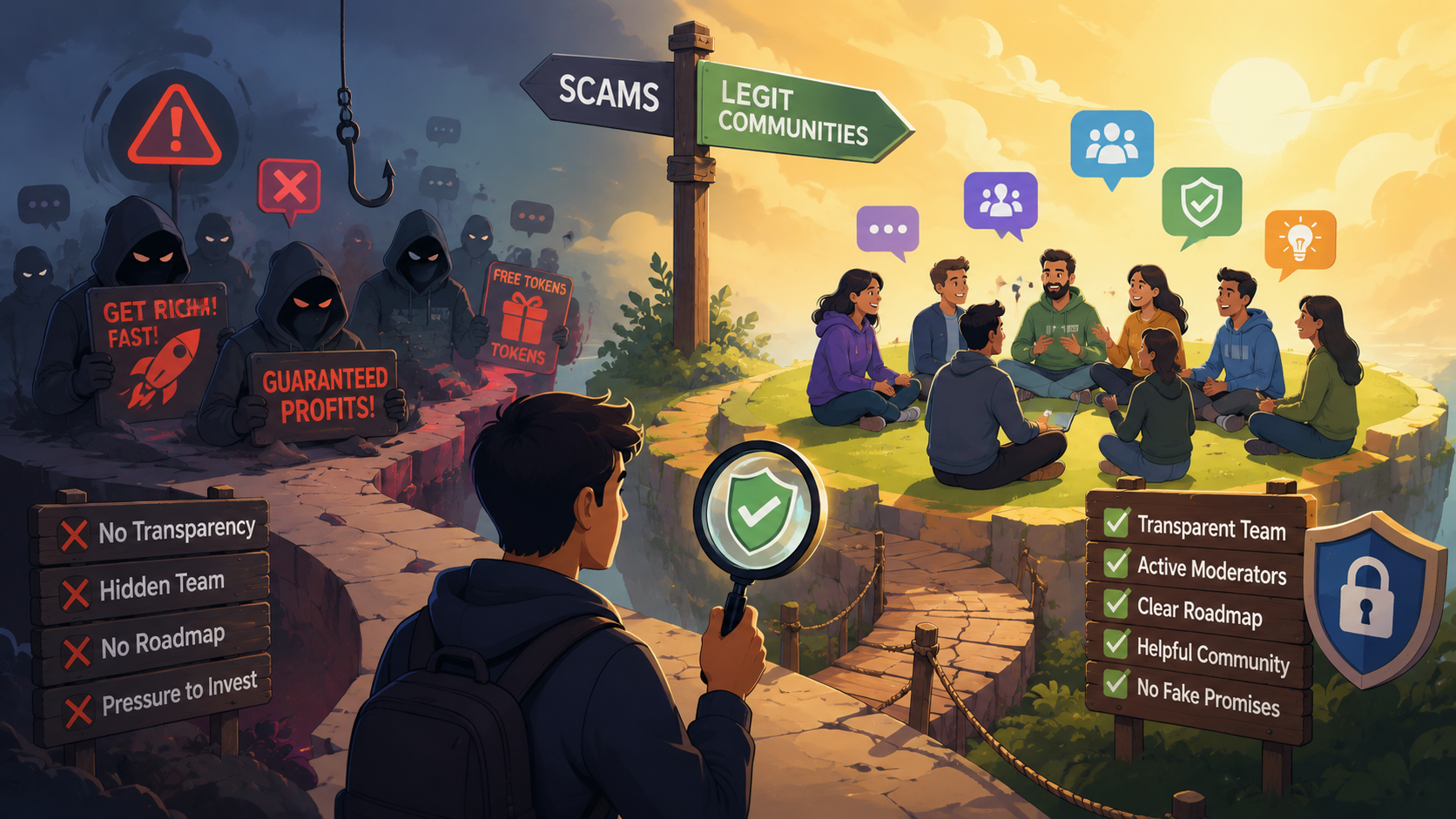
The cryptocurrency world is built around communities. Whether you're learning about blockchain, following a new project, or participating in governance, you'll likely spend time in Discord servers, Telegram groups, forums, Reddit communities, and social media. While many of these communities are welcoming and educational, others exist primarily to deceive newcomers through scams, fake promises, and manipulation.
Learning how to recognize trustworthy crypto communities is one of the most valuable skills you can develop. It can protect your funds, your personal information, and your confidence while helping you connect with people who genuinely share your interests.
Why Community Matters
Unlike traditional companies, many cryptocurrency projects rely heavily on their communities. Members help test products, report bugs, create educational content, organize events, vote on governance proposals, and welcome newcomers.
A healthy community often reflects the overall quality of a project. Even if the technology is excellent, poor communication or dishonest behavior can be warning signs. Likewise, projects with transparent teams and engaged members often build stronger ecosystems over time.
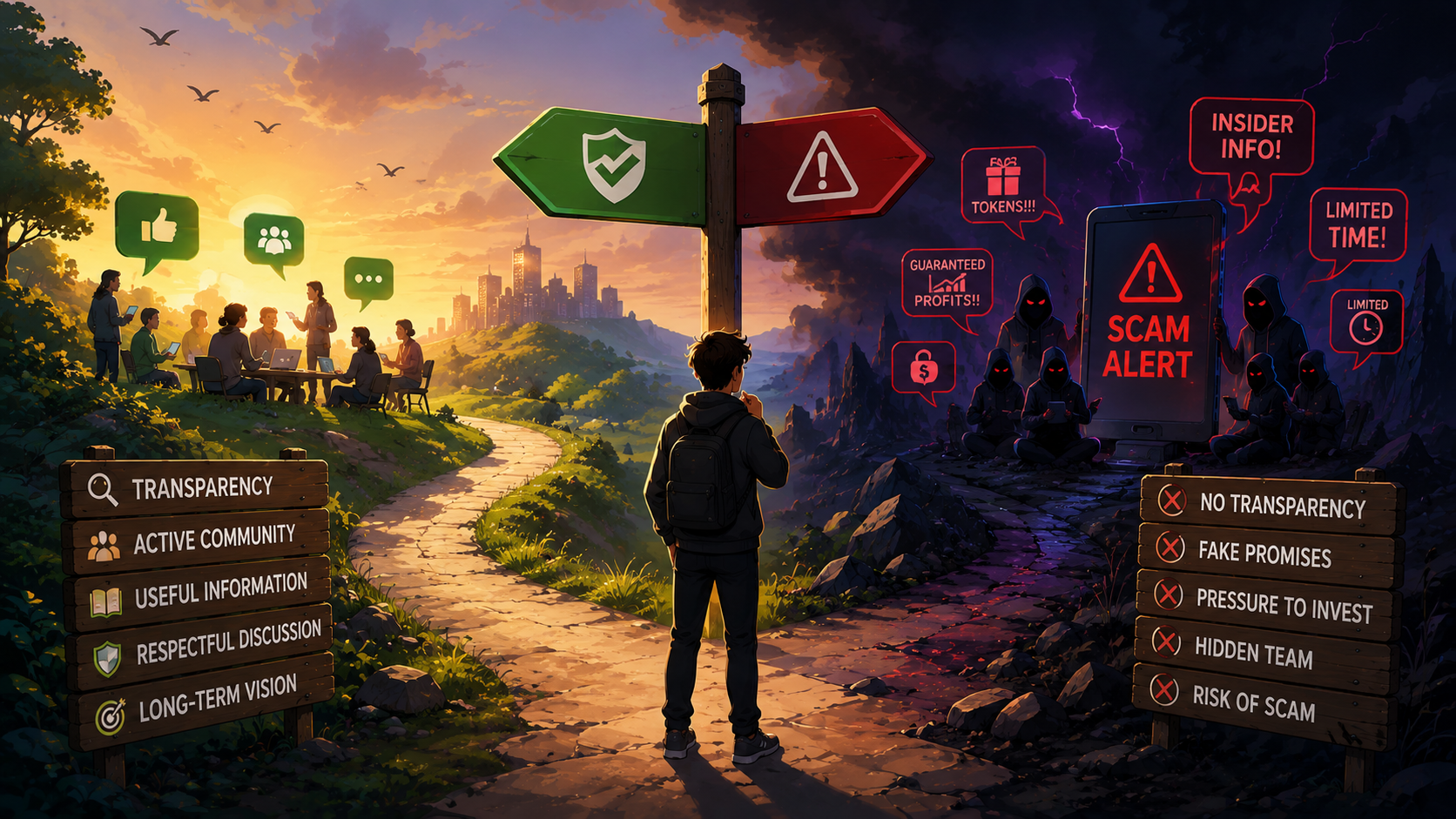
Look for Transparency
Legitimate communities are generally open about who they are and what they are building.
Good signs include:
- Clear project documentation
- Public roadmaps and development updates
- Moderators who identify themselves
- Links to official websites and social media accounts
- Honest discussions about both successes and challenges
Be cautious if you cannot determine who operates the community or if basic information about the project is missing.
Evaluate the Quality of Discussion
The conversations inside a community reveal a lot.
Healthy communities usually discuss:
- Technology
- Development progress
- Tutorials and guides
- Governance proposals
- Partnerships
- User support
- Security practices
Scam communities often focus almost entirely on:
- Price predictions
- "Guaranteed" profits
- Urgent buying opportunities
- Constant hype
- Referral programs
- Recruiting new members
If every conversation revolves around getting rich quickly, that's a major warning sign.
Beware of Unrealistic Promises
One of the oldest crypto scams is offering unrealistic returns.
No legitimate investment can guarantee profits or eliminate risk. Be skeptical of claims like:
- Guaranteed daily income
- Risk-free investments
- Double your crypto
- Secret insider opportunities
- Limited-time offers that require immediate payment
Real blockchain projects discuss products, technology, adoption, and long-term goals rather than promising instant wealth.
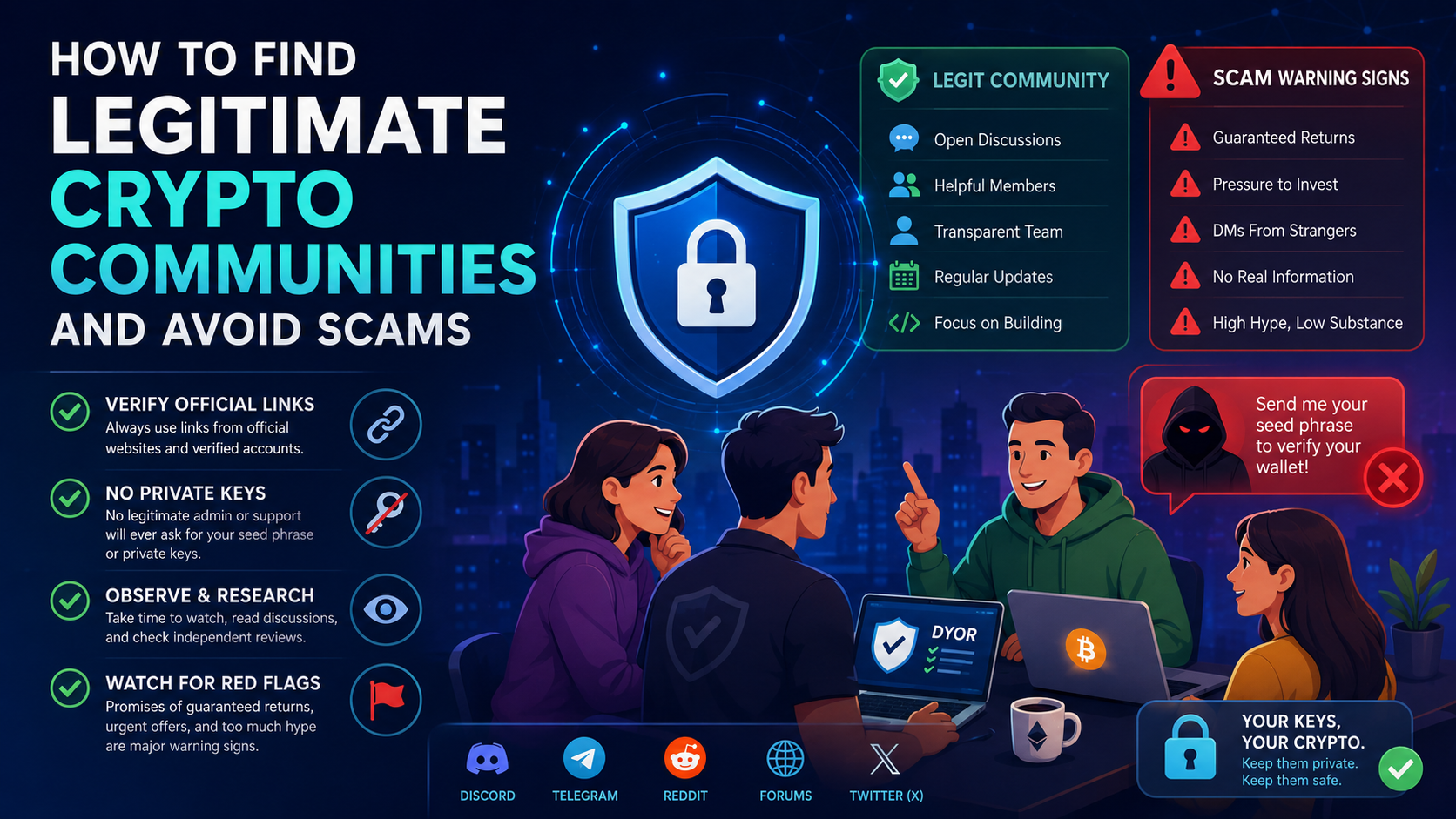
Verify Official Links
Scammers frequently create fake Discord servers, Telegram groups, websites, and social media accounts that closely resemble legitimate projects.
Before joining a community:
- Visit the official project website.
- Follow links from verified accounts.
- Double-check URLs.
- Compare usernames carefully.
- Avoid clicking random invitation links shared by strangers.
A single misplaced letter in a domain name can lead to a phishing website designed to steal your wallet credentials.
Never Share Your Seed Phrase
This rule cannot be repeated often enough.
No legitimate moderator, administrator, developer, or support representative will ever ask for:
- Your seed phrase
- Your private keys
- Wallet recovery words
- Passwords
- Authentication codes
Anyone requesting this information is attempting to steal your assets.
Watch How Moderators Behave
Good moderation creates a welcoming and informative environment.
Professional moderators:
- Answer questions patiently
- Enforce community rules consistently
- Remove spam
- Warn members about scams
- Encourage respectful discussion
Red flags include moderators who:
- Pressure users into investing
- Delete legitimate criticism
- Ban anyone asking reasonable questions
- Send unsolicited private messages
- Offer exclusive investment opportunities
Trustworthy moderators focus on supporting the community, not selling to it.
Ignore Unsolicited Direct Messages
One of the most common crypto scams begins with a friendly private message.
Someone may claim to be:
- A moderator
- Customer support
- A project developer
- A successful investor
- A giveaway organizer
They may offer investment advice, technical support, or exclusive opportunities.
In almost every legitimate crypto community, moderators explicitly warn users that they will never contact members first through private messages.
If someone does, treat it with extreme caution.
Check Independent Opinions
Don't rely solely on information inside the project's own community.
Look for discussions on:
- Independent forums
- Community review platforms
- Developer communities
- Blockchain explorers
- Open-source repositories
- Educational websites
If every positive review comes only from the project's own channels, you may not be seeing the complete picture.
Observe Before Participating
You don't need to invest immediately.
Spend several days observing:
- How members interact
- Whether questions receive helpful answers
- How criticism is handled
- Whether moderators are active
- Whether announcements are consistent
A few days of observation can reveal far more than a flashy marketing campaign.
Learn to Recognize Emotional Manipulation
Scammers often rely on emotions rather than facts.
Common tactics include:
- Fear of missing out (FOMO)
- Artificial countdown timers
- Fake urgency
- Celebrity endorsements
- Claims that "everyone is buying"
- Pressure to act immediately
Legitimate communities encourage informed decision-making and allow members to research before participating.
Check Project Activity
A legitimate community usually reflects ongoing development.
Look for evidence such as:
- Regular software updates
- Active Git repositories
- Developer discussions
- Community events
- Educational articles
- Governance proposals
- Bug fixes and release notes
A silent project with constant marketing but little actual development deserves extra scrutiny.
Protect Your Personal Information
Even trustworthy communities are public spaces.
Avoid sharing:
- Wallet balances
- Recovery phrases
- Personal identification
- Home addresses
- Financial details
- Private documents
Keeping personal information private reduces the risk of targeted attacks and social engineering.
Report Suspicious Activity
If you encounter scammers, fake accounts, or phishing attempts:
- Report them to community moderators.
- Warn other members.
- Block suspicious users.
- Avoid engaging with scammers.
Most legitimate communities actively work to remove malicious actors and appreciate reports from vigilant members.
Building Long-Term Trust
The best crypto communities are built over years, not weeks. They attract members through transparency, education, respectful discussion, and consistent development rather than exaggerated marketing.
As you gain experience, you'll become better at identifying genuine communities that contribute to the broader blockchain ecosystem. Taking a little extra time to verify information, research projects, and observe community behavior can prevent costly mistakes and lead you toward valuable learning opportunities and lasting connections.
Ultimately, crypto is about more than technology or price charts. It's about people working together to build decentralized systems. Finding the right communities allows you to learn, contribute, and participate safely while avoiding the scams that continue to target newcomers every day.
Pick your reaction
Post your comment