
One of the first concepts every cryptocurrency user encounters is the idea of public keys and private keys. While these terms may sound technical, they are fundamental to how blockchain networks keep digital assets secure without relying on banks or other central authorities.
Understanding the difference between public and private keys is essential before buying, sending, or storing cryptocurrency. Once you understand how they work together, you'll have a much better grasp of why self-custody is possible and why protecting your private key is so important.
Why Cryptocurrencies Need Keys
Traditional online banking relies on usernames, passwords, and financial institutions to verify ownership and authorize transactions.
Cryptocurrencies work differently.
Instead of proving your identity to a bank, you prove ownership of your funds using cryptography. This is where public and private keys come in.
Together they allow you to:
- Receive cryptocurrency
- Prove ownership of your wallet
- Authorize transactions
- Keep your funds secure without a third party
This system is known as public-key cryptography, and it is one of the foundations of blockchain technology.
What Is a Private Key?
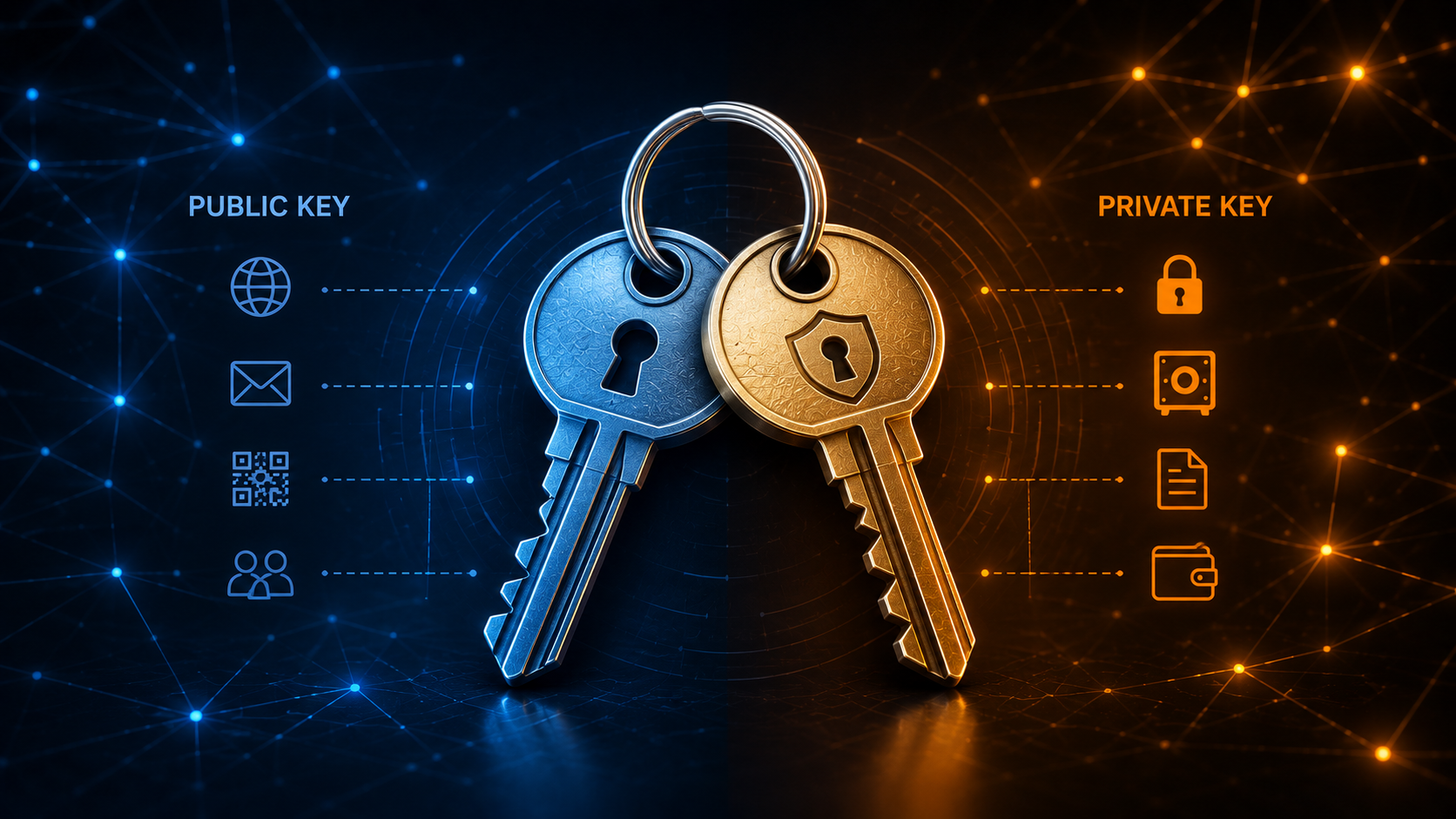
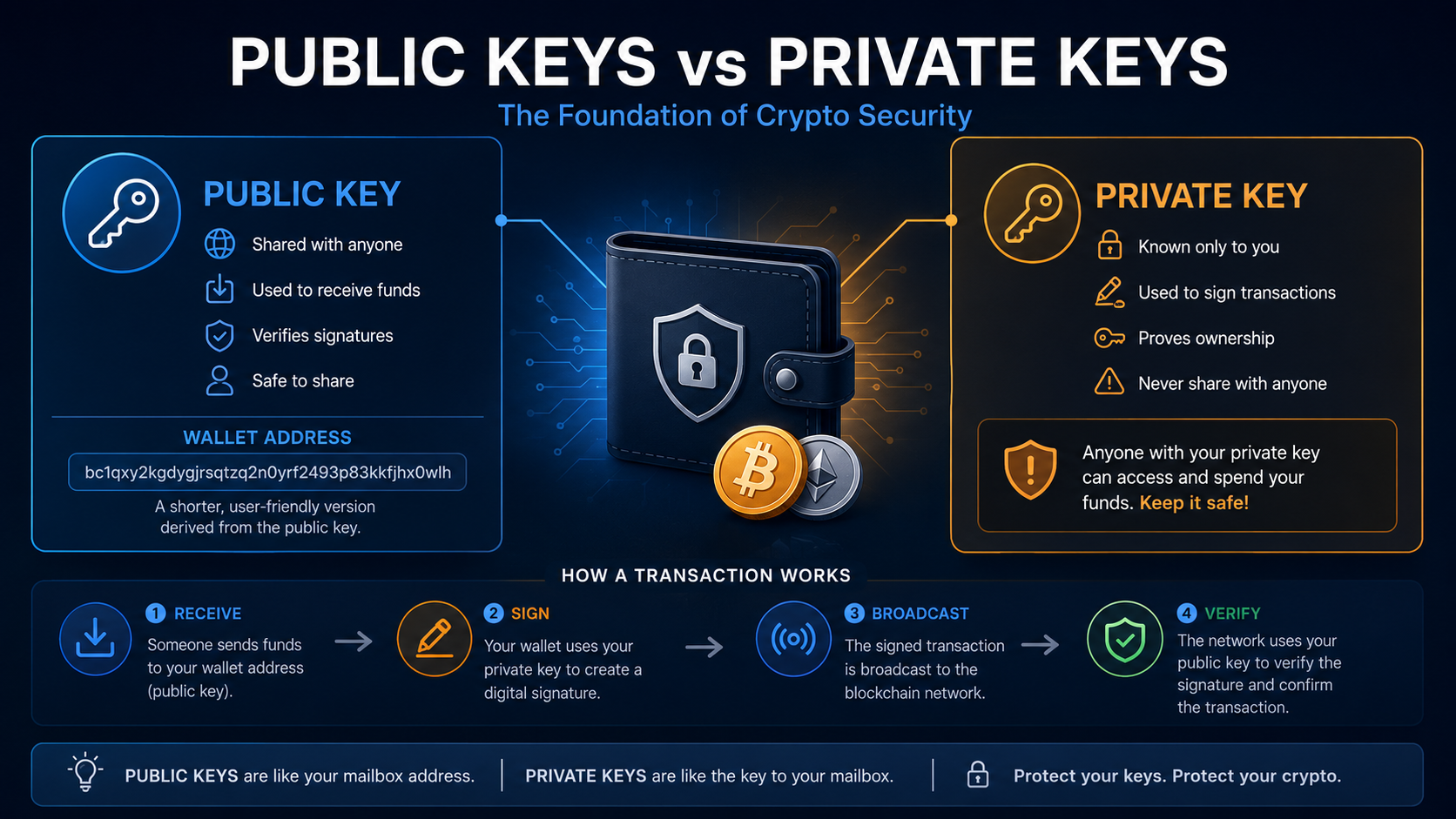
A private key is a long, randomly generated number that gives you complete control over your cryptocurrency.
Think of it as the master password to your wallet.
Anyone who possesses your private key can:
- Spend your coins
- Transfer your assets
- Sign blockchain transactions
- Access your wallet
Because of this, your private key should never be shared with anyone.
Unlike a password, there is no "Forgot Password" button. If you lose your private key and don't have a backup, your cryptocurrency is usually lost forever.
What Is a Public Key?
A public key is mathematically derived from your private key.
While it is connected to your private key, modern cryptography makes it practically impossible to calculate the private key from the public one.
The public key allows others to:
- Send cryptocurrency to you
- Verify digital signatures
- Confirm ownership without revealing your secret
Sharing your public key is completely safe.
Public Key vs Wallet Address
Many beginners confuse public keys with wallet addresses.
Although closely related, they are not exactly the same thing.
A wallet address is usually a shortened, encoded version of a public key that is easier for people to use.
For example:
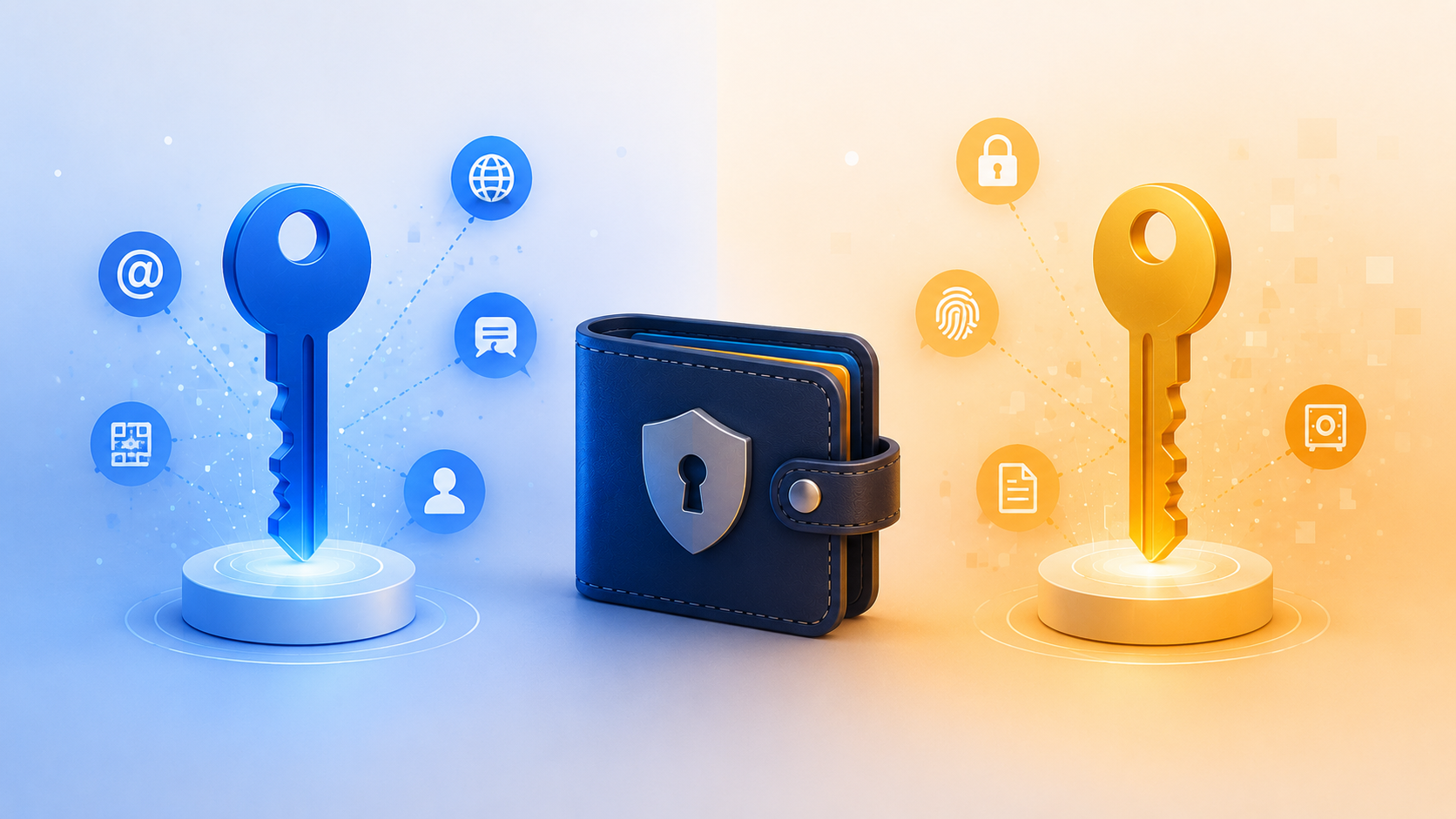
- Private Key → Secret ownership credential
- Public Key → Generated from the private key
- Wallet Address → Generated from the public key
Most users only ever share their wallet address.
A Simple Real-World Analogy
Imagine a secure mailbox.
Your mailbox address is like your wallet address.
Anyone can see it and send letters to it.
The key that opens the mailbox is like your private key.
Everyone may know where your mailbox is, but only the person with the key can open it and remove the contents.
Blockchain wallets work in a very similar way.
How Transactions Work
Let's walk through a simple example.
Step 1: You Create a Wallet
Your wallet software generates:
- A private key
- A public key
- One or more wallet addresses
These are created automatically.
Step 2: Someone Sends You Cryptocurrency
They only need your wallet address.
No passwords or private information are required.
The blockchain records that the funds now belong to the owner of the corresponding private key.
Step 3: You Spend the Coins
When sending cryptocurrency, your wallet uses your private key to create a digital signature.
This signature proves:
- You own the funds.
- The transaction is genuine.
- The data hasn't been altered.
Importantly, your private key itself is never sent across the network.
Only the digital signature is broadcast.
Step 4: The Network Verifies Everything
Other computers on the blockchain use your public key to verify the signature.
If everything matches, the transaction is accepted.
If not, it is rejected.
This entire process happens within seconds on many modern blockchains.
What Is a Digital Signature?
A digital signature is cryptographic proof that a transaction was authorized by the holder of the private key.
It allows everyone on the network to verify:
- The sender owns the wallet
- The transaction has not been changed
- The signature is valid
Without revealing the private key itself.
This is one of blockchain's greatest security innovations.
Why Can't Someone Guess My Private Key?
Private keys are extremely large random numbers.
For example, Bitcoin uses 256-bit private keys.
That means there are approximately:
2²⁵⁶ possible private keys
This number is unimaginably large.
Even if every computer on Earth worked together for billions of years, randomly guessing someone's private key would still be effectively impossible with today's technology.
Why Seed Phrases Matter
Most modern wallets no longer ask users to write down individual private keys.
Instead, they generate a seed phrase, also called a recovery phrase.
A seed phrase usually contains:
- 12 words
- 18 words
- 24 words
These words can recreate all of your wallet's private keys.
In other words:
Your seed phrase is your backup.
Anyone with your seed phrase has access to your funds.
Treat it exactly like your private key.
Common Mistakes Beginners Make
Sharing Their Seed Phrase
No legitimate wallet, exchange, support team, or blockchain project will ever ask for your seed phrase.
If someone does, it is almost certainly a scam.
Taking Screenshots
Saving your private key or recovery phrase in screenshots, cloud storage, email drafts, or messaging apps increases the risk of theft.
Offline backups are generally much safer.
Confusing Public and Private Keys
Some beginners worry about sharing their wallet address.
Sharing your wallet address is expected.
Sharing your private key or seed phrase is never safe.
Believing Customer Support Can Recover Lost Keys
Blockchain networks do not have password reset systems.
If your private key is permanently lost and no backup exists, nobody can recover your wallet.
Hot Wallets vs Cold Wallets
The difference between wallet types often comes down to how private keys are stored.
Hot Wallets
Examples include:
- Mobile wallets
- Desktop wallets
- Browser extension wallets
Private keys remain on an internet-connected device.
Advantages:
- Fast
- Convenient
- Easy for everyday use
Disadvantages:
- More exposed to malware and phishing attacks
Cold Wallets
Examples include:
- Hardware wallets
- Paper backups
- Offline storage
Private keys remain offline.
Advantages:
- Excellent long-term security
- Strong protection against online attacks
Disadvantages:
- Less convenient for frequent transactions
Many experienced users keep smaller amounts in hot wallets and larger holdings in cold storage.
Best Practices for Protecting Your Keys
To keep your cryptocurrency safe:
- Never share your private key.
- Never share your recovery phrase.
- Verify wallet addresses before sending funds.
- Keep multiple offline backups of your seed phrase.
- Use trusted wallet software.
- Enable additional security features where available.
- Beware of phishing websites and fake support accounts.
- Consider using a hardware wallet for significant amounts.
Frequently Asked Questions
Can two people have the same private key?
In theory, yes.
In practice, the number of possible keys is so enormous that the chance is effectively zero.
Can I change my private key?
Not directly.
Creating a new wallet generates a completely new private key.
Is my wallet address secret?
No.
Wallet addresses are designed to be shared so others can send you cryptocurrency.
Does the blockchain store my private key?
No.
Your private key never appears on the blockchain.
Only digitally signed transactions are published.
Can someone steal my cryptocurrency with only my wallet address?
No.
Knowing your wallet address allows someone to view public transactions and send you funds, but they cannot spend your cryptocurrency without your private key.
Final Thoughts
Public keys and private keys form the foundation of cryptocurrency ownership. Your public key and wallet address allow others to send you funds and verify your transactions, while your private key proves ownership and authorizes spending without ever leaving your wallet.
The most important rule to remember is simple: your private key and seed phrase are yours alone. Protect them carefully, back them up securely, and never share them with anyone. By understanding this relationship, you'll be much better prepared to use blockchain technology safely and confidently, whether you're sending your first transaction or managing a growing crypto portfolio.
Pick your reaction
Post your comment