
Buying cryptocurrency is often the first step in a much larger journey. Many newcomers focus on choosing an exchange and making their first purchase, but what happens next is just as important. Once you own crypto, you need to decide where to store it, how to protect it, and how to maintain control over your assets.
This is where the concept of self-custody comes in. Understanding self-custody is one of the most important skills any crypto user can learn, as it allows you to truly own and control your digital assets without relying on a third party.
What Is Self-Custody?
Self-custody means that you control the private keys that grant access to your cryptocurrency. Unlike traditional bank accounts, cryptocurrencies are not stored in a bank or held by a central authority. Ownership is determined by whoever controls the private keys associated with a wallet address.
When your crypto remains on a centralized exchange, the exchange controls those keys on your behalf. While this may be convenient, it means you are trusting another company to safeguard your assets. Self-custody removes that dependency and gives you direct control over your funds.
A common phrase in the crypto community is:
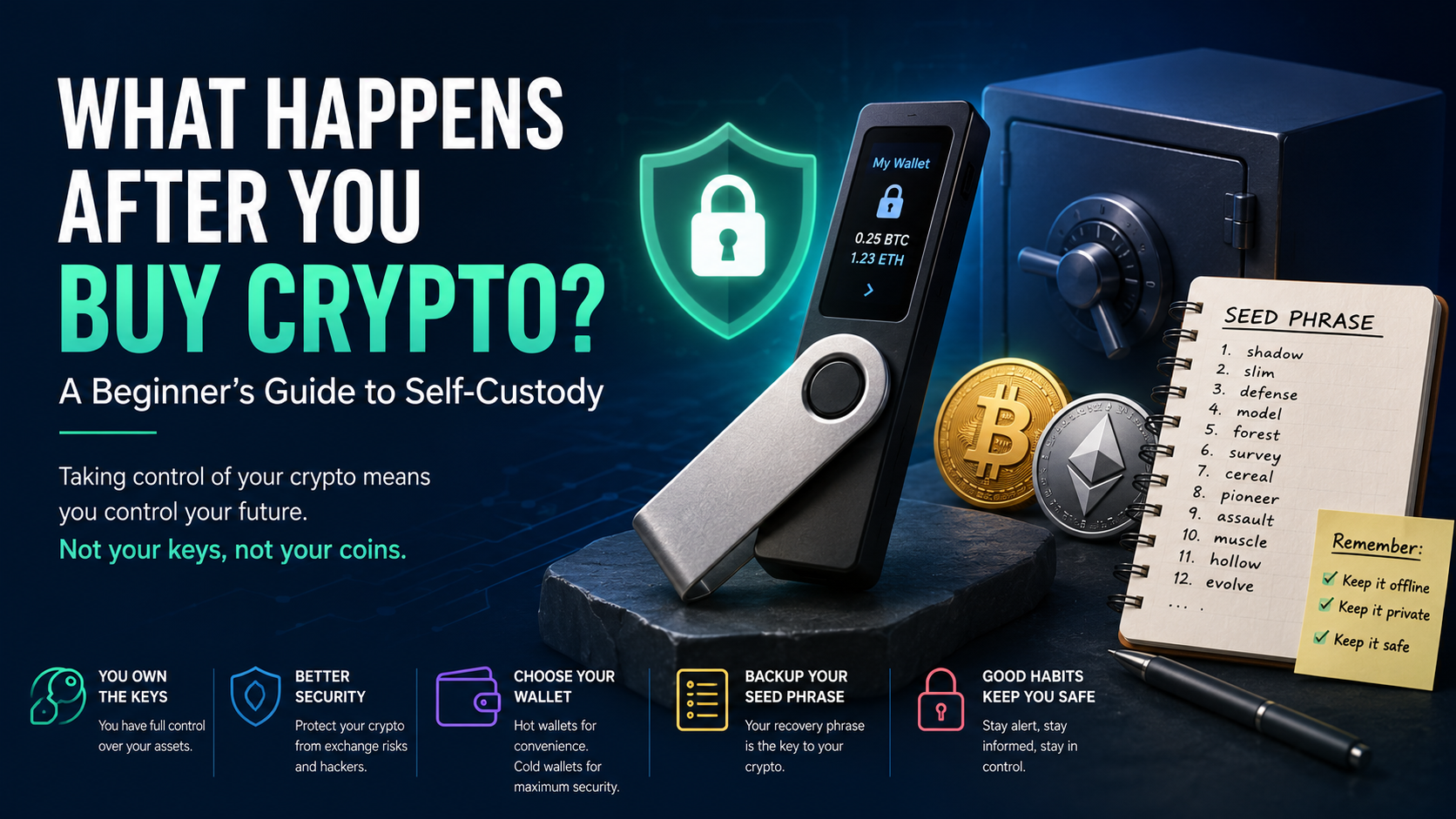
"Not your keys, not your coins."
This highlights the idea that true ownership only exists when you control the private keys yourself.
Why Do People Move Crypto Off Exchanges?
Cryptocurrency exchanges are useful for buying, selling, and trading digital assets. However, keeping large amounts of crypto on an exchange comes with certain risks.
These risks include:
- Exchange hacks and security breaches
- Insolvency or bankruptcy of the platform
- Frozen accounts or withdrawal restrictions
- Regulatory actions affecting access to funds
- Human errors by the exchange operator
While major exchanges invest heavily in security, history has shown that even large platforms can experience problems. Many experienced crypto users therefore choose to store long-term holdings in their own wallets.
Understanding Crypto Wallets
A crypto wallet does not actually store coins. Instead, it stores the private keys needed to access assets recorded on the blockchain.
There are two main categories of wallets:
Hot Wallets
Hot wallets are connected to the internet.
Examples include:
- Mobile wallets
- Browser extension wallets
- Desktop wallets
Advantages:
- Easy to use
- Convenient for everyday transactions
- Quick access to funds
Disadvantages:
- More vulnerable to malware and phishing attacks
- Less secure for storing large amounts
Cold Wallets
Cold wallets store private keys offline.
Examples include:
- Hardware wallets
- Air-gapped devices
- Paper backups
Advantages:
- Significantly higher security
- Protection against most online attacks
Disadvantages:
- Less convenient for frequent transactions
- Requires careful backup management
Many users keep small amounts in hot wallets for daily use and larger holdings in cold storage.
The Importance of Seed Phrases
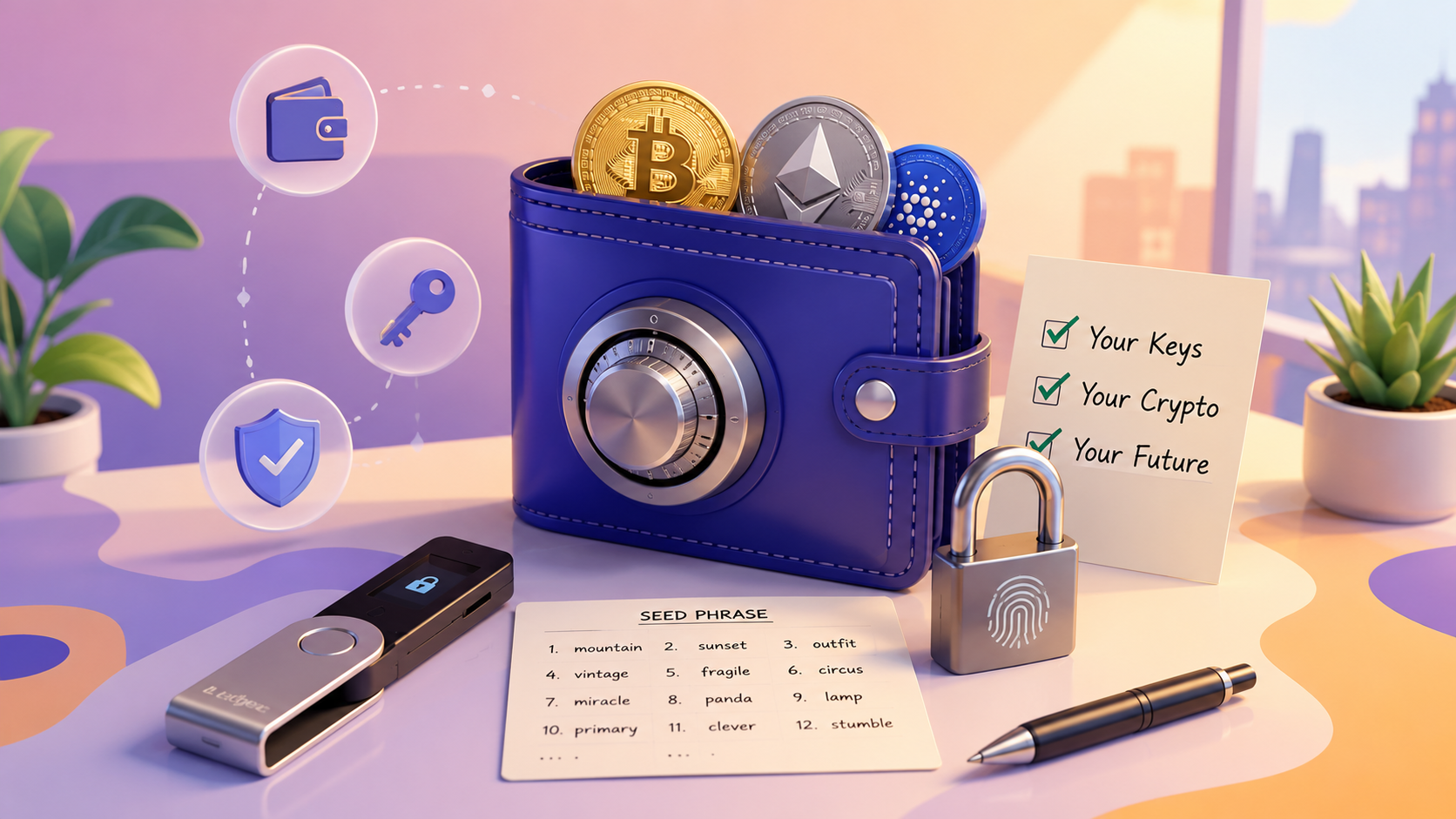
When creating a self-custody wallet, you will usually receive a recovery phrase, also known as a seed phrase.
This phrase typically consists of 12 or 24 words and acts as the master key to your wallet.
Anyone who gains access to this phrase can restore the wallet and control all associated assets.
Because of this, your seed phrase should:
- Never be shared with anyone
- Never be stored in screenshots
- Never be sent through email or messaging apps
- Be backed up securely offline
- Be stored in multiple safe locations if possible
Many crypto thefts occur because users unknowingly reveal their recovery phrases to scammers.
Common Security Mistakes
New crypto users often make avoidable mistakes that can result in permanent losses.
Some of the most common include:
Falling for Phishing Websites
Scammers frequently create fake versions of popular wallets, exchanges, and crypto services. Always verify URLs before entering sensitive information.
Sharing Recovery Phrases
Legitimate support staff will never ask for your seed phrase. Anyone requesting it is almost certainly attempting to steal your funds.
Storing Large Amounts on Exchanges
Keeping all assets on an exchange creates a single point of failure.
Clicking Unknown Links
Fake airdrops, giveaways, and NFT offers are common attack methods. Exercise caution when connecting your wallet to unfamiliar websites.
Neglecting Software Updates
Wallet software and hardware wallet firmware should be kept up to date to benefit from the latest security improvements.
Choosing the Right Wallet
The best wallet depends on your needs and experience level.
Consider:
- Supported cryptocurrencies
- Ease of use
- Security features
- Backup and recovery options
- Community reputation
- Open-source development
Beginners often start with user-friendly mobile wallets, while long-term investors may eventually choose dedicated hardware wallets for enhanced security.
Building Good Security Habits
Crypto security is not about a single tool. It is about developing consistent habits.
Good practices include:
- Using strong, unique passwords
- Enabling two-factor authentication
- Verifying website addresses carefully
- Keeping backups of recovery phrases
- Using hardware wallets for larger holdings
- Staying informed about emerging scams
The more valuable your holdings become, the more important these habits are.
Final Thoughts
Buying cryptocurrency is only the beginning. Learning how to securely store and manage your assets is an essential part of participating in the crypto ecosystem. Self-custody gives users direct ownership, greater independence, and protection from many of the risks associated with centralized platforms.
While self-custody comes with additional responsibility, taking the time to understand wallets, private keys, and recovery phrases can significantly improve your security and confidence as a crypto user. By adopting good security practices from the start, you can enjoy the benefits of cryptocurrency while minimizing unnecessary risks.

Pick your reaction
Post your comment