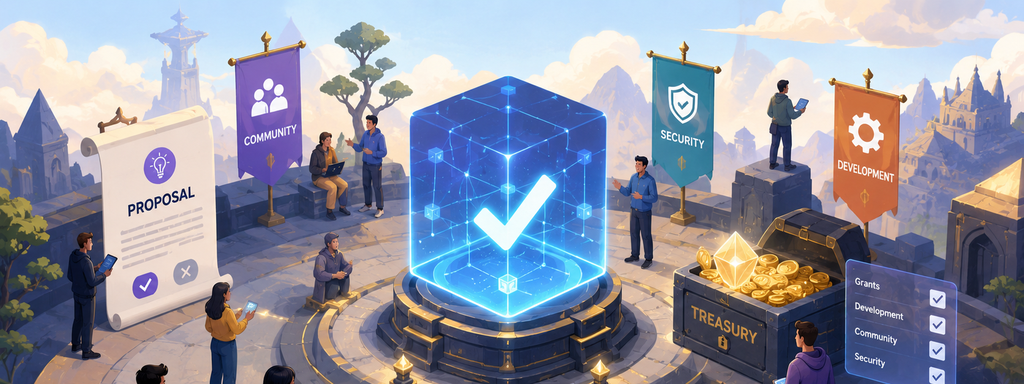

Blockchain networks are decentralized systems that operate without a central authority. Unlike traditional organizations, where decisions are often made by executives, boards, or governments, blockchain ecosystems rely on governance mechanisms that allow communities to participate in shaping the future of the network.
Governance determines how rules are changed, upgrades are implemented, funds are allocated, and disputes are resolved. Understanding blockchain governance is essential for anyone interested in cryptocurrencies, decentralized applications, and the broader world of Web3.
What Is Blockchain Governance?
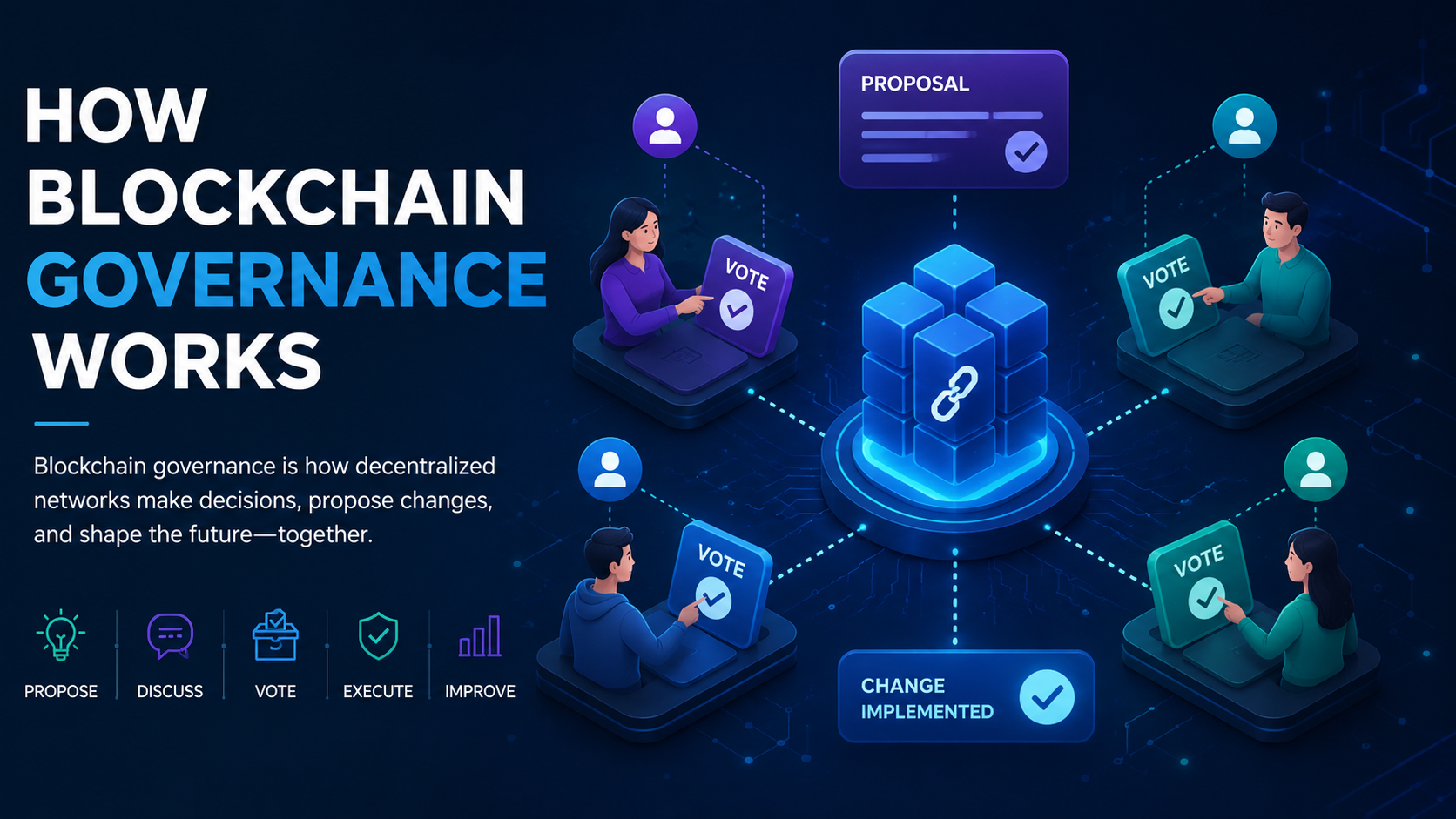
Blockchain governance refers to the processes and mechanisms used to make decisions about a blockchain network. These decisions can include software upgrades, protocol changes, treasury spending, security improvements, and community initiatives.
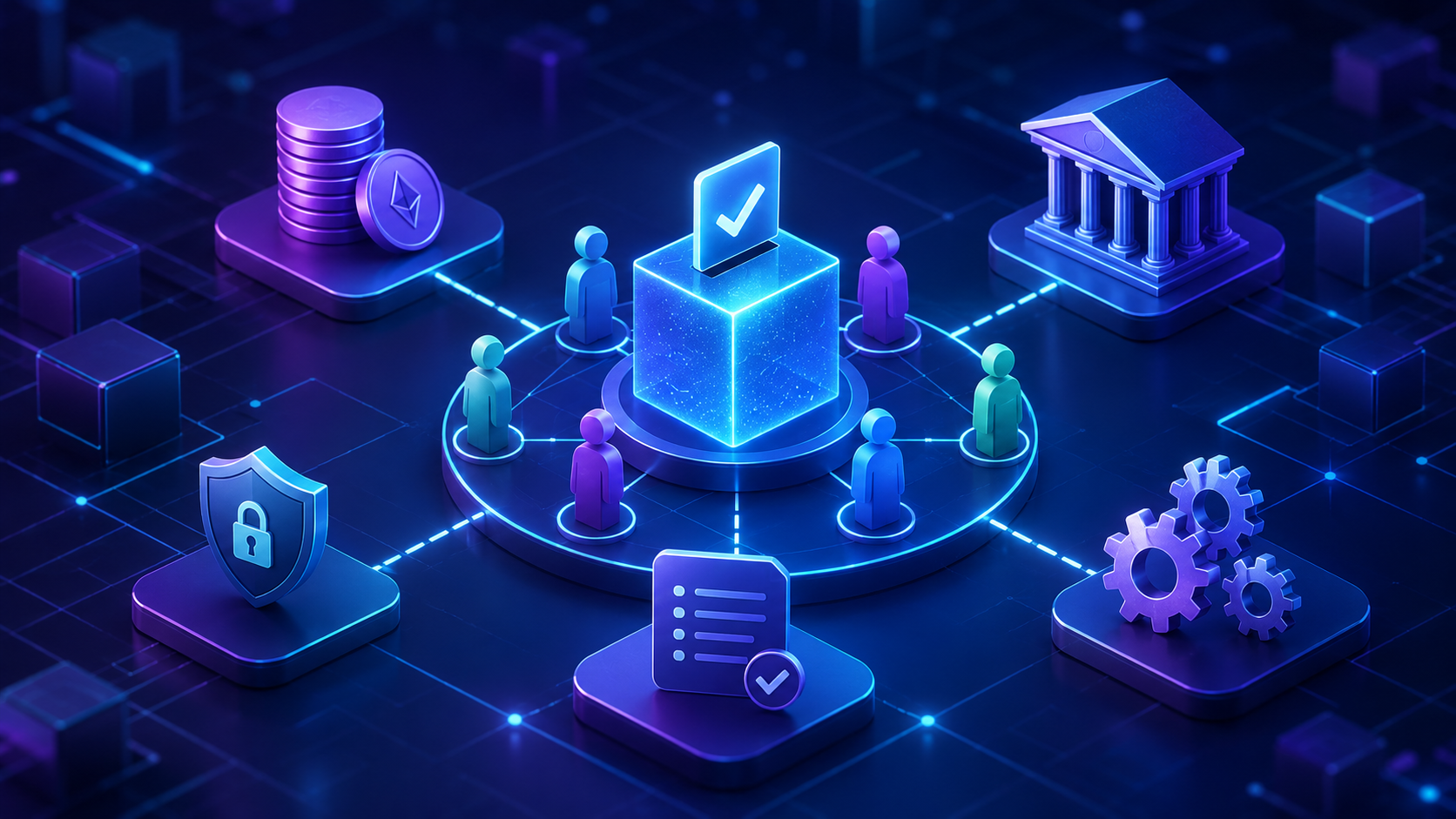
Since blockchain networks are decentralized, governance systems are designed to distribute decision-making power among stakeholders rather than concentrating it in a single entity. Depending on the project, stakeholders may include developers, validators, miners, token holders, community members, or specialized governance councils.
The primary goal of governance is to ensure that a blockchain can evolve over time while maintaining transparency, security, and community trust.
Why Governance Is Important
No blockchain is perfect from the moment it launches. Technology evolves, security threats emerge, and user needs change. Governance allows a network to adapt to these changes without relying on a central authority.
Effective governance helps:
- Implement new features and improvements
- Fix bugs and security vulnerabilities
- Manage community funds and treasuries
- Resolve disagreements within the ecosystem
- Maintain long-term sustainability
- Coordinate network upgrades
Without governance, a blockchain may struggle to evolve or respond to challenges, potentially leading to stagnation or fragmentation.
On-Chain vs. Off-Chain Governance
Blockchain governance generally falls into two broad categories: on-chain governance and off-chain governance.
On-Chain Governance
On-chain governance uses the blockchain itself to manage proposals and voting. Token holders or validators can submit proposals and cast votes directly through the network.
The voting process is transparent and recorded permanently on the blockchain. Once a proposal passes, the network may automatically execute the approved changes or prepare them for implementation.
Benefits of on-chain governance include:
- Transparency
- Verifiable voting records
- Automated execution
- Reduced reliance on informal coordination
Projects such as Tezos and Polkadot are well-known examples of networks that incorporate on-chain governance mechanisms.
Off-Chain Governance
Off-chain governance takes place outside the blockchain itself. Discussions occur through forums, social media platforms, developer meetings, community calls, and governance websites.
While voting may still occur, the results are often implemented manually through software updates and community coordination.
Benefits of off-chain governance include:
- Greater flexibility
- More detailed discussions
- Easier participation for non-technical users
- Ability to consider broader community feedback
Many major networks, including Bitcoin and Ethereum, rely heavily on off-chain governance processes.
Governance Proposals
Most governance systems revolve around proposals.
A proposal is a formal suggestion for changing or improving the network. Examples include:
- Adjusting transaction fees
- Changing staking rewards
- Funding development teams
- Upgrading network infrastructure
- Introducing new features
- Modifying governance rules themselves
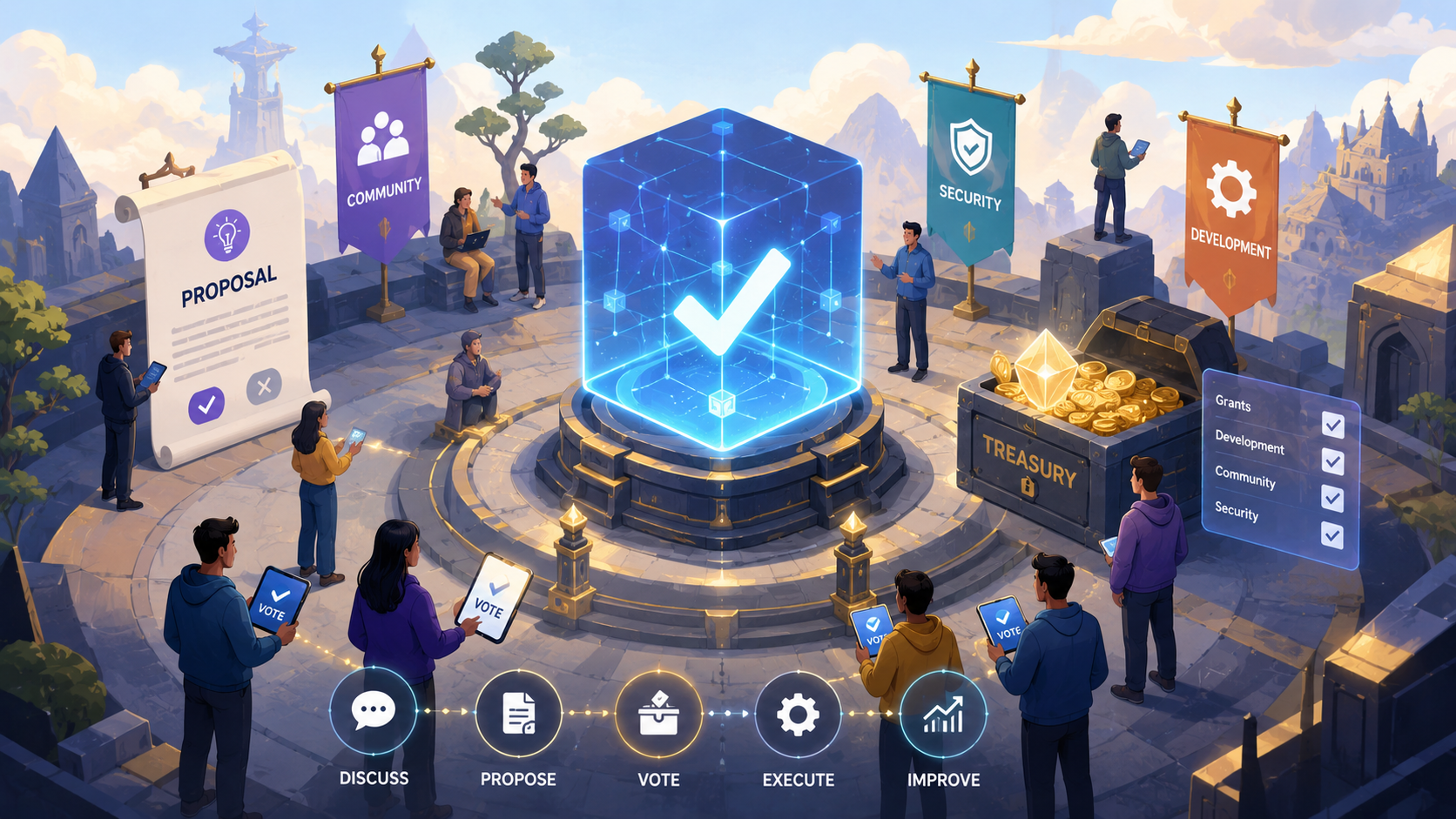
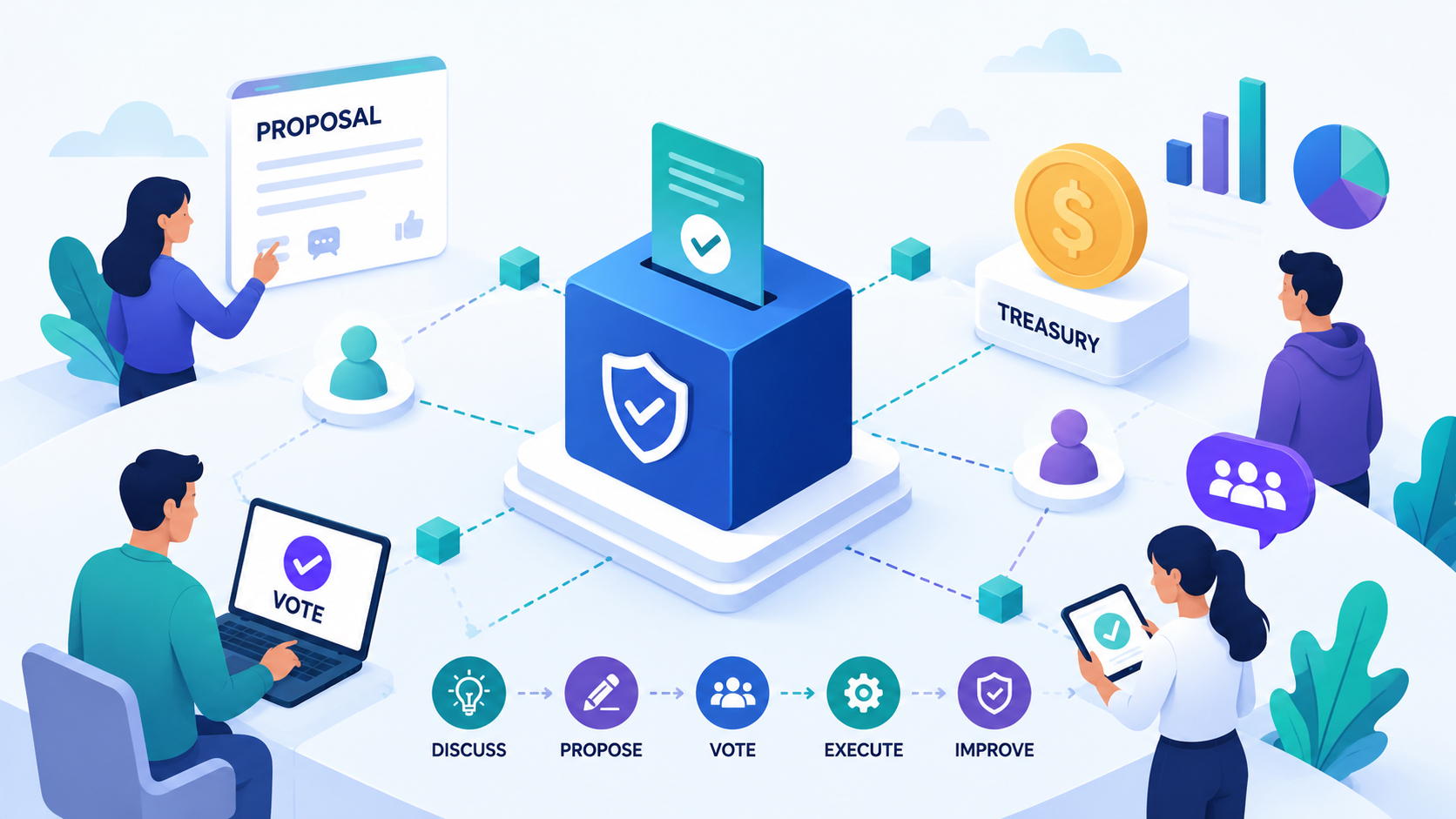
Before a proposal reaches a vote, it often undergoes extensive discussion and review. Community members can ask questions, suggest modifications, or express concerns.
This review process helps ensure that decisions are informed and transparent.
Voting Mechanisms
Different blockchain projects use different voting systems.
Token-Based Voting
The most common approach gives voting power based on the number of governance tokens a participant holds.
In this model:
- More tokens generally mean greater voting power.
- Participants can vote directly or delegate their votes to trusted representatives.
- Decisions are often approved based on majority support.
This system aligns decision-making power with economic stake in the network but can also lead to concerns about large holders having disproportionate influence.
Validator Voting
Proof-of-Stake networks often grant voting rights to validators who help secure the network.
Validators may vote on:
- Software upgrades
- Parameter changes
- Governance proposals
- Emergency measures
The voting power of validators is frequently linked to the amount of stake delegated to them.
Delegated Governance
Some networks allow token holders to delegate their voting power to representatives who vote on their behalf.
This approach can improve participation rates because not every user has the time or expertise to evaluate every proposal.
Delegated governance is similar to representative democracy in traditional political systems.
Governance Tokens
Many blockchain projects issue governance tokens specifically designed to facilitate participation.
Governance tokens typically allow holders to:
- Submit proposals
- Vote on network changes
- Influence treasury spending
- Participate in ecosystem decision-making
Examples include governance tokens used by many decentralized finance (DeFi) protocols and decentralized autonomous organizations (DAOs).
Governance tokens give communities a direct role in shaping the direction of a project rather than relying solely on developers or company leadership.
Treasury Governance
Many modern blockchain ecosystems maintain community treasuries funded through transaction fees, inflation, staking rewards, or other network revenues.
Governance participants can vote on how treasury funds are spent.
Common uses include:
- Software development
- Marketing campaigns
- Security audits
- Educational programs
- Community events
- Ecosystem grants
Treasury governance allows communities to collectively invest in the growth and sustainability of the ecosystem.
Hard Forks and Governance
One of the most significant outcomes of governance disagreements is a hard fork.
A hard fork occurs when part of a community adopts a new version of the blockchain software while another group continues using the old version. This creates two separate networks.
Famous examples include:
- Bitcoin Cash splitting from Bitcoin
- Ethereum Classic splitting from Ethereum
Hard forks demonstrate that governance is not always about achieving consensus. Sometimes communities fundamentally disagree about the future direction of a project.
Decentralized Autonomous Organizations (DAOs)
Many blockchain projects use Decentralized Autonomous Organizations, or DAOs, as governance structures.
A DAO is an organization governed by rules encoded in smart contracts and controlled by its members rather than a centralized management team.
DAO participants typically:
- Hold governance tokens
- Submit proposals
- Vote on decisions
- Manage treasury funds
- Guide project development
DAOs represent one of the most innovative experiments in decentralized governance and continue to evolve as blockchain technology matures.
Challenges of Blockchain Governance
Despite its advantages, blockchain governance faces several challenges.
Low Participation
Many token holders do not actively participate in governance votes, leading to low voter turnout.
Concentration of Power
Large token holders, often called "whales," may exert significant influence over outcomes.
Technical Complexity
Governance proposals can be highly technical, making it difficult for average users to evaluate them.
Slow Decision-Making
Reaching community consensus can take time, especially in large and diverse ecosystems.
Security Risks
Poorly designed governance systems may be vulnerable to manipulation, vote buying, or governance attacks.
Balancing decentralization, efficiency, and security remains one of the biggest challenges facing blockchain projects today.
The Future of Blockchain Governance
Blockchain governance continues to evolve as the industry matures. New approaches such as quadratic voting, reputation-based systems, delegated voting models, and hybrid governance structures are being explored to improve fairness and participation.
As decentralized networks become more widely adopted, governance will play an increasingly important role in determining their success. The ability for communities around the world to collectively make decisions without centralized control is one of the most revolutionary aspects of blockchain technology.
Conclusion
Blockchain governance is the framework that allows decentralized networks to adapt, improve, and grow over time. Through proposals, voting systems, governance tokens, DAOs, and community participation, blockchain ecosystems can make collective decisions without relying on traditional centralized leadership.
While governance models vary from project to project, they all share the same fundamental goal: enabling stakeholders to shape the future of the network. As blockchain technology continues to expand into finance, gaming, social platforms, and countless other industries, understanding governance will become increasingly important for anyone participating in the decentralized economy.
Pick your reaction
Post your comment