
Blockchain gaming has emerged as one of the most exciting intersections between gaming, digital ownership, and decentralized technology. While early blockchain games often focused heavily on token rewards and speculative assets, the industry is rapidly evolving toward experiences that prioritize gameplay, accessibility, and sustainable economies.
As technology improves and developers gain experience, blockchain gaming is moving closer to mainstream adoption. The future promises immersive virtual worlds, true ownership of digital assets, interoperable economies, and new ways for players to participate in the games they love.
The Evolution of Blockchain Gaming
The first generation of blockchain games introduced concepts such as non-fungible tokens (NFTs), play-to-earn mechanics, and decentralized marketplaces. These innovations allowed players to own in-game items, characters, and virtual land in ways that traditional games could not offer.
However, many early projects faced challenges. High transaction fees, limited scalability, complex onboarding processes, and unsustainable reward systems often hindered long-term growth. Some games attracted users primarily interested in financial rewards rather than engaging gameplay, creating economies that struggled when token prices declined.
The next generation of blockchain games is learning from these lessons. Developers are increasingly focused on creating enjoyable gaming experiences first, with blockchain technology operating seamlessly in the background.
True Digital Ownership
One of the most significant advantages of blockchain gaming is true ownership of digital assets. In traditional games, players purchase skins, weapons, collectibles, and other items that remain under the control of the game publisher. If a game shuts down or a player's account is banned, access to those assets can disappear.
Blockchain technology changes this model. NFTs allow players to own their digital items directly in their wallets. These assets can potentially be traded, sold, transferred, or even used across multiple games and platforms.
As standards mature, players may increasingly build digital collections that retain value and utility beyond a single game ecosystem.
Interoperability Between Games
A major vision for the future of blockchain gaming is interoperability. Instead of digital assets being locked into a single game, players may one day use the same character, vehicle, weapon, or cosmetic item across multiple virtual worlds.
While technical and artistic challenges remain, blockchain standards make this concept more feasible than ever before. Shared asset ecosystems could create entirely new opportunities for developers and players alike.
For example, a rare collectible earned in one game could unlock special content in another, creating interconnected gaming experiences that span multiple platforms and communities.
The Rise of Player-Owned Economies
Blockchain technology enables player-owned economies where users have greater control over the value they create. Rather than all economic activity being managed by a centralized publisher, players can participate directly in marketplaces and trading ecosystems.
Future games may allow players to:
- Trade assets freely on open marketplaces.
- Create and sell user-generated content.
- Earn rewards for contributing to game development.
- Participate in governance decisions.
- Build businesses within virtual worlds.
This shift could transform players from passive consumers into active participants within gaming ecosystems.
Improved Scalability and Lower Costs
Scalability has long been one of the biggest challenges for blockchain gaming. Modern games require thousands or even millions of transactions, making high fees and slow settlement times unacceptable.
Fortunately, blockchain infrastructure is improving rapidly.
Layer 2 networks, sidechains, and gaming-focused blockchains are providing significantly lower fees and higher transaction throughput. Technologies such as rollups, zero-knowledge proofs, and data availability solutions continue to reduce costs while maintaining security.
As blockchain transactions become faster, cheaper, and nearly invisible to players, gaming experiences can rival the smoothness of traditional online games.
Artificial Intelligence and Blockchain Gaming
Artificial intelligence is expected to play a major role in the future of blockchain gaming. AI can generate dynamic worlds, intelligent non-player characters, personalized quests, and adaptive storytelling experiences.
When combined with blockchain technology, AI-generated assets and content could become verifiable, tradable, and owned by players. This creates opportunities for entirely new game genres where users contribute to evolving virtual worlds while maintaining ownership of their creations.
AI-powered economies may also help balance in-game rewards, detect fraud, and create more sustainable virtual ecosystems.
The Growth of the Metaverse
Although the term "metaverse" has experienced varying levels of popularity, the underlying concept of interconnected virtual environments remains compelling.
Blockchain technology provides a foundation for persistent digital identities, asset ownership, and decentralized economies across virtual spaces. Future metaverse platforms may allow users to move between different experiences while maintaining ownership of their avatars, items, achievements, and digital property.
Gaming is likely to be one of the primary drivers of these interconnected virtual worlds.
Community Governance and Decentralization
Many blockchain games are experimenting with decentralized governance models. Through governance tokens and decentralized autonomous organizations (DAOs), players can participate in decisions regarding game updates, economic policies, and ecosystem development.
While fully decentralized governance presents challenges, it offers players a greater voice in shaping the future of the games they support. This approach can foster stronger communities and align incentives between developers and players.
Mainstream Adoption Challenges
Despite significant progress, several obstacles remain before blockchain gaming reaches mass adoption.
These challenges include:
- Simplifying wallet creation and management.
- Reducing technical complexity for new users.
- Addressing regulatory uncertainty in different regions.
- Preventing exploitative tokenomics.
- Maintaining security against hacks and scams.
- Convincing traditional gamers of blockchain's benefits.
The most successful future projects will likely integrate blockchain features in ways that enhance gameplay without requiring users to understand the underlying technology.
The Future Outlook
The future of blockchain gaming will likely be defined by games that are fun first and blockchain-enabled second. Players increasingly care about engaging gameplay, compelling stories, competitive experiences, and vibrant communities rather than speculative rewards alone.
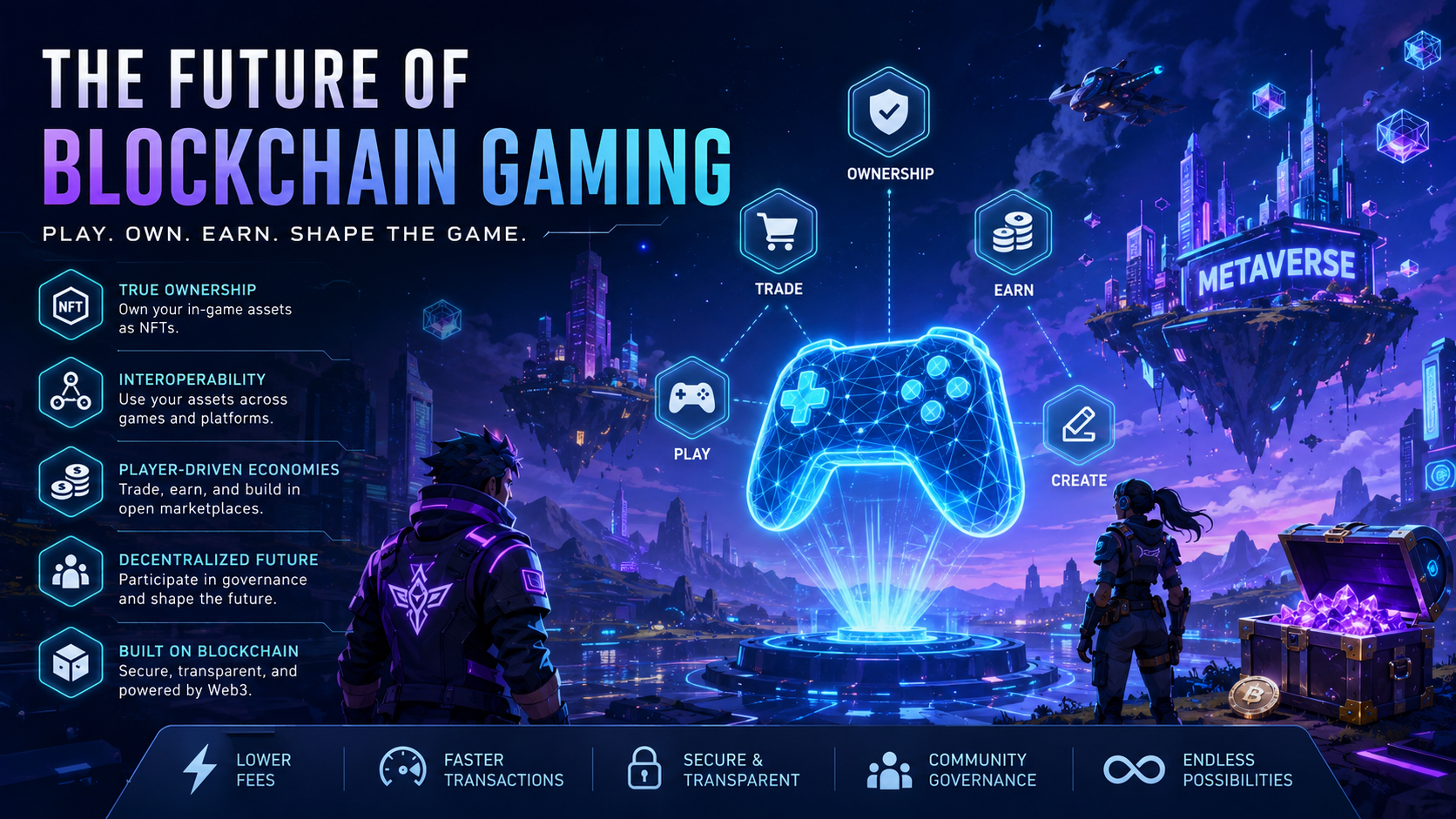
As infrastructure matures, transaction costs fall, and user experiences improve, blockchain technology may become a standard component of online gaming rather than a niche feature. True ownership, interoperable assets, player-driven economies, and decentralized governance have the potential to reshape how games are built, played, and monetized.
While challenges remain, blockchain gaming continues to evolve rapidly. The coming years may see the emergence of virtual worlds where players have unprecedented control over their digital identities, assets, and experiences, creating a gaming landscape unlike anything seen before.
Pick your reaction
Post your comment