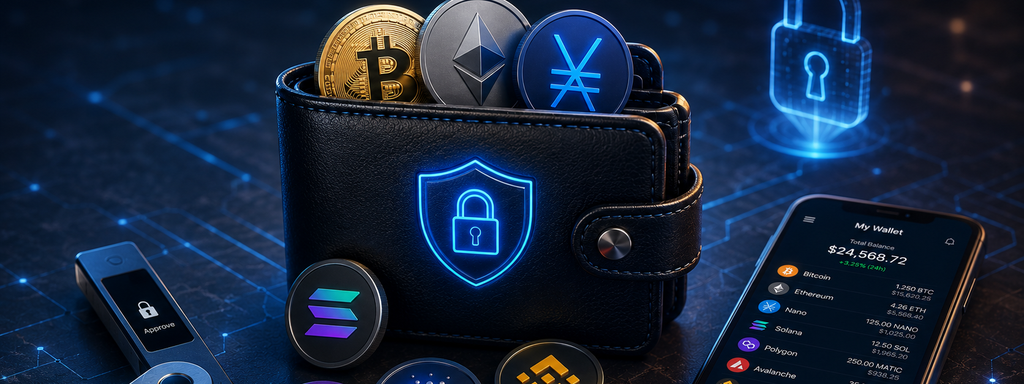

Choosing the right crypto wallet is one of the most important decisions anyone entering the cryptocurrency world can make. Whether you're buying your first coins or managing a diverse portfolio, your wallet determines how you store, access, and secure your digital assets.
With dozens of wallet types available, it can be difficult to know which one is right for your needs. Some prioritize maximum security, while others focus on convenience, mobile access, or support for decentralized applications (dApps).
This guide explains the most important types of crypto wallets, how they work, their advantages and disadvantages, and when you should use each one.
What Is a Crypto Wallet?
A crypto wallet is software or hardware that allows you to interact with blockchain networks. Contrary to what many beginners believe, a wallet does not actually store your cryptocurrency. Your coins remain on the blockchain. The wallet stores the private keys that prove ownership of your assets and allow you to authorize transactions.
Think of your wallet as the key to a safe rather than the safe itself.
Every wallet typically includes:
- A public address that others can use to send you cryptocurrency.
- A private key that proves ownership of your funds.
- A recovery phrase (also called a seed phrase) that can restore access if your device is lost.
Protecting your private keys and recovery phrase is essential. Anyone with access to them can control your funds.
Hot Wallets
Hot wallets are connected to the internet. They are easy to use and ideal for everyday transactions, but they are generally less secure than offline storage.
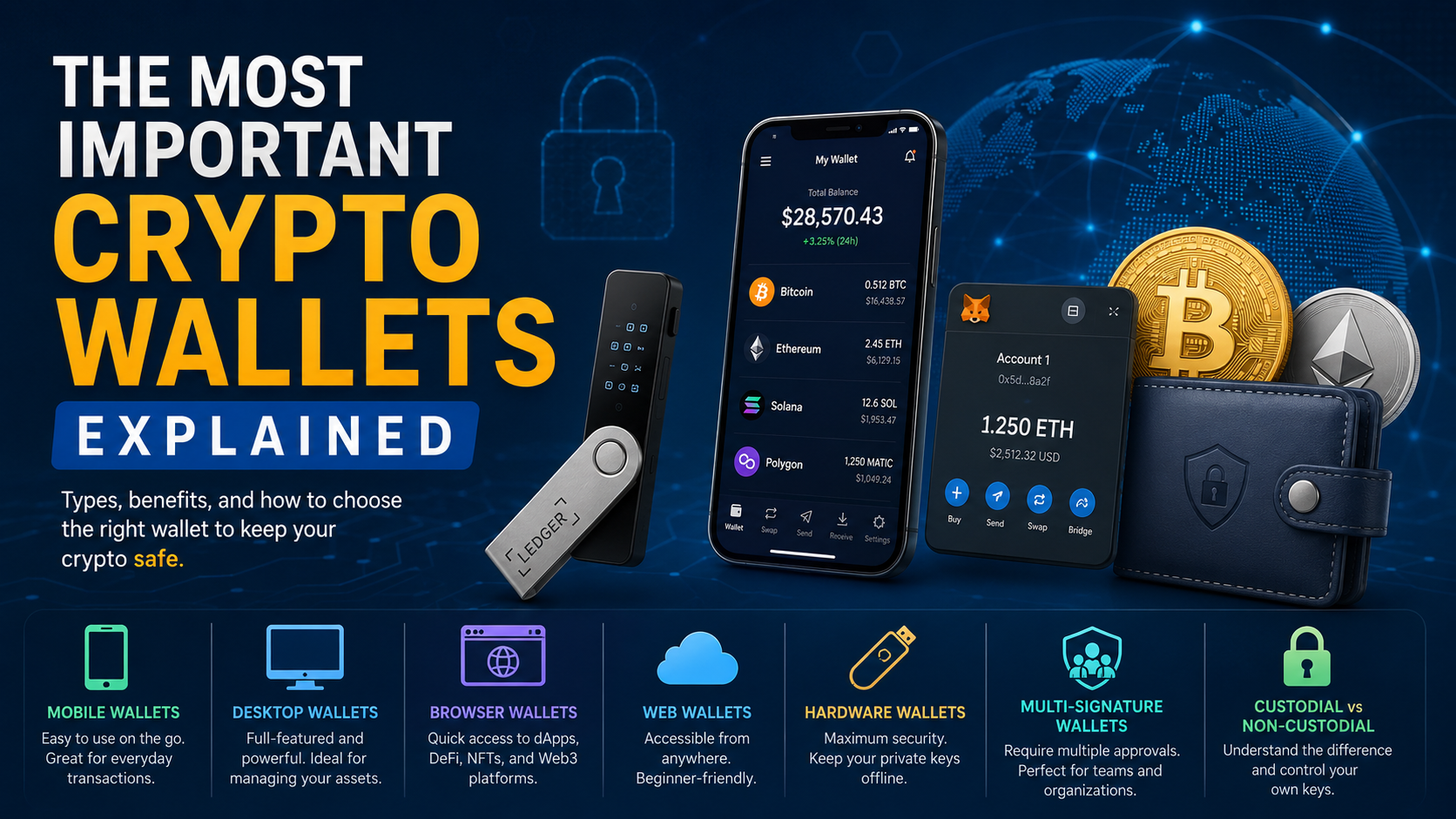
Mobile Wallets
Mobile wallets run on smartphones and tablets.
They are perfect for:
- Paying with cryptocurrency
- Managing assets while traveling
- Connecting to decentralized applications
- Receiving payments quickly
Advantages:
- Easy to install
- Convenient for daily use
- QR code support for quick transactions
- Often include staking and swap features
Disadvantages:
- Vulnerable if the phone is compromised
- Dependent on mobile device security
- Higher risk than offline wallets
Mobile wallets are an excellent choice for beginners who only store modest amounts of cryptocurrency.
Desktop Wallets
Desktop wallets are installed on Windows, macOS, or Linux computers.
Many experienced users prefer desktop wallets because they offer greater functionality than mobile wallets.
Advantages:
- Full-featured interfaces
- Better portfolio management
- Easier interaction with advanced blockchain tools
- Large screen improves usability
Disadvantages:
- Vulnerable to malware if the computer is infected
- Less portable than mobile wallets
Desktop wallets work well for regular investors who manage their assets from home.
Browser Extension Wallets
Browser wallets have become extremely popular thanks to decentralized finance (DeFi), NFTs, and Web3 applications.
These wallets operate as browser extensions and allow websites to request blockchain transactions.
Common uses include:
- Decentralized exchanges
- NFT marketplaces
- Blockchain games
- DAO governance
- Token staking
Advantages:
- One-click dApp access
- Very convenient
- Fast transaction signing
Disadvantages:
- Browser extensions can become attack targets
- Users must watch for phishing websites
- Malicious smart contracts can request dangerous permissions
Always verify the website URL before connecting your wallet.
Web Wallets
Some exchanges and crypto services provide web-based wallets that run entirely in your browser.
These are often the easiest option for newcomers because no installation is required.
Advantages:
- Accessible from almost anywhere
- Beginner friendly
- Easy account recovery
Disadvantages:
- You often do not control the private keys
- Platform hacks could affect your funds
- Accounts rely on passwords and platform security
Remember the common saying:
Not your keys, not your coins.
Whenever possible, long-term investors should eventually move assets into wallets where they control the private keys.
Hardware Wallets
Hardware wallets are physical devices designed specifically for protecting cryptocurrency.
They keep private keys offline, making them one of the safest storage methods available.
Even when connected to a computer, the private keys never leave the device.
Advantages:
- Extremely high security
- Resistant to malware
- Ideal for large holdings
- Suitable for long-term storage
Disadvantages:
- Initial purchase cost
- Slightly slower to use
- Device must be stored safely
Many experienced investors store the majority of their assets on hardware wallets while keeping only small amounts in hot wallets for everyday use.
Paper Wallets
Paper wallets were once a popular method of offline storage.
A paper wallet consists of printed private keys or QR codes.
Although technically secure from online attacks, they are no longer widely recommended.
Problems include:
- Paper can be damaged
- Ink may fade
- Easy to lose
- Difficult for beginners to use safely
Modern hardware wallets have largely replaced paper wallets.
Multi-Signature Wallets
Multi-signature (multisig) wallets require multiple approvals before a transaction can be completed.
For example:
- 2 of 3 signatures required
- 3 of 5 signatures required
These wallets are commonly used by:
- Businesses
- Investment funds
- Family treasuries
- DAOs
- Community organizations
Advantages:
- Eliminates single points of failure
- Reduces theft risk
- Improves organizational security
Disadvantages:
- More complicated setup
- Requires coordination between participants
Custodial Wallets
Custodial wallets are managed by another company, usually a cryptocurrency exchange.
The provider controls the private keys while you access your account through a username and password.
Advantages:
- Very easy for beginners
- Password recovery available
- Integrated trading
Disadvantages:
- You depend on the platform
- Withdrawals may be restricted
- Exchange failures could affect your funds
Custodial wallets are convenient but should generally not be used for storing significant long-term holdings.
Non-Custodial Wallets
Non-custodial wallets place you in complete control of your private keys.
Only you can authorize transactions.
Advantages:
- Full ownership
- Greater privacy
- No reliance on third parties
- Compatible with decentralized finance
Disadvantages:
- You are fully responsible for backups
- Lost recovery phrases usually mean permanent loss of access
Most cryptocurrency enthusiasts eventually transition to non-custodial wallets as they gain experience.
Cold Storage
Cold storage refers to any wallet that remains disconnected from the internet most of the time.
Examples include:
- Hardware wallets
- Air-gapped computers
- Offline signing devices
Cold storage dramatically reduces exposure to hackers.
Many long-term investors keep the majority of their holdings in cold storage and only transfer funds to hot wallets when necessary.
Wallet Security Best Practices
Regardless of which wallet you choose, following good security habits is essential.
Some of the most important recommendations include:
- Never share your recovery phrase.
- Store backups offline.
- Enable two-factor authentication where available.
- Verify website addresses before connecting your wallet.
- Keep wallet software updated.
- Avoid downloading wallets from unofficial sources.
- Be cautious of phishing emails and fake support accounts.
- Test recovery procedures before storing large amounts.
- Never photograph or store your recovery phrase in cloud storage.
- Consider using hardware wallets for valuable holdings.
Security habits are often more important than the wallet itself.
Which Wallet Should You Choose?
There is no single wallet that is perfect for everyone.
A beginner buying small amounts of cryptocurrency may be perfectly happy with a mobile wallet. Someone actively trading NFTs or using DeFi might prefer a browser extension wallet. Long-term investors often combine a hardware wallet with a mobile wallet for daily spending.
Many experienced crypto users actually maintain multiple wallets, each serving a different purpose. This approach reduces risk while making everyday transactions more convenient.
Final Thoughts
Crypto wallets are the foundation of digital asset ownership. Understanding the differences between hot wallets, cold wallets, custodial services, hardware devices, and non-custodial solutions helps you make informed decisions about protecting your investments.
The most secure wallet is not always the most convenient, and the most convenient wallet is not always the safest. The best approach is to match your wallet to your needs, the value of your holdings, and your level of experience.
As you continue your crypto journey, learning how wallets work will give you greater confidence, stronger security, and true ownership of your digital assets.
Pick your reaction
Post your comment