

Liquidity is one of the most important concepts in finance and cryptocurrency, yet it's often misunderstood by beginners. Whether you're buying Bitcoin, trading tokens on a decentralized exchange, or investing in a new crypto project, liquidity plays a major role in how easily you can buy or sell assets without affecting their price.
Understanding liquidity can help you make better investment decisions, avoid unexpected trading costs, and recognize healthier cryptocurrency markets.
What Is Liquidity?
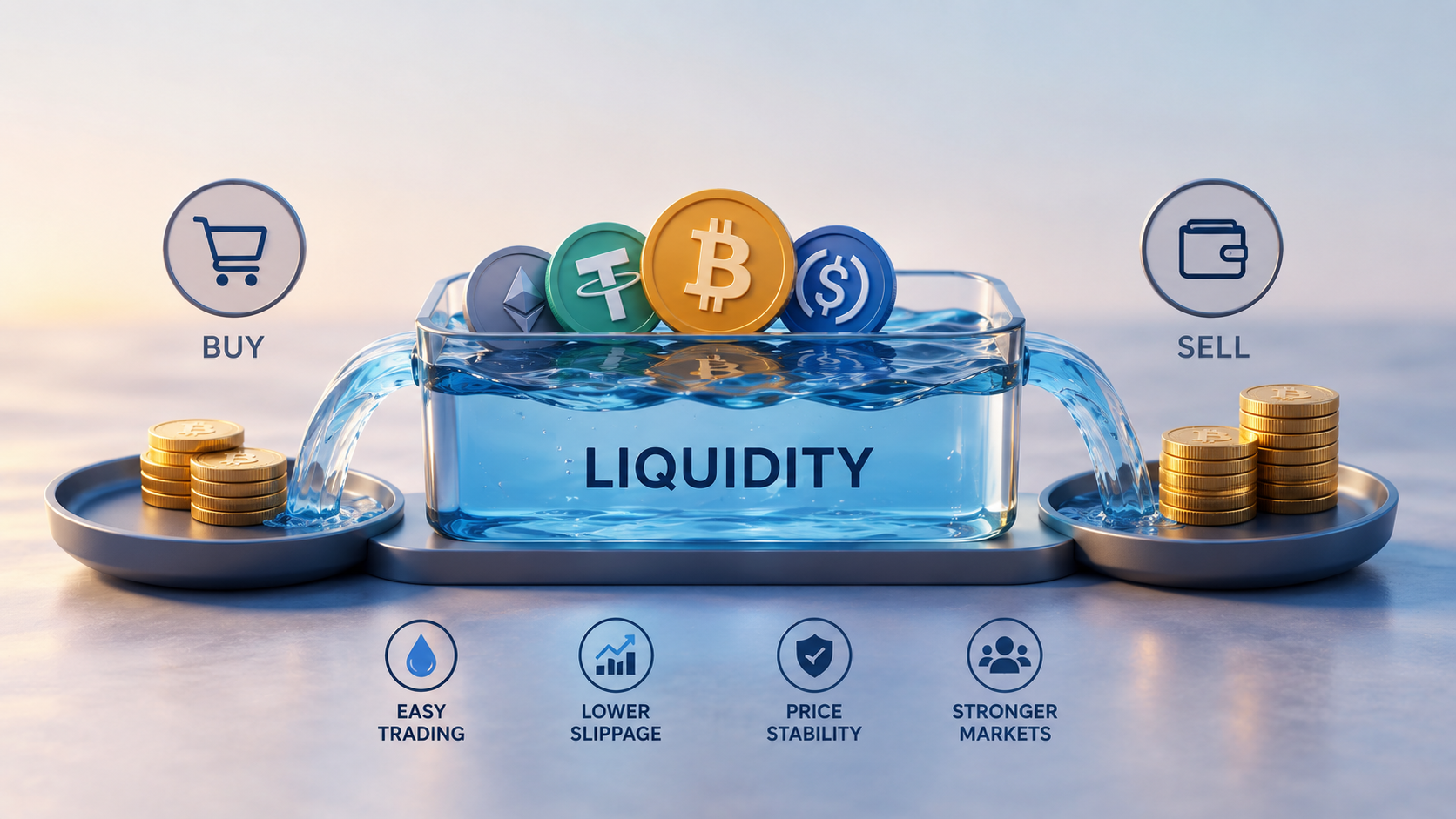
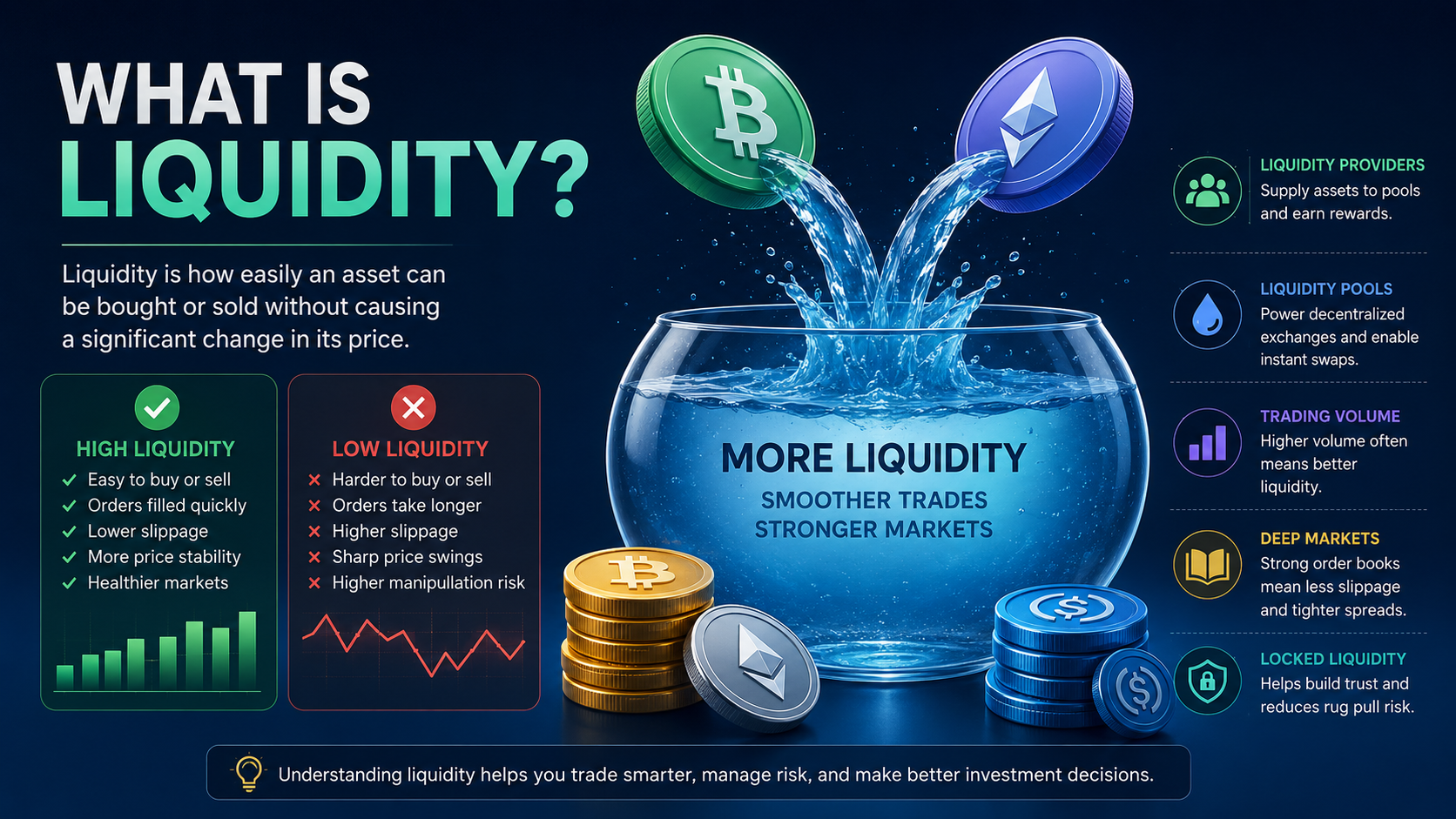
Liquidity refers to how easily an asset can be bought or sold without causing a significant change in its price.
An asset with high liquidity has many buyers and sellers actively trading it. Transactions happen quickly, and the market price remains relatively stable even when large amounts are traded.
An asset with low liquidity has fewer participants. Buying or selling even a moderate amount may significantly move the price, making trades more expensive and less predictable.
In simple terms:
- High liquidity = easy to trade.
- Low liquidity = difficult to trade.
Why Liquidity Matters
Liquidity affects nearly every aspect of a financial market.
When liquidity is high:
- Orders are filled quickly.
- Price movements are smoother.
- Trading costs are lower.
- Large investors can trade without dramatically moving the market.
When liquidity is low:
- Trades may take longer.
- Prices can fluctuate dramatically.
- Slippage becomes more common.
- Markets become easier to manipulate.
For both beginners and experienced traders, liquidity is one of the most important indicators of a healthy market.
Everyday Example
Imagine trying to sell a popular smartphone.
If thousands of people want to buy it, you can sell it almost immediately at a fair market price.
Now imagine trying to sell a rare collectible that only a handful of people are interested in. Finding a buyer could take weeks, and you may need to lower your asking price considerably.
The smartphone market is highly liquid.
The collectible market is much less liquid.
Cryptocurrency markets work in much the same way.
Liquidity in Cryptocurrency
Every cryptocurrency has its own level of liquidity.
Large cryptocurrencies such as Bitcoin or Ethereum usually have very high liquidity because millions of people trade them every day across numerous exchanges.
Smaller cryptocurrencies or newly launched tokens often have much lower liquidity. Even relatively small trades may cause noticeable price swings.
Before buying any cryptocurrency, it's worth checking:
- Daily trading volume
- Number of exchanges listing the asset
- Market capitalization
- Size of the order book
- Available liquidity pools (for decentralized exchanges)
These factors provide a good indication of how easy it will be to enter or exit a position.
What Is Trading Volume?
Trading volume measures how much of an asset has been bought and sold during a specific period, usually 24 hours.
Although trading volume is not the same as liquidity, the two are closely related.
Generally:
- Higher trading volume often indicates better liquidity.
- Lower trading volume often suggests lower liquidity.
However, volume alone doesn't tell the full story. Some markets experience temporary spikes in activity but still lack sufficient liquidity for larger trades.
Order Books
Centralized exchanges use order books to match buyers and sellers.
An order book contains:
- Buy orders (bids)
- Sell orders (asks)
The more buy and sell orders available at prices close to the current market price, the more liquid the market generally is.
A deep order book allows large trades to be executed with minimal impact on price.
A thin order book means even modest trades can move the market significantly.
Liquidity Pools
Decentralized exchanges (DEXs) operate differently.
Instead of matching buyers and sellers directly, many DEXs use liquidity pools.
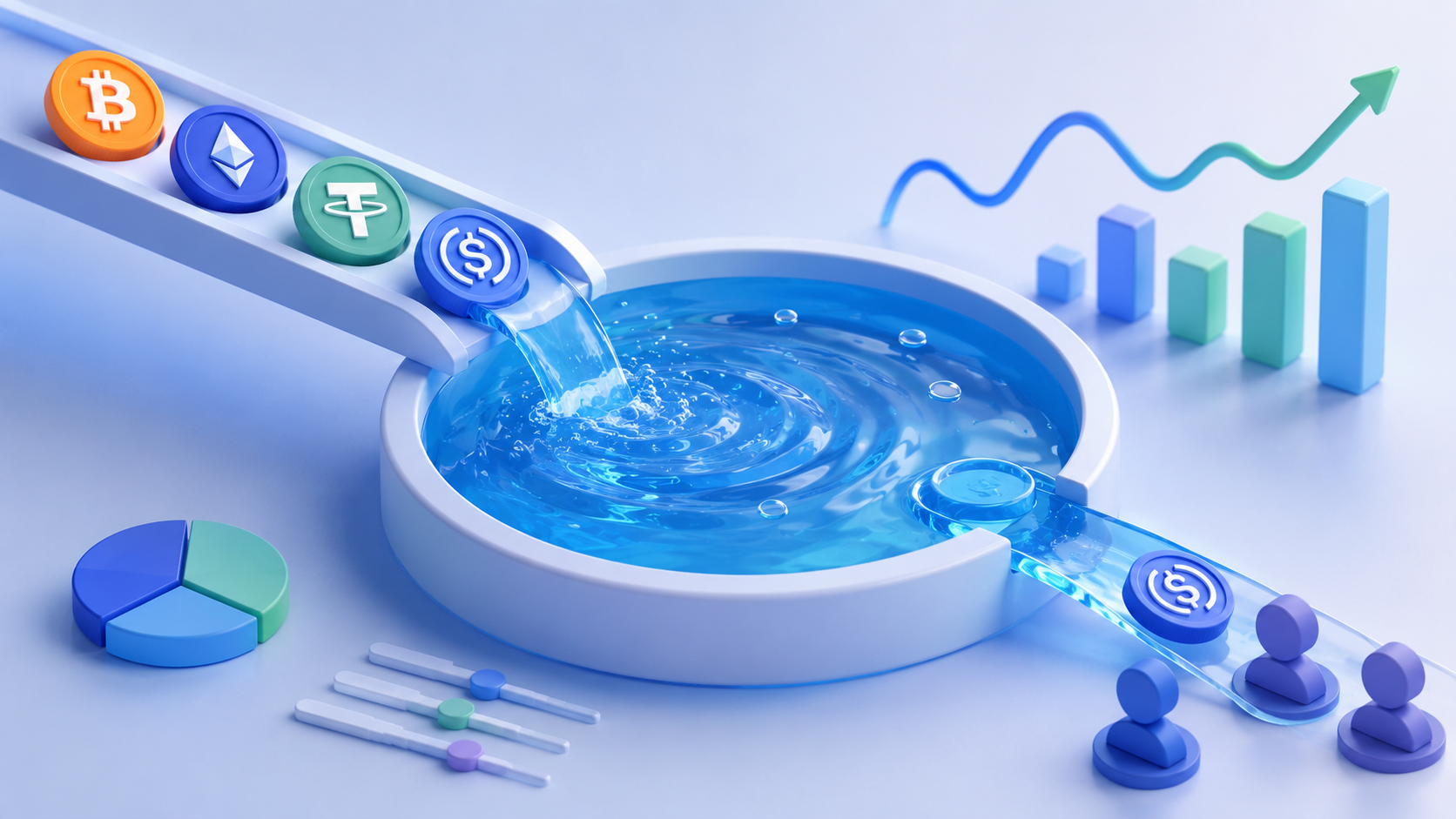
Liquidity pools are collections of cryptocurrency deposited by users called liquidity providers (LPs).
These pools allow traders to swap tokens instantly without needing another trader on the opposite side of the transaction.
Examples of popular DEXs using liquidity pools include Uniswap, PancakeSwap, Raydium, and many others.
Who Are Liquidity Providers?
Liquidity providers are users who deposit pairs of cryptocurrencies into liquidity pools.
For example, someone might deposit:
- ETH and USDC
- SOL and USDC
- BNB and USDT
In return, liquidity providers often receive:
- A share of trading fees
- Liquidity provider (LP) tokens
- Additional incentive rewards from certain protocols
Providing liquidity can generate passive income, but it also comes with risks.
What Is Slippage?
Slippage occurs when the price you expected differs from the price you actually receive during a trade.
For example:
You want to buy a token for $10.
By the time your transaction is completed, there are not enough sellers at that price, so your average purchase price becomes $10.40.
That difference is slippage.
Low liquidity generally results in higher slippage.
Large trades are especially vulnerable because they consume multiple price levels within the order book or liquidity pool.
Bid-Ask Spread
Another important concept related to liquidity is the bid-ask spread.
The bid price is the highest price someone is willing to pay.
The ask price is the lowest price someone is willing to accept.
The difference between these prices is called the spread.
Highly liquid markets usually have:
- Very small spreads
- More competitive pricing
Illiquid markets often have:
- Larger spreads
- Higher trading costs
Can Low Liquidity Be Dangerous?
Yes.
Low liquidity increases several risks, including:
- Extreme price volatility
- Large slippage
- Difficulty selling assets
- Easier market manipulation
- Pump-and-dump schemes
This is why many scam tokens deliberately launch with very little liquidity.
A project may appear valuable on paper, but if there are almost no buyers, holders may struggle to sell their tokens when they want to exit.
Locked Liquidity
Many legitimate crypto projects choose to lock their liquidity.
Liquidity locking means the project's liquidity provider tokens are placed into a smart contract for a specified period, preventing the developers from immediately withdrawing the funds.
This can increase investor confidence because it reduces the risk of a so-called "rug pull," where developers remove liquidity and leave investors unable to sell their tokens.
However, locked liquidity is only one factor to consider. It should never be viewed as proof that a project is trustworthy.
Liquidity vs. Market Capitalization
Market capitalization and liquidity are different concepts.
Market capitalization is calculated as:
Current Price × Total Circulating Supply
Liquidity measures how easily those tokens can actually be traded.
A project can have:
- A high market capitalization but poor liquidity.
- A modest market capitalization with excellent liquidity.
This is why market cap alone does not indicate how easy it is to buy or sell an asset.
Why Investors Should Care
Liquidity affects every investment decision.
Before purchasing any cryptocurrency, ask yourself:
- Can I easily sell this later?
- Is there enough daily trading activity?
- Is the order book deep?
- Is liquidity locked (if applicable)?
- Does this asset trade on reputable exchanges?
Answering these questions can help reduce risk and prevent unpleasant surprises.
Tips for Beginners
If you're new to cryptocurrency:
- Prefer assets with healthy trading volume.
- Avoid buying large amounts of illiquid tokens.
- Check slippage before confirming trades.
- Research liquidity pools for decentralized tokens.
- Don't rely solely on market capitalization.
- Be cautious of newly launched tokens with very little liquidity.
Learning to evaluate liquidity is an important step toward becoming a more informed crypto investor.
Conclusion
Liquidity is the foundation of efficient financial and cryptocurrency markets. It determines how easily assets can be traded, how stable prices remain, and how much traders pay in hidden costs such as slippage and spreads.
Whether you're buying a well-established cryptocurrency or exploring a newly launched token, understanding liquidity helps you evaluate market health, manage risk, and trade with greater confidence.
As with every cryptocurrency investment, always do your own research. Looking beyond price charts and understanding factors like liquidity can help you make smarter, safer decisions in the fast-moving world of digital assets.
Pick your reaction
Post your comment