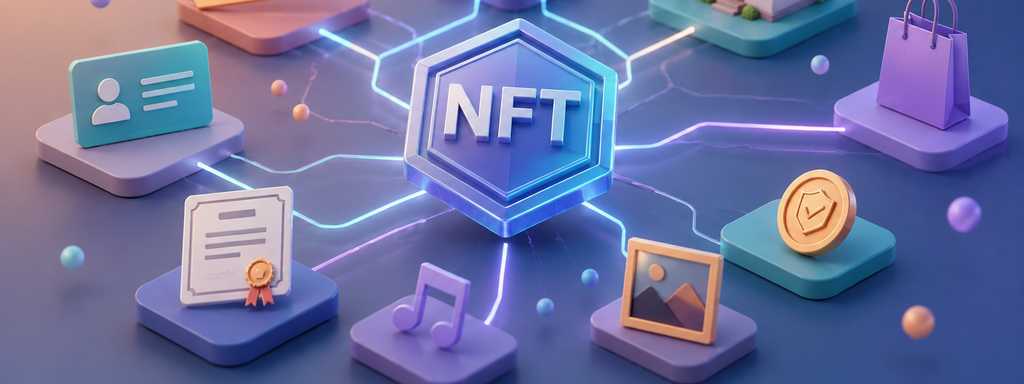

NFTs became widely recognized through digital artwork, collectibles, and high-profile sales. For many people, the term still brings to mind expensive profile pictures and speculative trading. However, the underlying technology can represent much more than digital art.
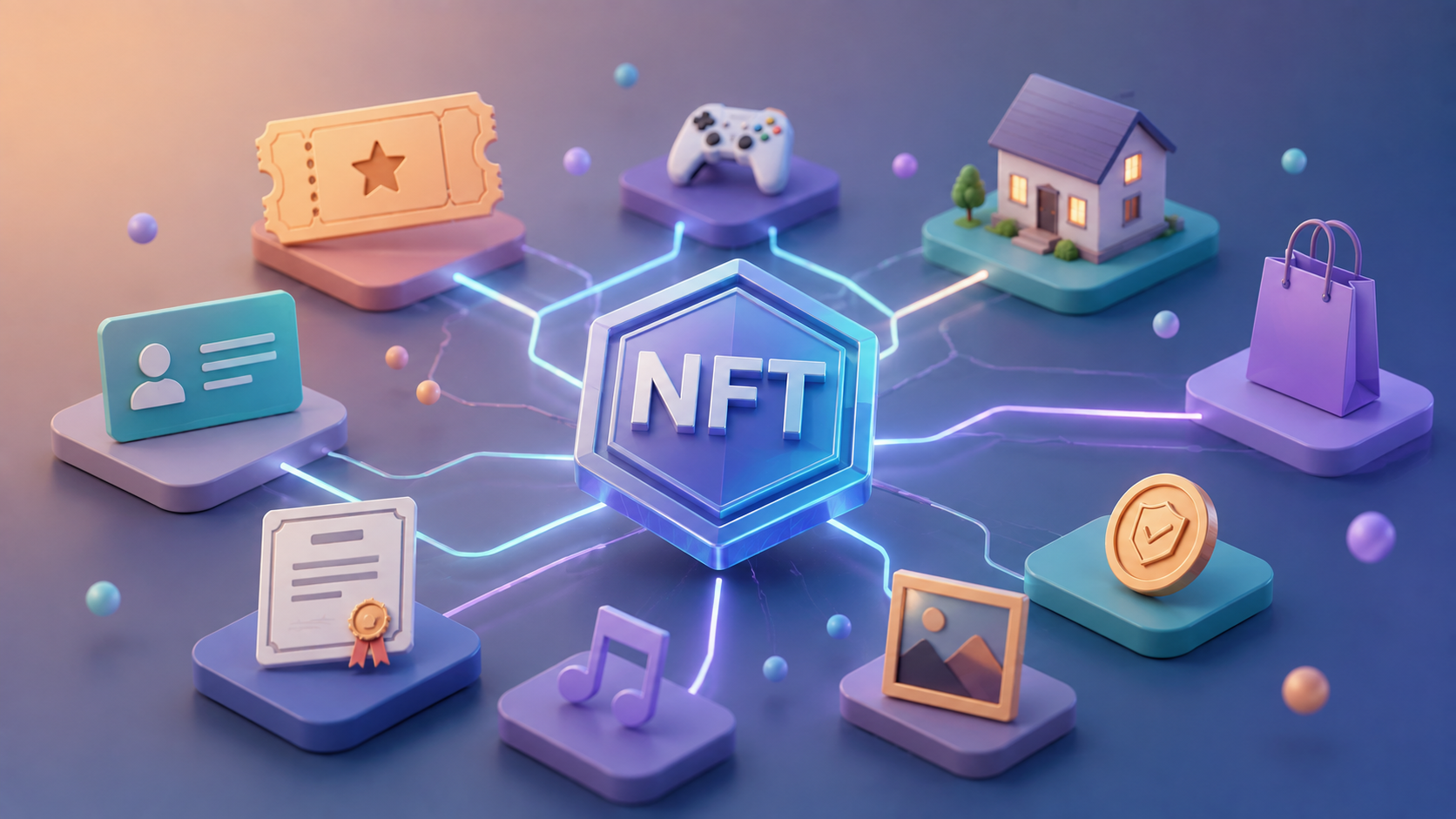
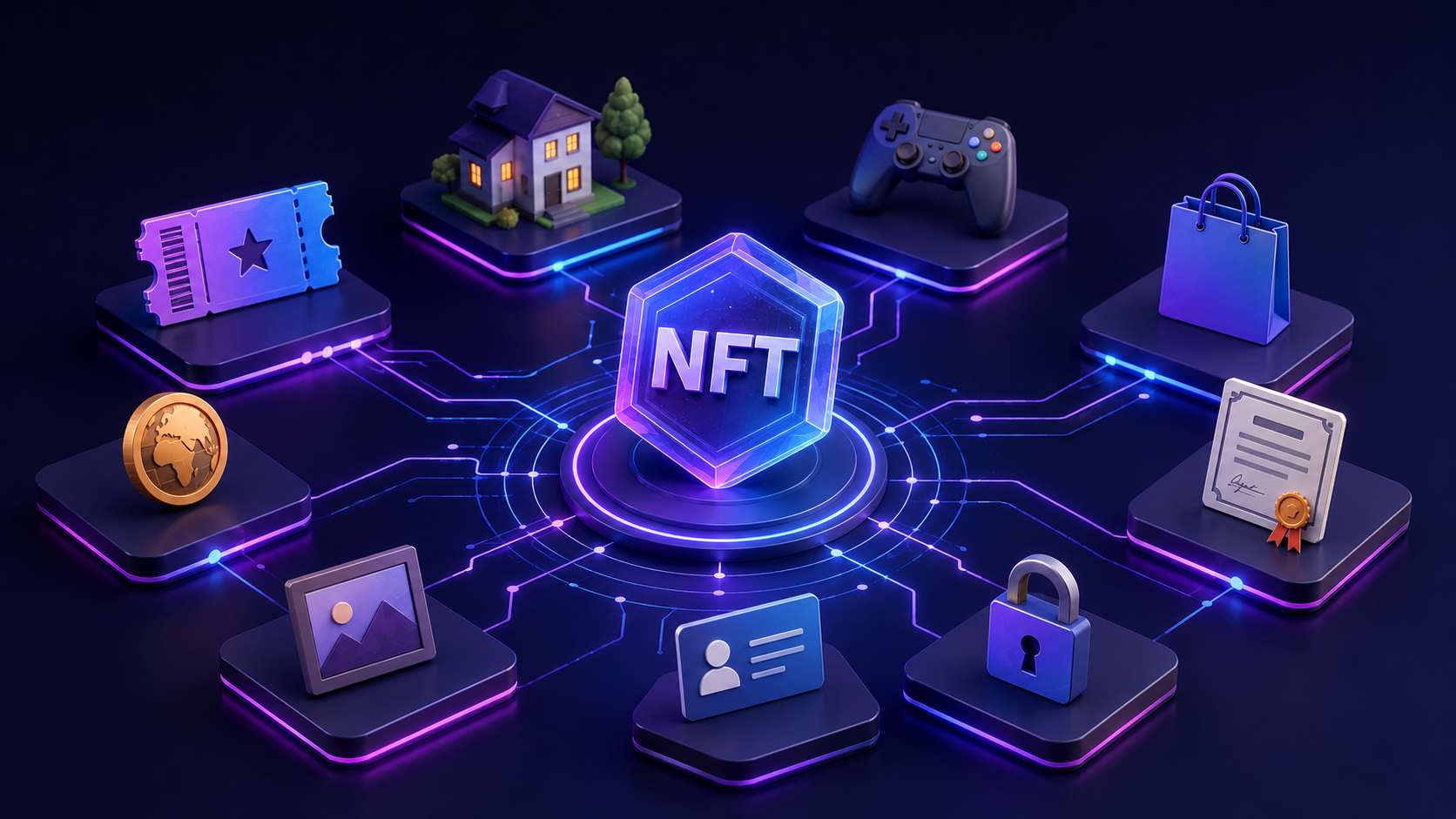
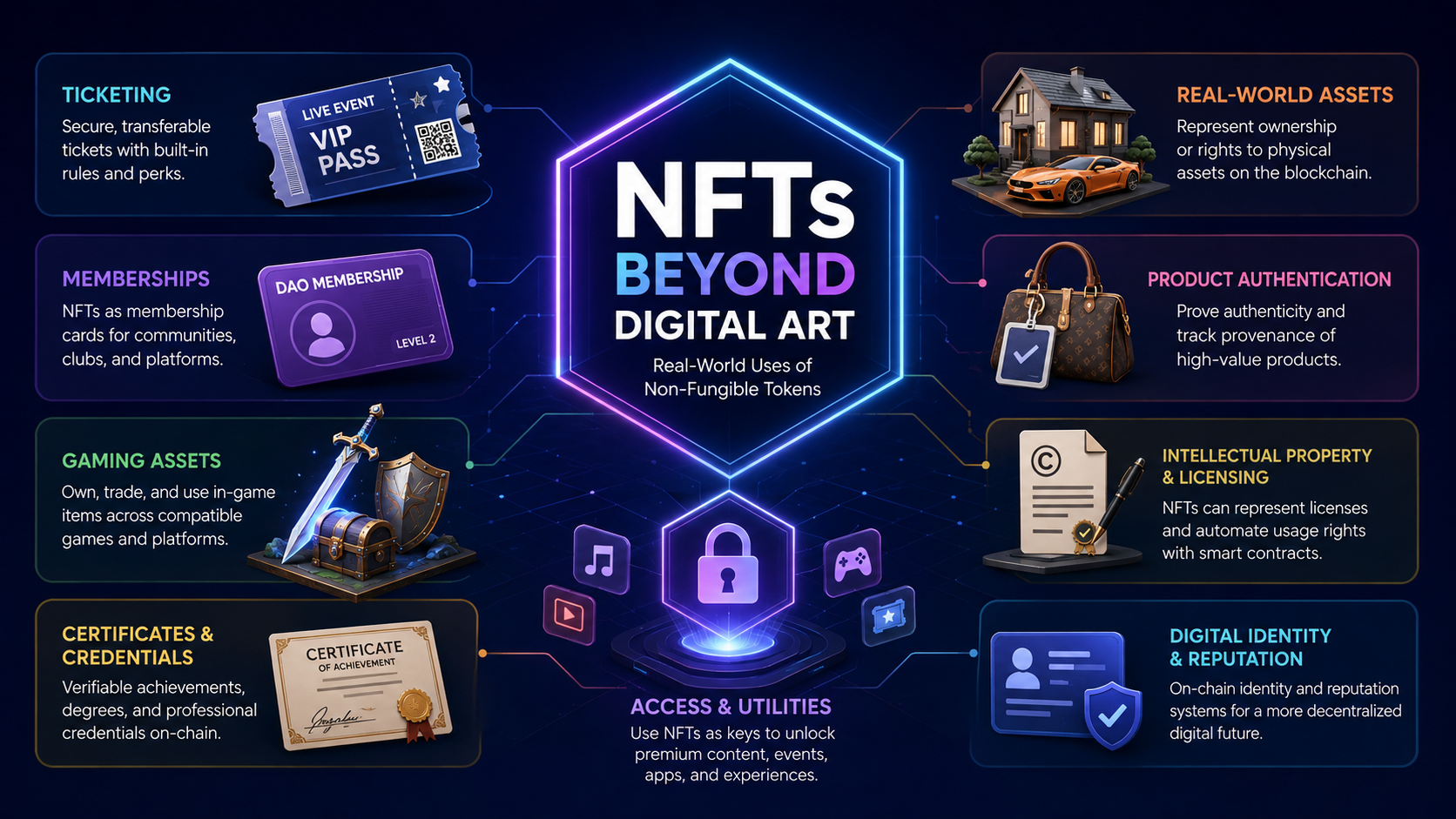
At their core, Non-fungible tokens, better known as NFTs, provide a way to represent unique or individually identifiable assets on a blockchain. That makes them potentially useful for tickets, memberships, gaming assets, certificates, identity credentials, intellectual property, real-world assets, and many other applications where ownership or authenticity matters.
As blockchain technology continues to develop, NFTs may increasingly become infrastructure that works quietly behind digital services rather than products that people buy simply because they are NFTs.
What Makes an NFT Different?
Most cryptocurrencies are fungible. One Bitcoin, for example, is generally interchangeable with another Bitcoin of the same amount. NFTs work differently.
Each NFT can have its own unique identifier and associated information. This allows a blockchain to distinguish one token from another, even when they are created using the same smart contract.
An NFT can represent ownership, access rights, credentials, digital objects, or references to physical assets. Depending on how a system is designed, the token may also contain or reference metadata describing what it represents.
This ability to create individually identifiable blockchain-based assets is what gives NFTs applications far beyond artwork.
Digital Tickets
Ticketing is one potential application for NFTs.
Traditional digital tickets are usually stored within centralized systems. NFT-based tickets can instead be represented as blockchain assets, allowing their ownership and transfer history to be recorded on-chain.
Event organizers could use smart contracts to define how tickets may be transferred or resold. For example, a system could restrict resale prices, collect royalties on secondary sales, or prevent transfers after a particular date.
NFT tickets could also remain useful after an event. A concert ticket might become a digital collectible, provide access to future presales, or act as proof that someone attended a particular event.
However, blockchain ticketing does not automatically eliminate fraud. The security and usefulness of such systems still depend on identity verification, wallet security, smart-contract design, and the connection between the token and the real-world event.
Memberships and Community Access
NFTs can function as digital membership cards.
A community, organization, club, or online platform can issue NFTs that grant holders access to particular areas, services, events, or benefits. Instead of maintaining a traditional membership database alone, an application can check whether a connected wallet contains the required token.
Membership NFTs can also have different levels. One token might provide basic access, while another represents premium membership or additional privileges.
For online communities, this can create portable membership systems that potentially work across multiple applications.
NFT ownership should not automatically be treated as proof of identity, however. A wallet proves control of certain blockchain assets, not necessarily the real-world identity of the person controlling it.
Gaming Assets
Gaming is one of the most frequently discussed uses of NFTs beyond digital art.
In traditional games, items such as skins, weapons, characters, land, and collectibles usually exist entirely inside databases controlled by the game developer. Players may be able to use these assets, but they rarely have independent control over them.
Blockchain-based gaming can represent certain items as NFTs.
This can make it possible for players to transfer or trade assets through compatible marketplaces or wallets. In theory, assets could even be used across different games or applications if developers deliberately build compatible systems.
True interoperability is much more complicated than simply putting an item on a blockchain. Different games have different graphics, economies, rules, statistics, and technical architectures. An NFT sword from one game cannot automatically function inside another.
The blockchain can make ownership portable, but developers still need to make the underlying applications compatible.
Certificates and Credentials
NFTs can also represent certificates and credentials.
Universities, training organizations, employers, professional associations, and other institutions could issue blockchain-based credentials representing qualifications or achievements.
A recipient could then provide cryptographic evidence that a particular credential was issued to their wallet. Verification systems could check the blockchain rather than relying entirely on paper documents or manually contacting the issuing organization.
Examples could include:
- Educational certificates
- Professional qualifications
- Training achievements
- Event participation
- Course completion
- Digital badges
- Product certifications
For sensitive credentials, privacy is particularly important. Personal information should generally not be permanently published on a public blockchain. Systems can instead use hashes, cryptographic proofs, or off-chain data while using the blockchain for verification.
Digital Identity and Reputation
NFT technology can also contribute to decentralized identity and reputation systems.
A blockchain-based credential could represent membership in an organization, completion of a verification process, or achievement of a particular status.
Some credentials do not need to be transferable. In fact, allowing them to be sold would defeat their purpose. A professional certification, for example, should not be transferable from one person to another simply because the underlying token can be transferred.
This has led to experimentation with non-transferable tokens, sometimes called soulbound tokens, that remain associated with a particular wallet.
Such systems could contribute to decentralized reputation, but they also introduce significant privacy and governance questions. People need mechanisms for correcting mistakes, recovering credentials, changing wallets, and deciding what information becomes publicly visible.
Real-World Assets
NFTs can potentially represent rights connected to physical assets.
Examples could include property, vehicles, luxury goods, equipment, collectibles, or other individually identifiable objects.
A token might represent ownership, partial ownership, a certificate of authenticity, or another contractual right associated with an asset.
However, owning a blockchain token does not automatically mean someone legally owns the physical item it claims to represent.
For real-world asset tokenization to work reliably, there must be a trusted legal and operational connection between the blockchain record and the physical asset. Contracts, regulations, custodians, registries, courts, and other institutions may still play important roles.
The blockchain can provide a transparent ownership record, but it cannot independently enforce every real-world claim.
Product Authenticity and Supply Chains
NFTs can also act as digital certificates associated with individual products.
A manufacturer could create a unique token for a luxury watch, designer item, electronic device, piece of machinery, or collectible. The token could contain or reference information about the product's origin, production, ownership history, or maintenance.
When the physical product changes owners, the corresponding digital record could also be transferred.
This concept may help create more transparent product histories, particularly for high-value goods where provenance matters.
The challenge is ensuring that the physical item remains reliably connected to its digital representation. If that connection can be manipulated, the blockchain record alone cannot guarantee authenticity.
Intellectual Property and Licensing
NFTs can also be used as components of licensing systems.
A token could represent a license to use a photograph, music track, design, software asset, character, or other intellectual property under specific conditions.
Smart contracts could potentially automate parts of licensing, such as payments or access permissions.
But purchasing an NFT does not inherently transfer copyright.
The legal rights associated with a token depend on the terms established by the creator or rights holder. An NFT might provide commercial rights, personal-use rights, access to content, or no intellectual property rights at all.
Clear licensing terms therefore remain essential.
Domain Names and Digital Ownership
Some blockchain ecosystems use NFTs to represent human-readable domain names or identifiers.
Instead of interacting with a long wallet address, users may be able to associate an easier-to-remember name with blockchain addresses or decentralized applications.
Because these names can be represented as blockchain assets, users may be able to hold and transfer them directly through their wallets.
This demonstrates a broader principle behind NFTs: they can represent scarce digital resources that need individually identifiable ownership.
Documents and Records
NFT-like systems can also help establish the existence, origin, or ownership history of documents.
Contracts, certificates, warranties, receipts, and other records could be associated with blockchain entries that provide timestamps and verifiable histories.
The actual document does not necessarily need to be stored on the blockchain. Instead, a cryptographic hash can represent the document.
If the document is later changed, its hash changes as well, making unauthorized modifications detectable.
This approach can provide blockchain-based verification without permanently publishing the complete contents of a document.
NFTs as Access Keys
One particularly practical application is using NFTs as programmable access credentials.
An NFT could unlock:
- Premium website features
- Private community channels
- Software functionality
- Online courses
- Events
- Exclusive downloads
- Games or virtual environments
- Subscription benefits
The application simply verifies whether the user's wallet contains the required asset.
These systems can also be dynamic. Different tokens may unlock different features, and smart contracts can define rules governing how access rights are issued or transferred.
Why NFTs Do Not Need to Look Like NFTs
One of the most important developments may be making NFT technology less visible.
Early blockchain applications often required users to understand wallets, addresses, gas fees, tokens, and transactions. That complexity can make applications difficult for mainstream users.
Future NFT-based services could hide much of this infrastructure.
A concert attendee might simply receive a ticket inside an app. A gamer might earn an item without thinking about the blockchain underneath it. A customer could scan a product to verify its authenticity without knowing that an NFT is involved.
In these situations, the technology becomes infrastructure rather than the main selling point.
This is similar to how people use databases, encryption, and cloud computing every day without needing to understand how those technologies operate.
The Limitations of NFTs
NFTs are not a universal solution.
Using blockchain technology introduces trade-offs involving cost, scalability, privacy, security, usability, and regulation. In many situations, a conventional database may be simpler and more efficient.
NFTs become particularly interesting when multiple parties need to independently verify ownership, authenticity, or transaction history without relying entirely on a single database operator.
There are also important questions surrounding wallet recovery, stolen assets, smart-contract vulnerabilities, intellectual property, consumer protection, and legal recognition.
A blockchain record can establish what happened on the blockchain. It cannot automatically guarantee that every claim connected to that record is accurate in the physical or legal world.
From Speculation to Infrastructure
The first major NFT boom introduced millions of people to blockchain-based digital ownership, but it also created an image of NFTs that was heavily associated with speculative artwork and collectibles.
The technology itself is considerably broader.
NFTs are essentially programmable, individually identifiable digital assets. That simple concept can be applied wherever systems need to represent unique ownership, credentials, access rights, licenses, records, or objects.
The most important NFT applications of the future may therefore look very different from the collections that originally made the technology famous.
They may not even be marketed as NFTs.
Instead, the technology could operate quietly underneath ticketing platforms, games, identity systems, product authentication services, membership programs, and other applications.
Conclusion
NFTs demonstrated that blockchain networks can represent more than interchangeable currencies. They can also represent unique assets and rights.
Digital art remains an important part of NFT history, but it represents only one possible application. Ticketing, gaming, memberships, credentials, product authentication, licensing, real-world asset tokenization, and digital identity all demonstrate how the same underlying technology can be used in very different ways.
Not every application needs a blockchain, and many NFT concepts still face significant technical, legal, and usability challenges. But when verifiable digital ownership and portability provide genuine benefits, NFTs can offer capabilities that traditional systems may struggle to reproduce across independent platforms.
The future of NFTs may therefore be less about buying images and more about building a programmable ownership layer for the digital world.
Pick your reaction
Post your comment