

BlockMap
Aug. 2, 2026
Dollar-Cost Averaging Explained: A Smarter Way to Invest Over Time
Cryptocurrency prices can rise and fall dramatically within hours, making it difficult to decide when to buy. Many investors worry about purchasing at the wrong time or trying to predict short-term market movements. Dollar-cost averaging (DCA) is a simple investment strategy designed to reduce this uncertainty by spreading purchases over time instead of investing everything at once.
BlockMap
Aug. 1, 2026
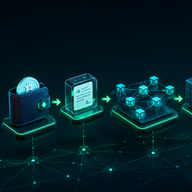
What Happens During a Blockchain Transaction?
If you've ever sent cryptocurrency from one wallet to another, you've probably wondered what actually happens after you click "Send." While the process may seem instant from the user's perspective, a blockchain transaction goes through several important steps before it becomes a permanent part of the blockchain.

BlockMap
July 31, 2026
The Difference Between Coins and Tokens
Cryptocurrency can seem full of unfamiliar terminology, and two of the most commonly confused terms are coins and tokens. While many people use them interchangeably, they describe two different types of digital assets with distinct purposes and technical foundations.

BlockMap
July 30, 2026
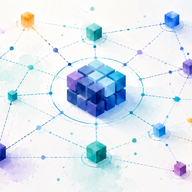
What Are Blockchain Oracles?
Blockchain technology enables decentralized applications to operate without relying on central authorities. However, blockchains have one important limitation: they cannot directly access information from the outside world. This is where blockchain oracles come in.
BlockMap
July 29, 2026
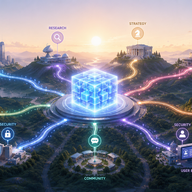
What Makes a Blockchain Decentralized?
Blockchain is often described as a decentralized technology, but not every blockchain is decentralized to the same degree. Some networks are highly distributed across thousands of participants worldwide, while others rely on a relatively small number of organizations to validate transactions and make decisions.
BlockMap
July 28, 2026
Blockchain Careers Beyond Development: Exploring Opportunities Across the Industry
Blockchain is often associated with software engineers writing smart contracts or building decentralized applications. While developers remain essential, they represent only one part of a much larger ecosystem.
BlockMap
July 26, 2026
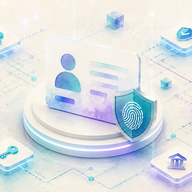
Blockchain for Digital Identity: Giving People Control Over Their Online Identity
Every time you create an online account, verify your age, sign in to a service, or submit personal information, you're relying on some form of digital identity. Today, this information is typically stored by governments, companies, or online platforms, making it vulnerable to data breaches, identity theft, and misuse.
BlockMap
July 25, 2026
Kaspa (KAS): A High-Speed Blockchain Powered by BlockDAG
Kaspa is a Layer 1 blockchain designed to achieve fast transaction confirmations without sacrificing decentralization or security. Unlike traditional blockchains that produce one block at a time, Kaspa uses a unique BlockDAG (Directed Acyclic Graph) architecture that allows multiple blocks to be created and confirmed simultaneously.
BlockMap
July 24, 2026
Blockchain in Voting Systems: Can It Make Elections More Secure and Transparent?
Elections are one of the foundations of democratic societies, but they also face ongoing challenges. Voters expect results to be accurate, transparent, and protected against fraud, while election organizers must ensure privacy, accessibility, and public trust. As blockchain technology continues to evolve beyond cryptocurrencies, one of its most discussed potential applications is digital voting.
BlockMap
July 23, 2026
XRP: Fast Digital Payments and the Global Financial Network
XRP is one of the oldest and most well-known cryptocurrencies in the blockchain industry. Created to enable fast, low-cost international payments, it powers the XRP Ledger, an open-source blockchain designed for transferring value efficiently.